Days 7-9

Kyoto & surroundings

Fushimi Inari Taisha, Arashiyama bamboo forest and much more

how to get around KYOTO

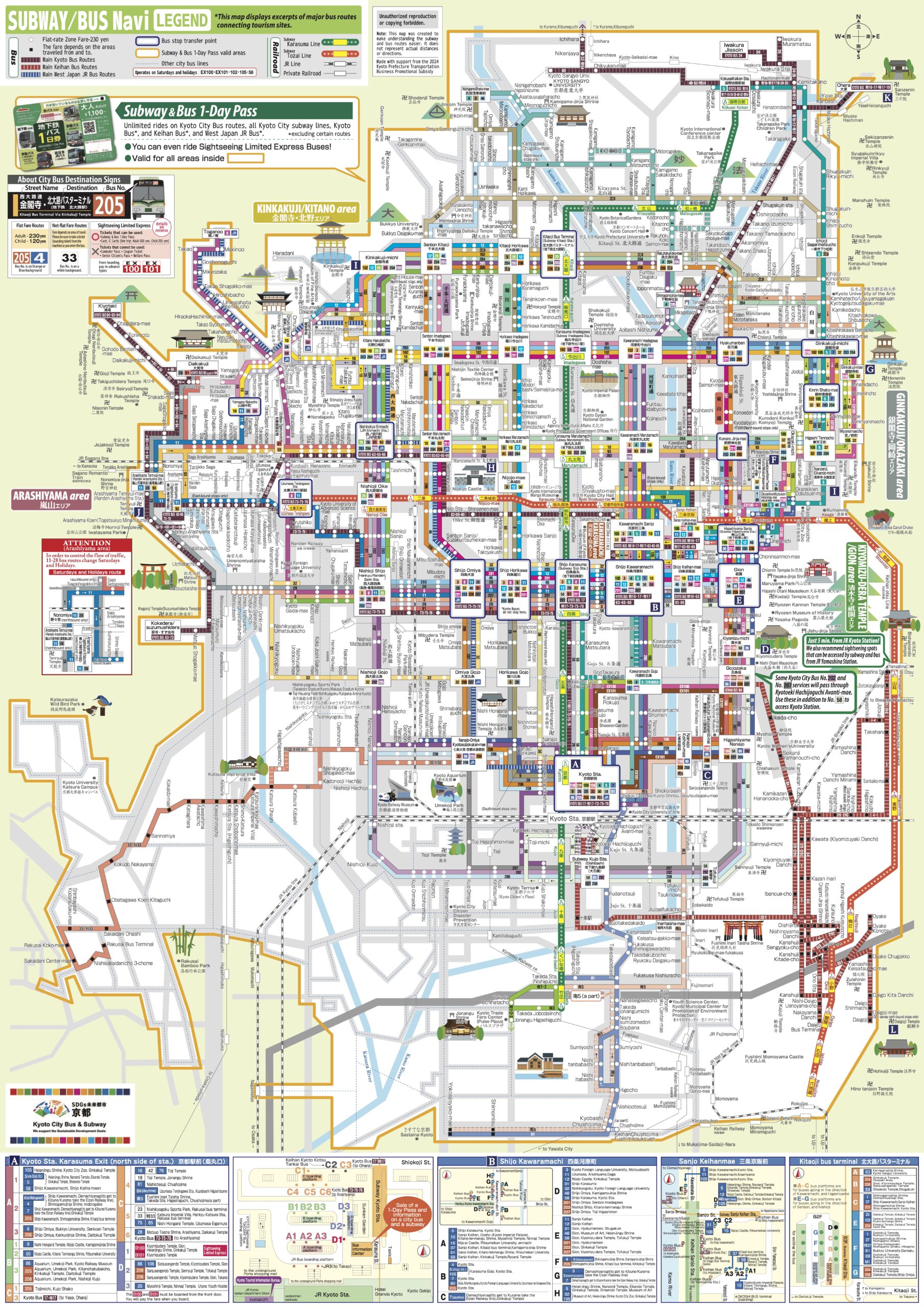
Download the map here.

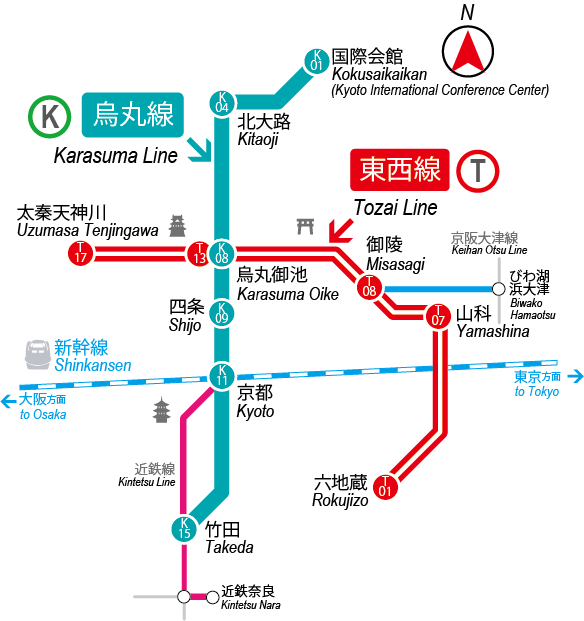
There are only 2 subway lines in Kyoto: the Karasuma and Tozai Line.

It is not included in the Japan Rail Pass, we recommend buying a rechargeable Suica card.

Download the map here.

It is the best way to get around Kyoto, as there is a dense network of lines.

You get on through the back door, where you pick up a ticket to show the driver before getting off, which will indicate the amount due.

If you don’t want to pay cash, you can use a Suica card.

legend

✴️ = best choice!

day 7

discovering kyoto

(in kimono!)

From Kanazawa station we take a Thunderbird limited express train to Kyoto station (2.15 hours).

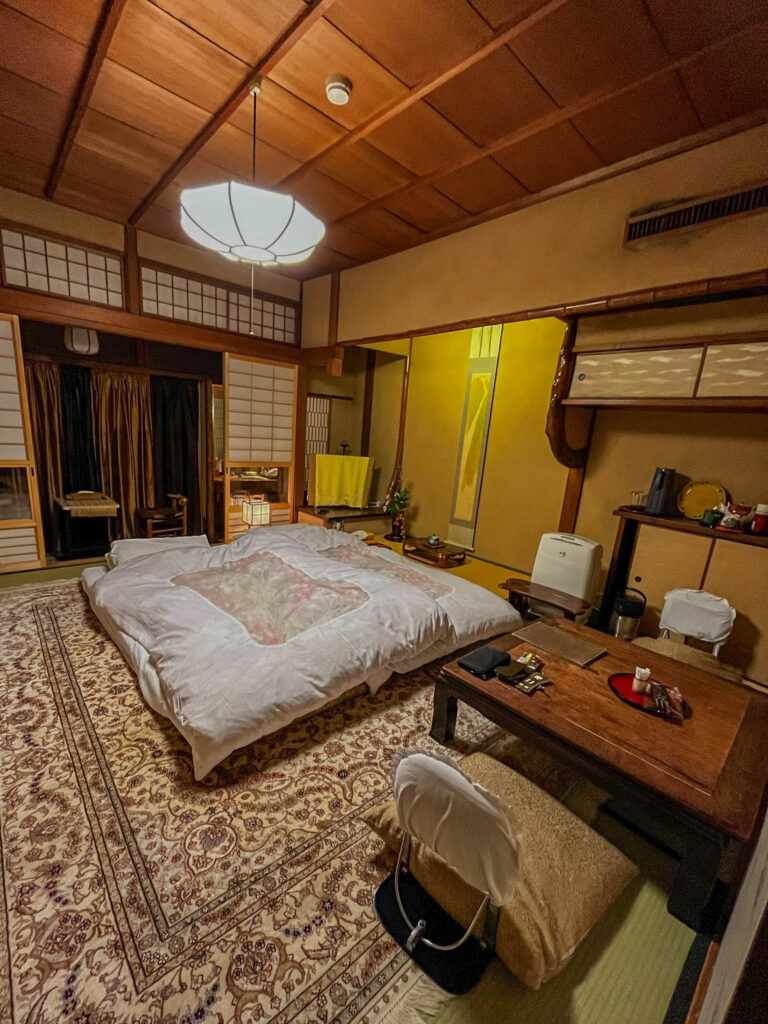
We leave our backpacks in our new facility, the ancient and charming Seikoro ryokan: tonight we will sleep in traditional futons!

For lunch we scout out this microscopic restaurant, specializing in Tonkatsu, the typical fried pork cutlet. ✴️

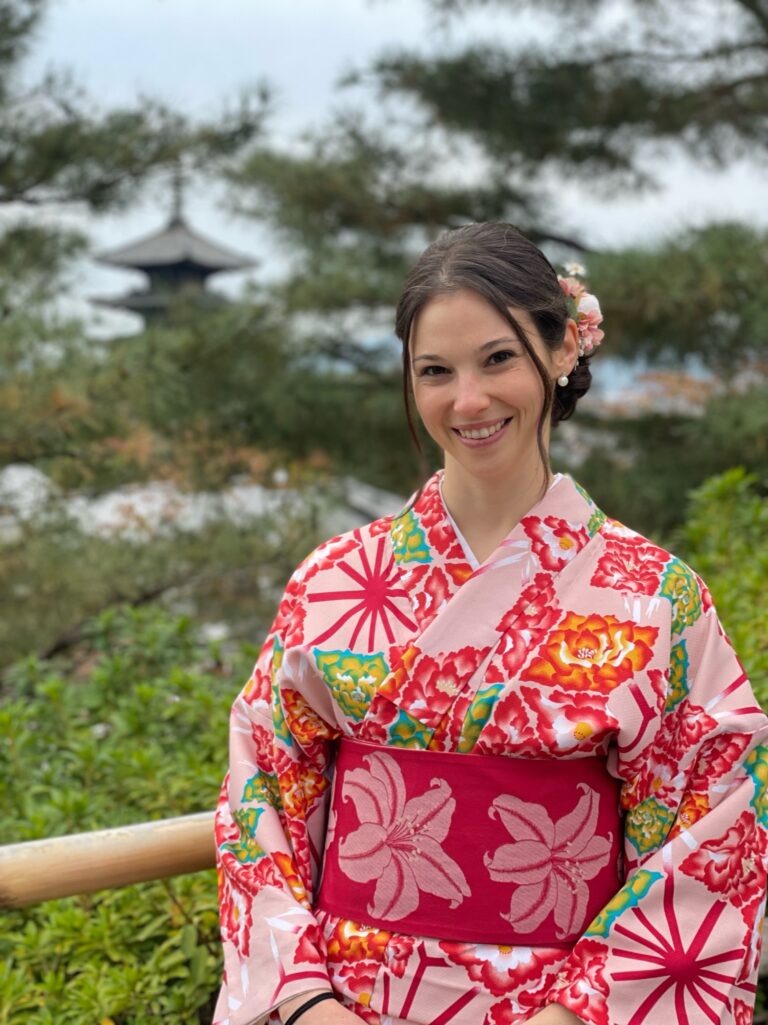
Today we explore the main streets of Kyoto, fulfilling a dream of mine: wearing a kimono, the traditional Japanese dress.

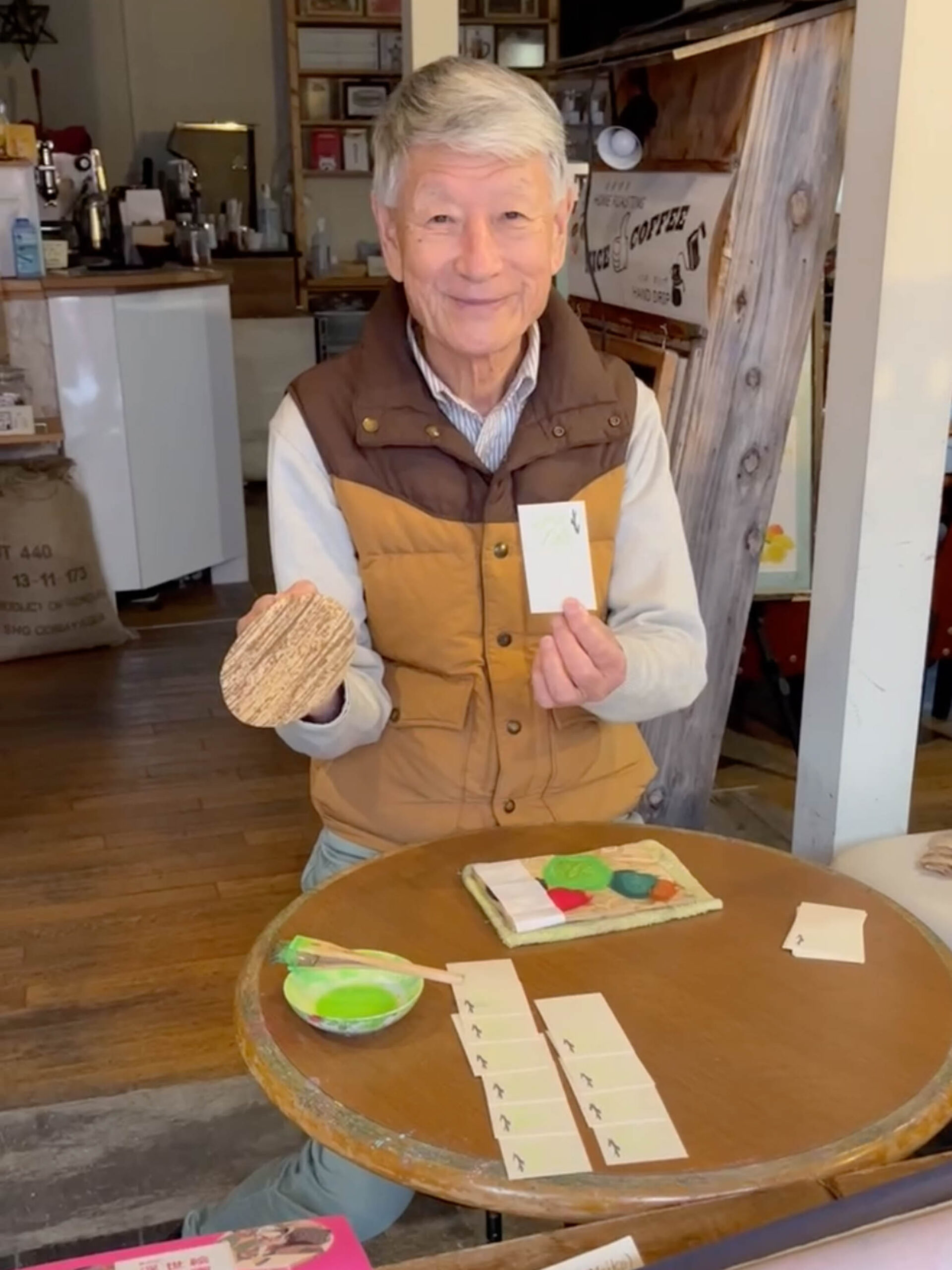
We cross the famous Hanamikoji-Dori, the street with the best-preserved teahouses, where we spot three geishas; pass by the Yasaka Pagoda (yes, the one in the movie Memoirs of a Geisha); and buy handmade prints from a sweet old man at this store on Ninenzaka Street, characterized on the outside by three white umbrellas. ✴️

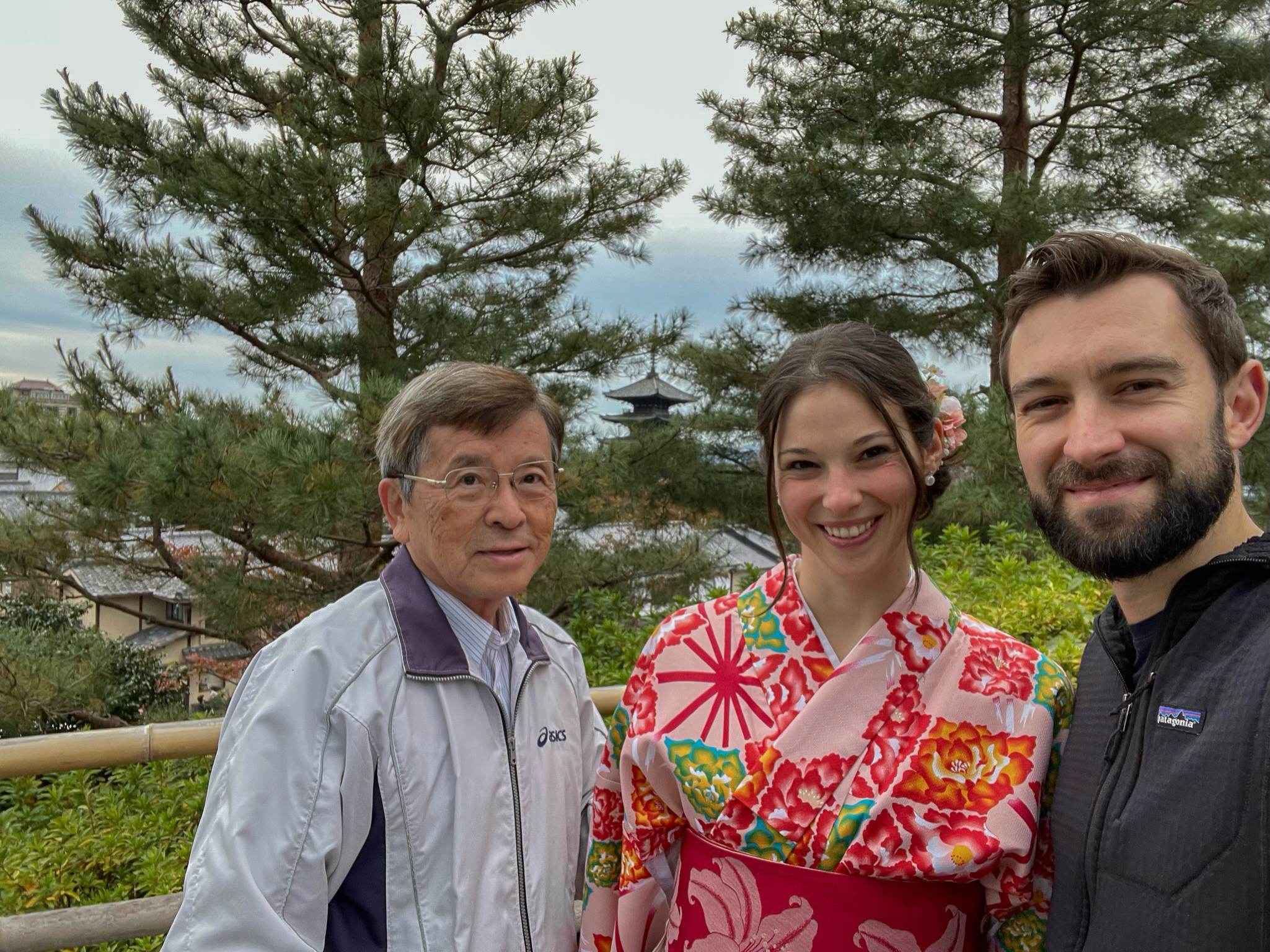
When the tour is over, we stop for a few photos at this beautiful viewpoint, where we chat with a nice retired gentleman who is curious about where we came from.

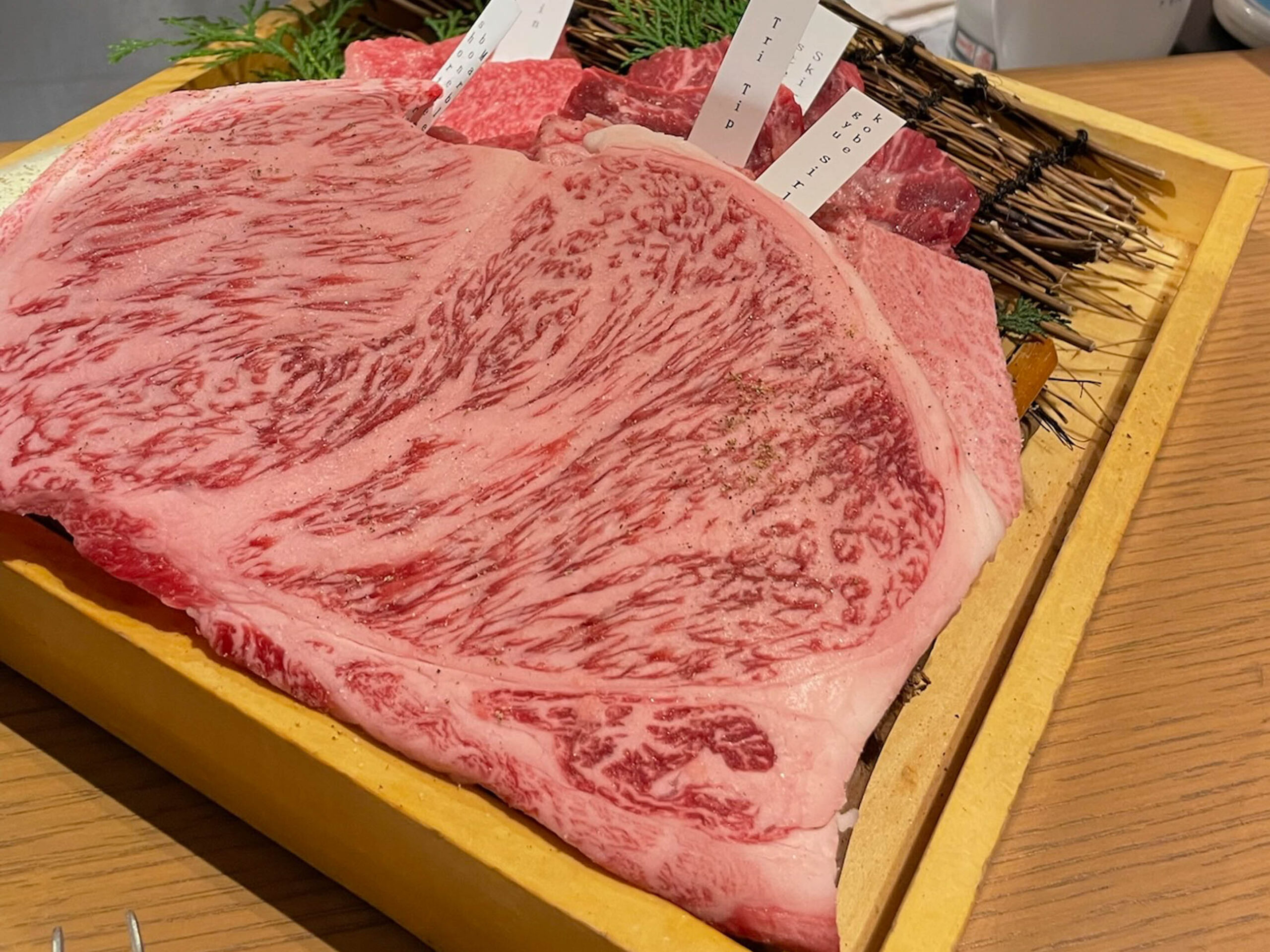
For dinner, we taste fine Kobe and Wagyu meat at this restaurant in the traditional Pontocho street, characterized by illuminated lanterns. We finish with an ‘encore’ dinner at Okonomiyaki yuu and a gin in the small traditional bar next door. ✴️

glossary

Tonkatsu
Fried pork cutlet

Futon

Traditional Japanese mattress. Composed of cotton and about 14 centimeters thick. It is laid out on the tatami only in the evening before going to bed. Instead, in the morning it is rolled up and stored in the closets.

Tatami
Straw paving

Kimono
Traditional Japanese dress.
I rented it from this store at € 36 for the day. ✴️
The activity is bookable on GetYourGuide.
The service was great and fast: it involves renting a matching kimono, bag and sandals plus hairstyle.
If you plan to walk a lot, I recommend bringing a comfortable pair of shoes, to substitute for traditional sandals if needed.

Manzo di Kobe
It is a Japanese culinary specialty.
It is a very fine and soft meat characterized by a high level of intramuscular fatness, which gives the meat a marbled effect.

day 8

the faces of kyoto

Tea ceremony, Nishiki Market, Ginkakuji Temple,
Philosopher’s Path, Gion Corner Theater.

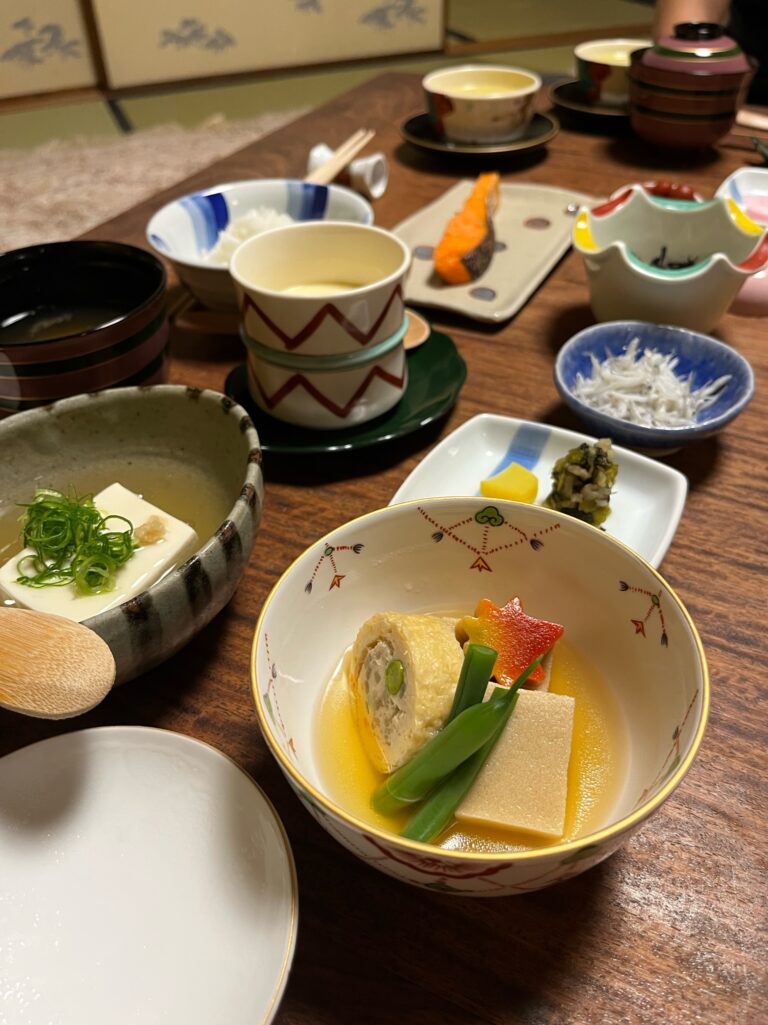
As soon as we got up, a typical Japanese breakfast was immediately waiting for us: the owner of the ryokan where we stayed prepared – and brought directly to our room – a very rich feast: fish (from salmon to baby shrimp), pickled vegetables, tofu, miso soup, rice, tempura, and fruit – we are not used to eating so much early in the morning!

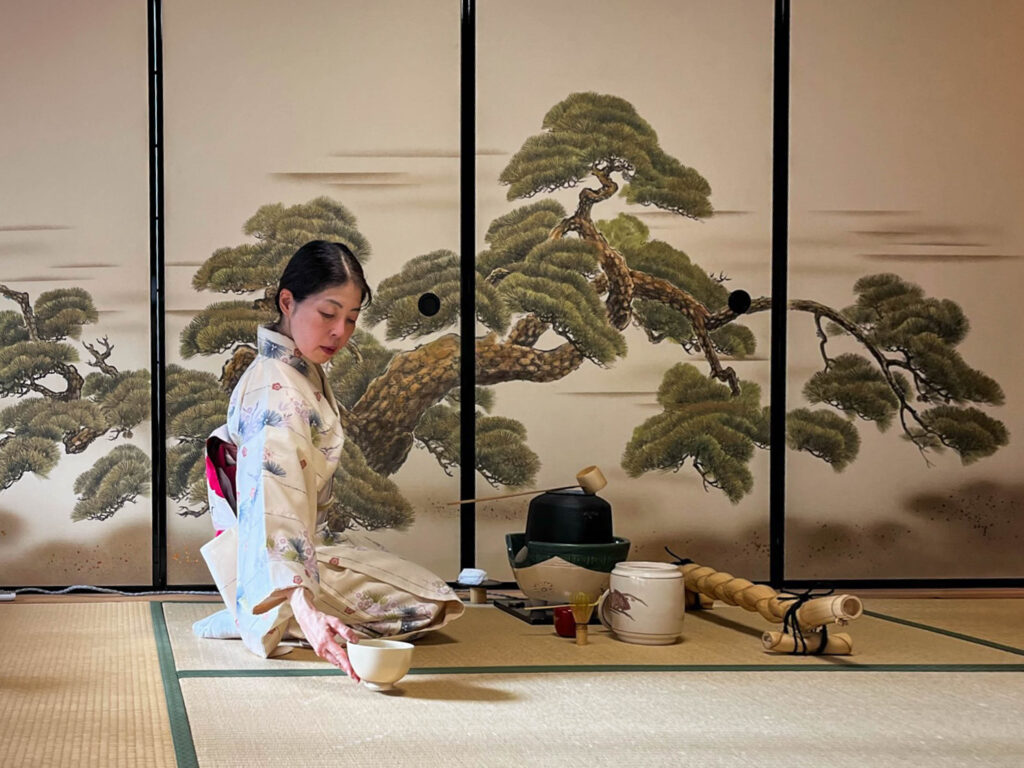
With our stomachs full, we head to a traditional house to participate in the tea ceremony experience – this time, dressing up in traditional clothes will be both of us!

Thanks to the instructions of the guide – who spoke English very well – we were able to brew our first real Matcha tea. In Japan, the preparation of Matcha, the distinctive green tea powder, is a ritual, almost a dance.

Second stop: Nishiki Market, where I bought various gifts to take to family and friends (bookmarks, fans, hair accessories) and a beautiful vintage silk kimono at this store.

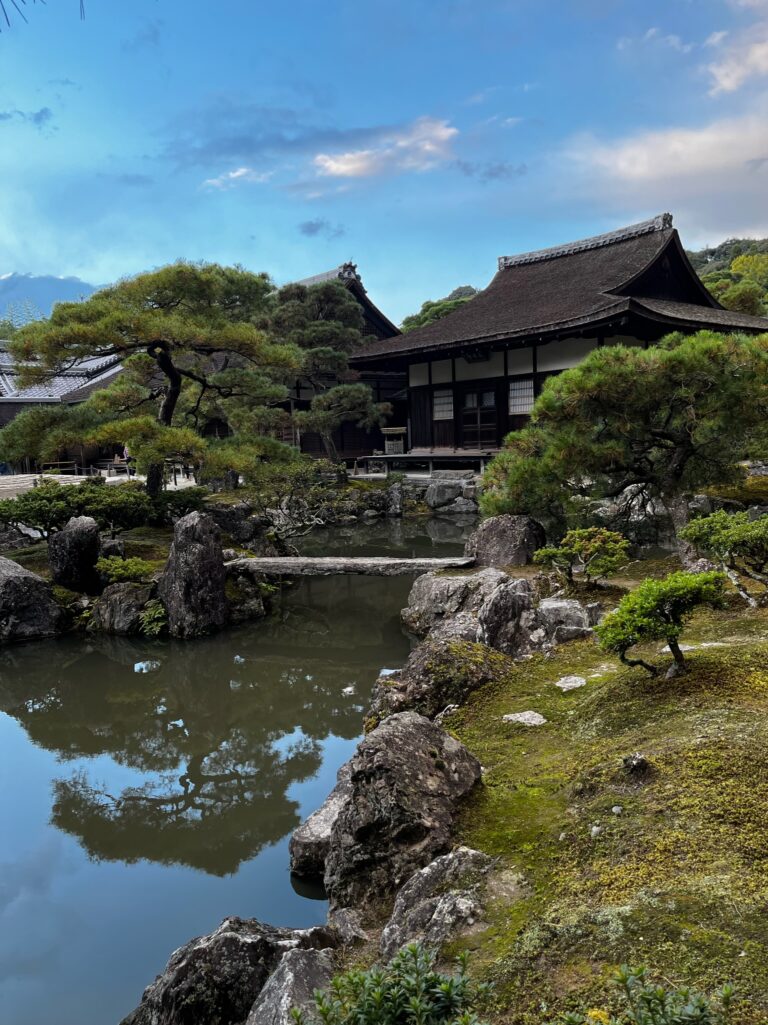
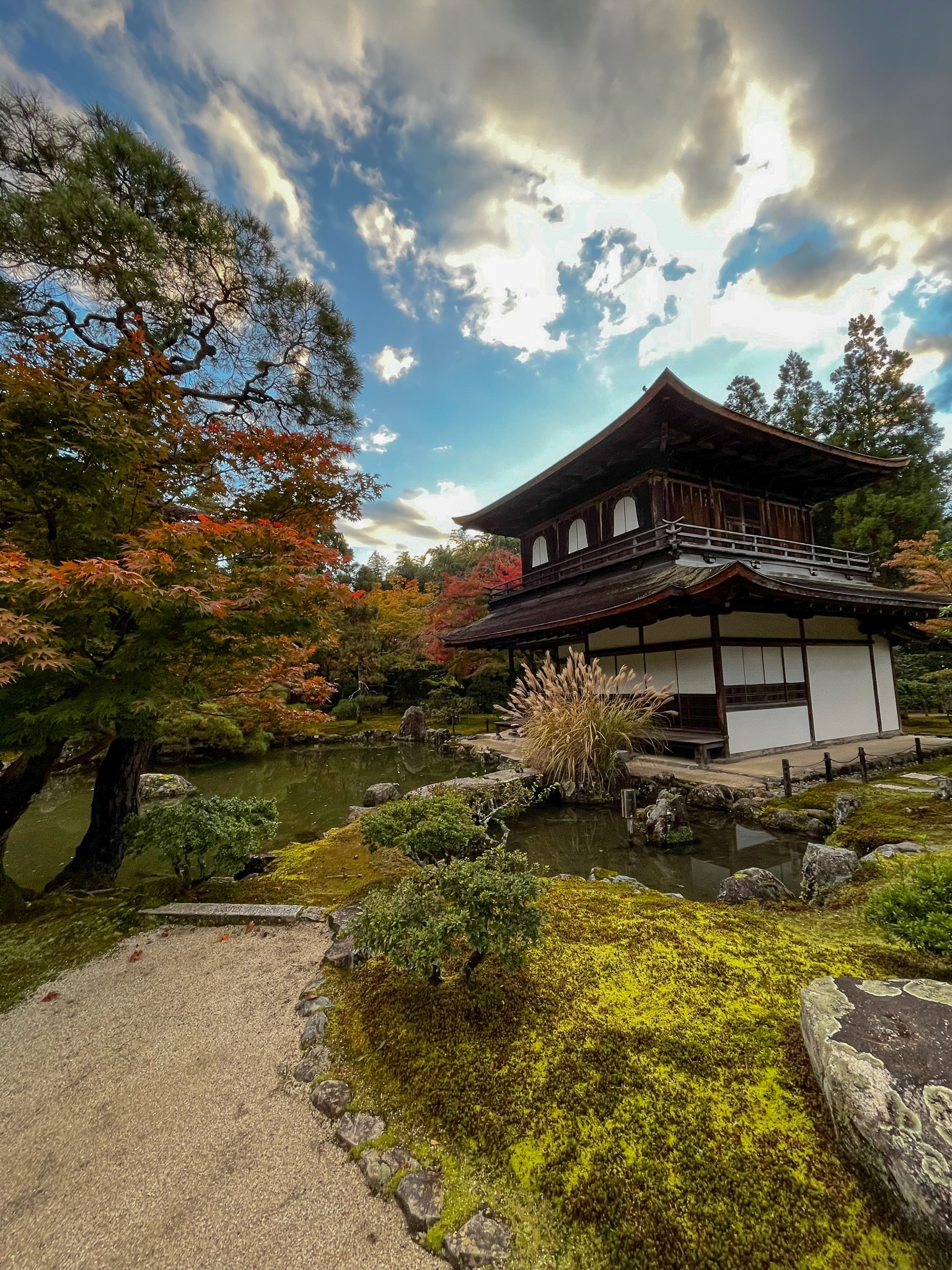
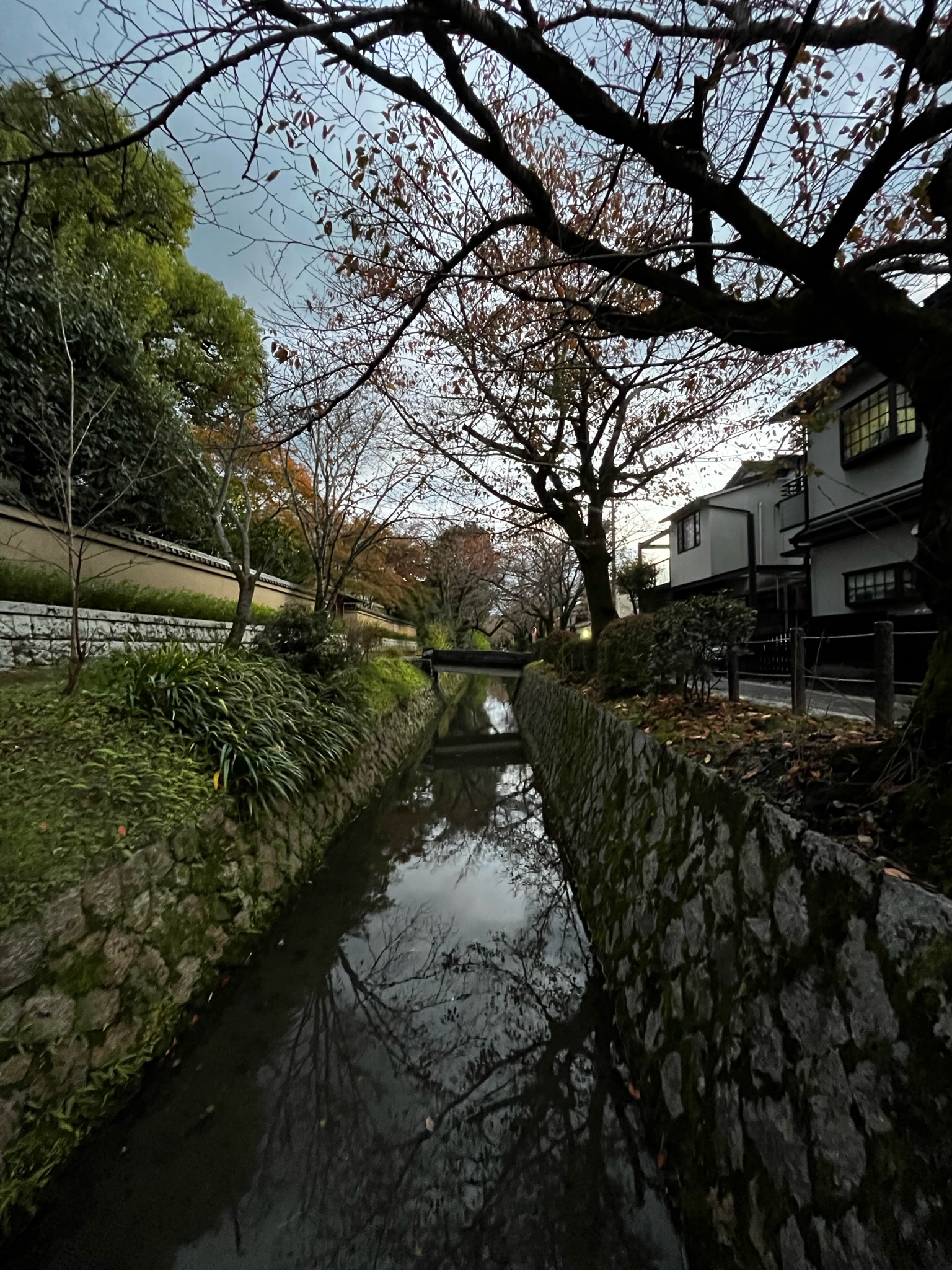
We take the bus to the Ginkakuji Temple, also known as the Silver Pavilion, for a visit to its beautiful garden, and return to downtown Kyoto by taking the relaxing Philosopher’s Path, right at sunset time.

The path is named after Kyoto University philosophy professor Nishida Kitaro, who used to walk this path, as a form of daily meditation.

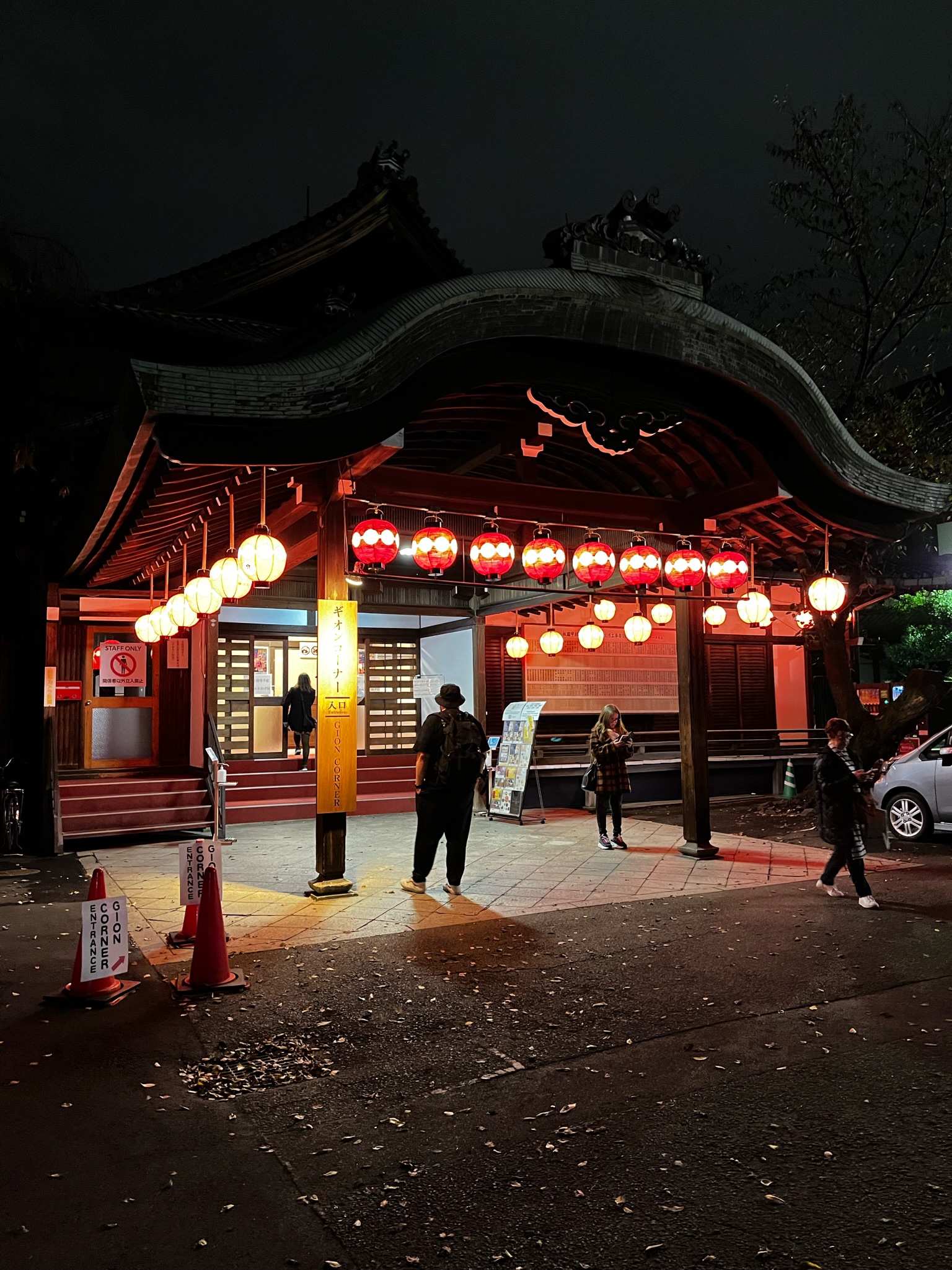
Our day ends with a performance at the Gion Corner Theater. Here, different Japanese art forms follow each other in 8 short moments. : Bunraku puppet theater, maiko Kyomai dance, Kyogen comedy, Bukagu dance, Noh theater, Ikebana flower decoration, Koto music, tea ceremony.

We dined at Kura Sushi, a Western-style chain. Since Kyoto is not a seaside city, sushi is not so obvious to find here… meat specialties are much more in vogue.

While you’re waiting your turn for sushi, we recommend having a drink at the bar across the street: the little Louie Louie café.

Tonight we sleep at Kyomachiya Ryokan Sakura Urushitei, which is simple but nice.

glossary

Matcha
It is a highly prized powdered green tea originating in China.
It is rich in beneficial properties, particularly antioxidants.

Maiko
Apprentice geiko (geisha).
The term geisha is generic and is used to describe both.

recommended activities

Tea ceremony

We booked the experience at Maikoya, a historic machiya (traditional house).
The cost for two people is ¥15,000 (€45 each).

day 9

the surroundings of kyoto

Fushimi Inari Taisha, Arashiyama Bamboo Forest
& Kiyomizu-Dera Temple.

We enjoyed our best breakfast ever at this very small bakery we found by chance, and ate take-out. So good and stocked, we decided to go back the next morning as well.

When we arrive at Kyoto Station, we take a JR Nara line train to Inari Station (5 minutes, about 6 trains run per hour).

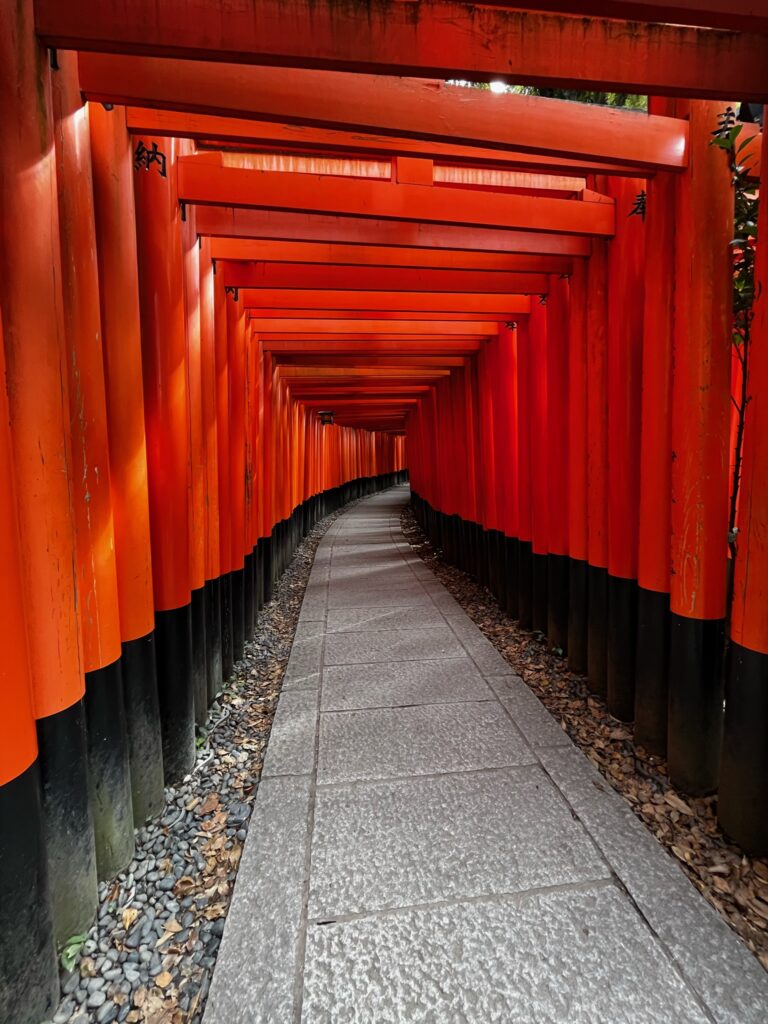
Not far from the station is the Fushimi Inari Taisha shrine, from which starts the pathway marked by endless red torii that runs along the access route to Mount Inari (walking to the top of the mountain takes about 2 hours).

the path is very crowded, and after a hundred torii we decide to follow a small path, which leads us to another semi-abandoned shrine.

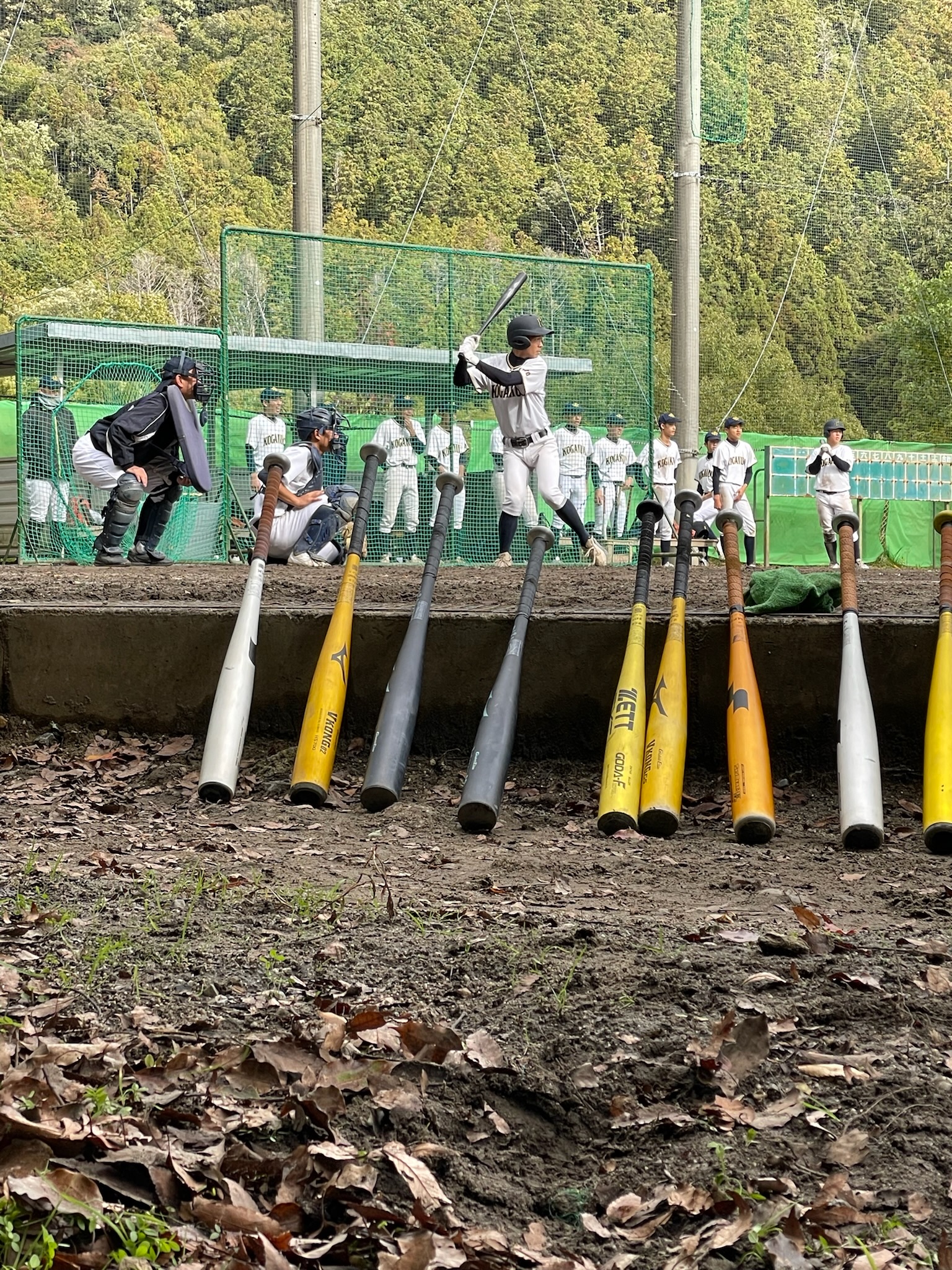
From here, we follow the excited voices of some boys who, not far away, are playing baseball. They belong to a school and, although outsiders are not allowed in the area, they allow us to watch them practice!

Baseball is one of the most popular sports in Japan and is slightly different from American baseball.

as we end this pleasant playful break, we return to Kyoto and from here continue by a JR Sagano line train to Saga-Arashiyama station (30 min.).

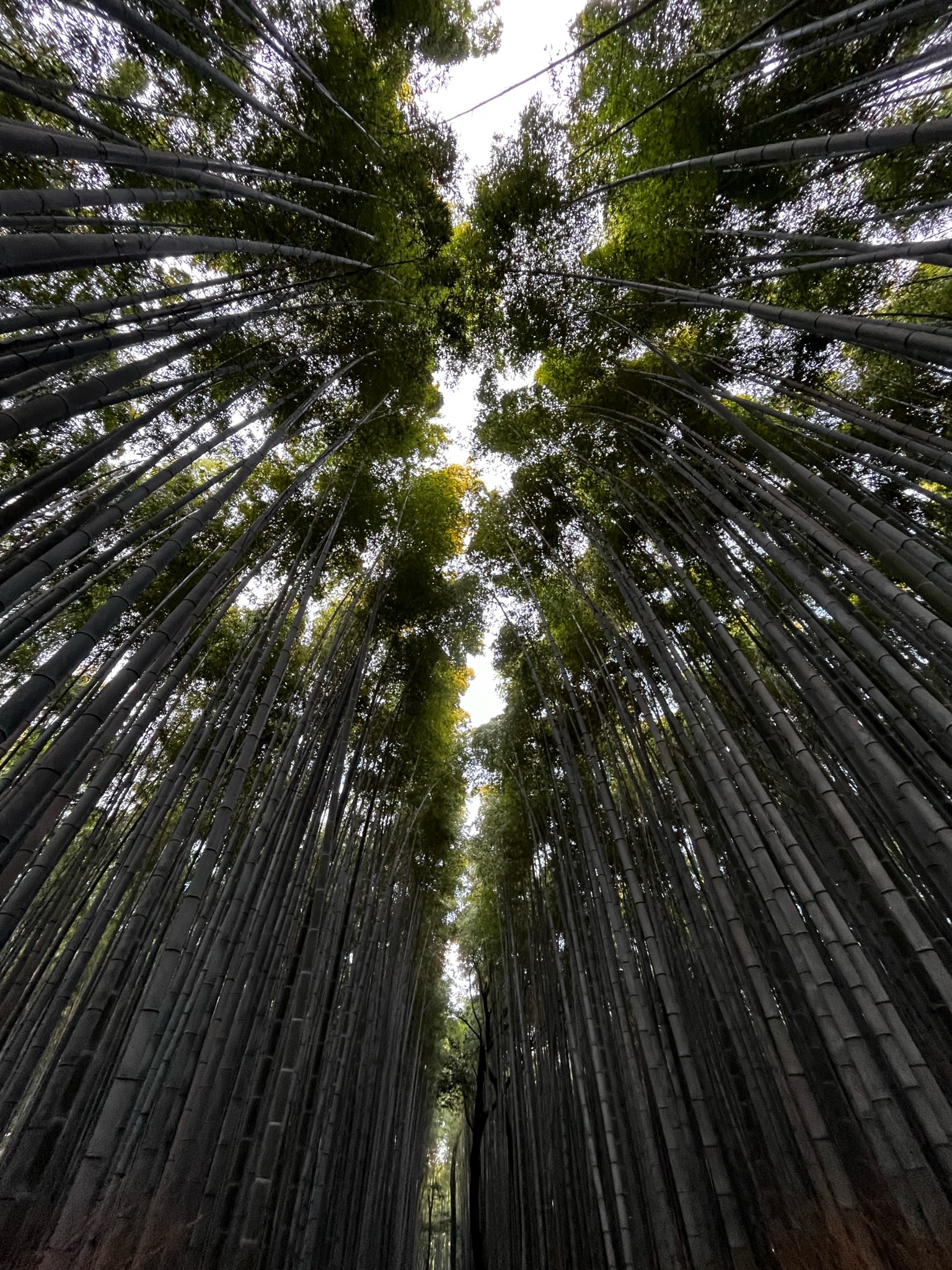
The famous bamboo forest is a fifteen-minute walk from the station. We wanted to have lunch at this restaurant, but unfortunately it was already fully booked (so we recommend making reservations in advance). We therefore fell back on a ramen restaurant, nothing special.

Download the map of Arashiyama!

Another activity for which reservations need to be made well in advance is the scenic and romantic Sagano Scenic Railway, which starts from Saga Torokko Station and ends its ride at Kameoka Station. We can’t catch it today; we will keep it on our list of things to do on our next trip!

If you skipped the day at Shibu Onsen (see day 4), you can observe Japanese macaques here at Iwatayama Monkey Park.

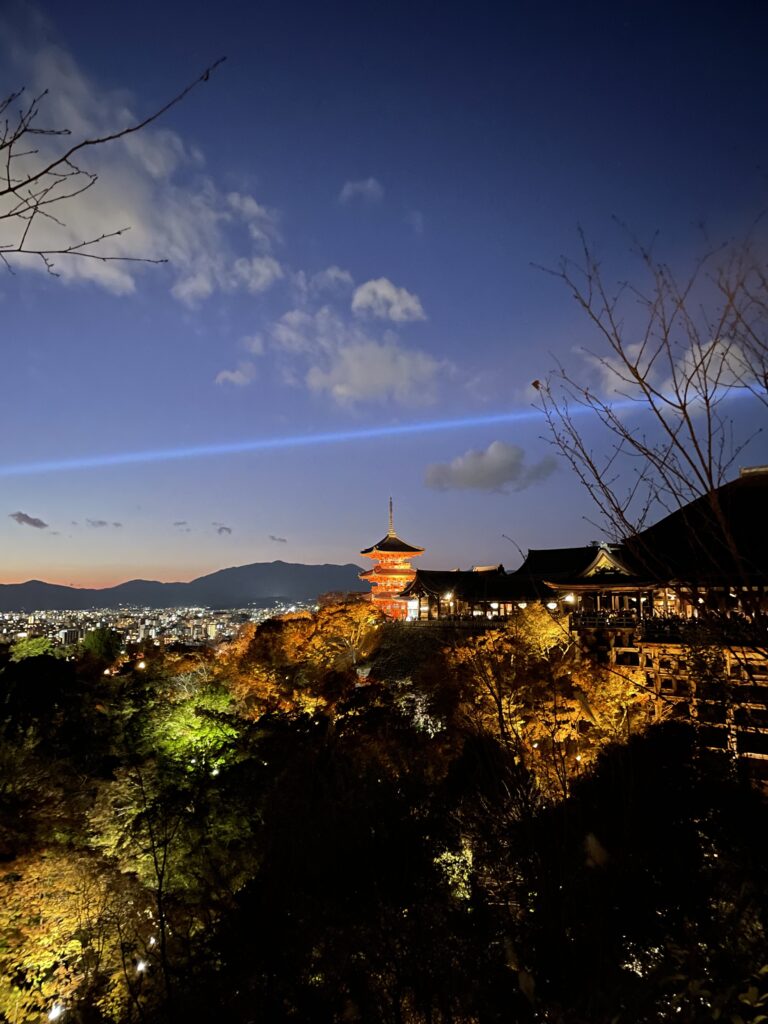
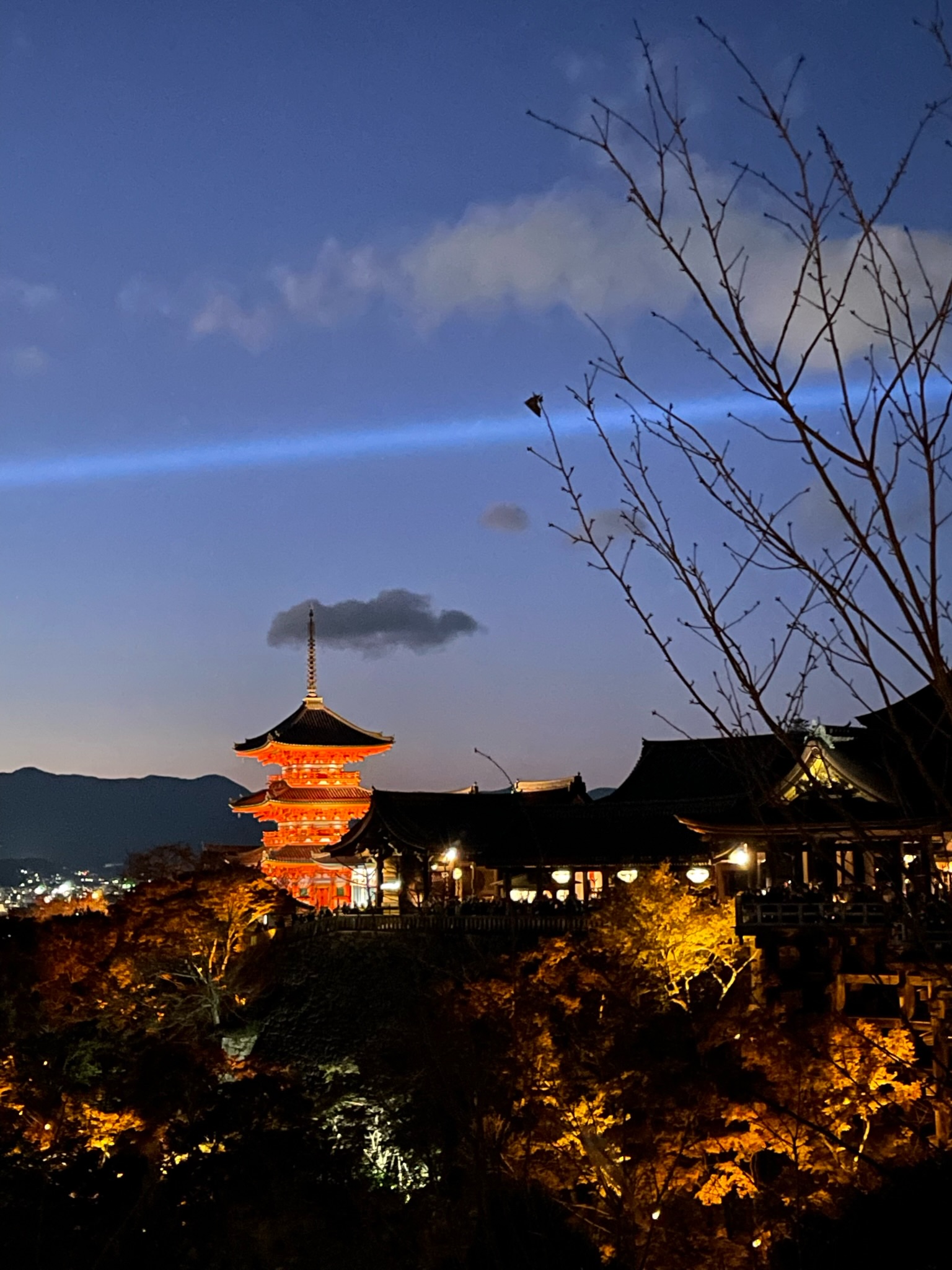
We return to Kyoto to enjoy the sunset at Kiyomizu-Dera Temple. ✴️

To reach the temple, go along the Otani Cemetery road: a mystical and gloomy but at the same time fascinating and scenic place.

On the way back we make a few stops:

After another 20 minutes of walking we are in queue, outside the ChaoChao Gyoza restaurant. While waiting, our hunger also increases, and as soon as we are seated, we order about 30 gyoza each.Tasty and delicate!

glossary

Torii
Red gateways to a sacred area.

Gyoza
Ravioli stuffed with meat or shrimp.

hours and costs

Sagano Scenic Train
The ride from Saga Torokko Station to Kameoka Station takes approximately 25 minutes each way. It is included in the JRPass.

Kyomizu Dera
Cost: ¥400
Find the opening hours in each period here.

Otany Cemetery
Closes at 5 p.m.