Days 1-3

discovering tokyo and kamakura

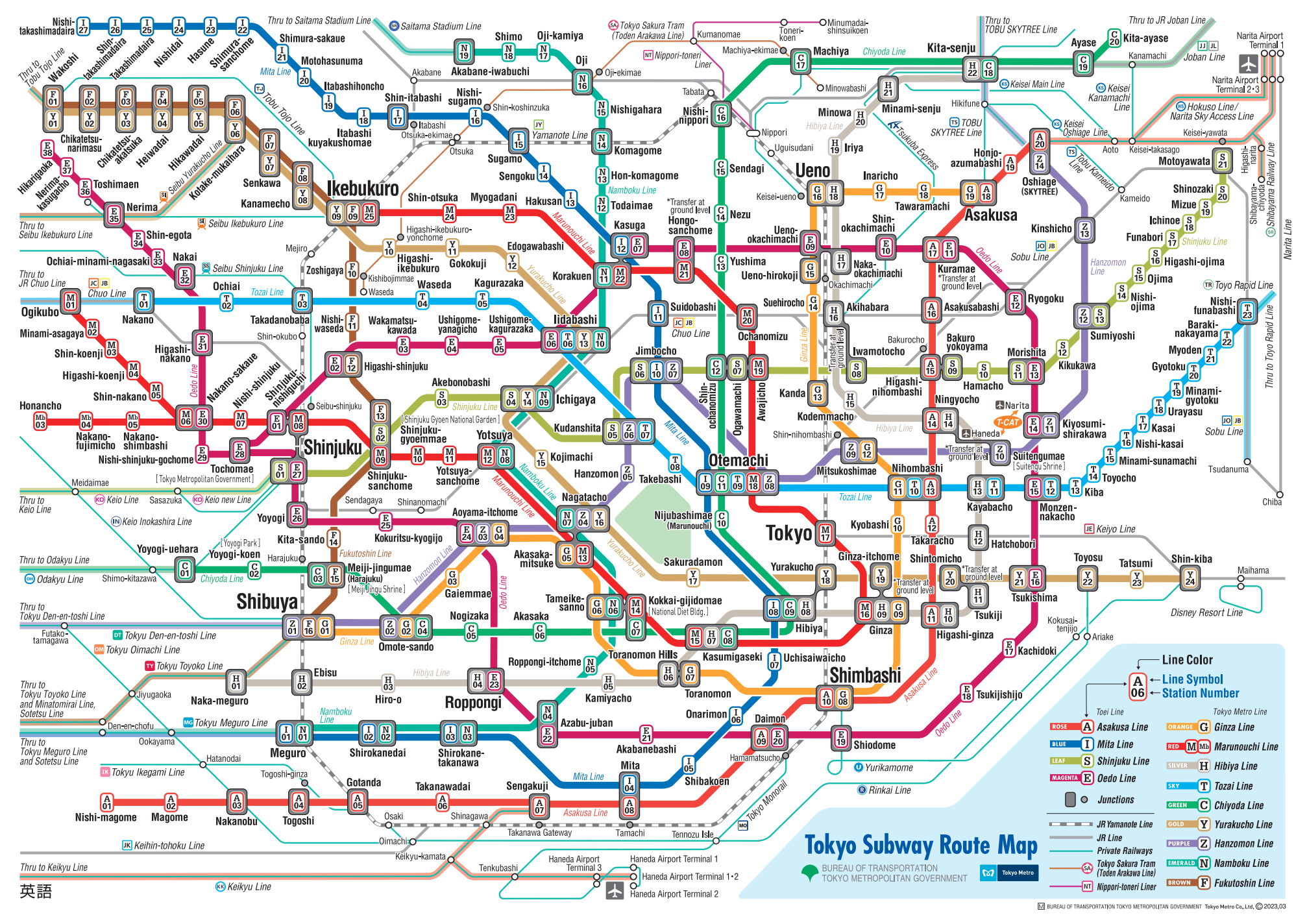
how to get around tokyo

Download the map here

Please note: the metro does not operate 24 hours a day, but only from 05:00 to 24:00.

Not included in the Japan Rail Pass, it looks complex but is well organised.

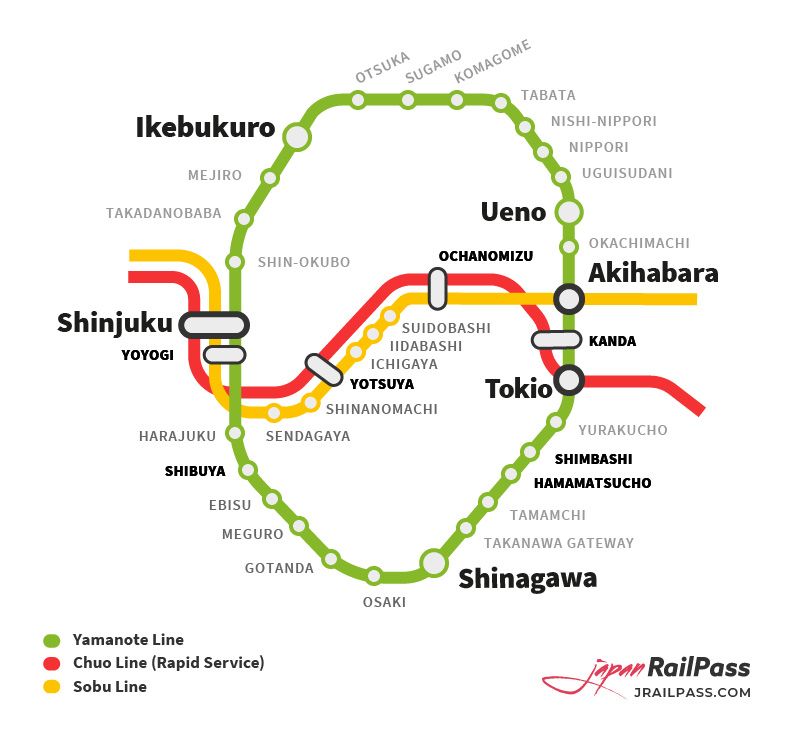
Download the map here

It takes you everywhere and, unlike the metro, is included in the Japan Rail Pass. This is why, except in rare cases, we have always preferred it for moving between different districts.

The main one, the green line (Yamanote line), loops around the city’s main districts.

Instead, the yellow (Sobu line) and red (Chou line) cut through the centre.

Active from approx. 04:30 to 00:30

legend

✴️ = best choice!

day 1

shinjuku

After an excellent flight with the Japanese airline Nippon Airways, which gives us a preview of the oriental atmosphere (how cute are the pilots and stewardesses who greet each other with a bow?), we land at Tokyo Haneda airport at 08:40.

At the airport, we are fingerprinted and have our passport stamped “temporary visitor”. We exchange the Japan Rail Pass voucher for the real pass and collect the Wi-Fi pocket, which will be indispensable for this trip.

Thanks to the Tokyo Monorail, which leaves right from the airport, we arrive at Hamamatsucho station in just 30 minutes. From here, thanks to the Yamanote Line, in another 26 minutes we have already arrived in the Shinjuku district, the base of our first days in the city.

Just opposite the station we relax for a few minutes at the Shinjuku Gioen National Garden, a green oasis that allows us to recharge our batteries after the journey.

We find a place for lunch at a sushi restaurant in downtown Shinjuku, with few seats and frequented only by locals, where we taste our first real nigiri!

The menu, unlike Italian sushi where it mainly consists of tuna, salmon and sea bass, offers many varieties of fish and some of these are differentiated by cut or level of fatness. The wasabi is added, in good quantities, directly by the chef between the rice and the fish (if you don’t want it, just mention it).

With our stomachs full we set off for our hotel: we chose The Knot Tokyo Shinjuku and would recommend it for its location, cleanliness and excellent western breakfast! It is also close to the Tokyo Metropolitan Government building, where on the top floor there is a free observatory to admire the city from above.

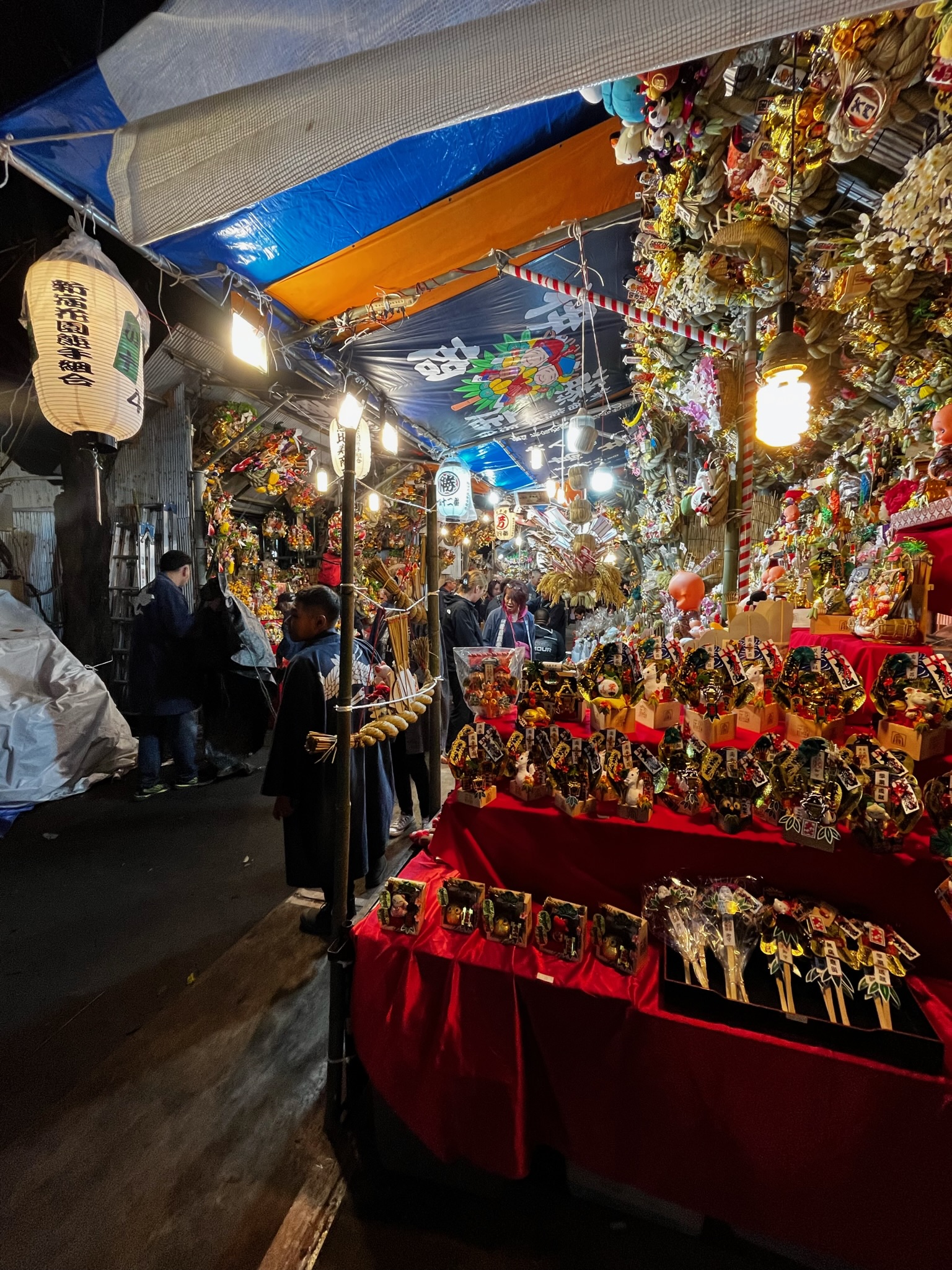
Out in search of a restaurant for dinner, we stumble upon the Tori no Ichi Festival, celebrated on 11 and 23 November. Stalls sell decorated lucky charm rakes for the occasion, the sale of which is accompanied by applause. We taste skewers, typical takoyaki octopus fritters, grilled soba and for dessert dorayaki.

We end the evening in the entertainment district with red-light clubs, Kabukichō, famous for being run by the Yakuza, the Japanese mafia. Within it is another sub-district called Golden Gai , famous for its narrow alleys where there are many small restaurants.

hours and costs

Tokyo Monorail: running from 05:12 to 00:07, included in the JRPass, there are 3 trains: The Haneda Express is the fastest.

Shinjuku Gioen National Garden: open from 09:00 to 16:00, Tuesday to Sunday, ¥500.

Tokyo Metropolitan Government: 09:30-22:00, free.

day 2

asakusa & akihabara

From the hotel we take the Yamanote Chou line to Kanda station (11 min).
From here we take the metro, Ginza line, to Asakusa station (11 min).

We walk along the famous Nakamise-Dori street, where we buy beautiful bookmarks, and arrive at the Sensō-ji temple.

Asakusa is the old quarter of Tokyo and, compared to the rest of the city, it really feels like being catapulted into another atmosphere. Outside temples and shrines, it is possible to buy an Omikuji: a card that contains a prediction about our fate.

How it works: after leaving an offering, shake the metal box containing numbered sticks, knocking one of them out. Look for the number corresponding to the number of the stick in the wooden drawer opposite. Inside the drawer is a leaflet with the prediction (in Japanese and English)!

Don’t forget to taste the Melon Pan, there is a stall specialising in the production of this typical sweet, which resembles a sugary bread, at the entrance to the market, near the temple! ✴️

As always, only one rule applies for lunch: find an intimate place frequented only by locals, and the small ramen restaurant we find at the end of the market is just what we wanted! ✴️

In the afternoon, we move to the Akihabara district. To get there from Asakusa, we again take the metro (Ginza line) to Suehirocho station (9 min). Akihabara is a very youthful, technological and modern district. If you want to have a paranormal experience, visit a Maid Café This is a very special place, where even straight-laced men, just after leaving work, take a photo with their hands clasped in a heart together with the waitresses, dressed as French governesses. We went to Home Café, the queue is long but while you are waiting you can walk around and come back at the appointed time.

If you are a fan of video games, we also recommend a visit to the vintage shop Super Potato.

We had dinner near the station, at a sushi belt restaurant that turned out to be one of the best value for money; it is called Uzushio – Sushi go round. ✴️

The last obligatory stop before returning to the hotel: the UDX underground car park, where the city’s most flamboyant cars gather around 9pm to 10pm. Be careful not to get caught, access is restricted to authorised drivers only!

day 3

Kamakura,
Shibuya &
Roppongi Hills

From Shinjuku Station we take the Yamanote Line to Shinagawa Station (21 min) and from Shinagawa a train on the Yokosuka Line to Kamakura (47 min).

The town of Kamakura, famous for the Kōtoku-in temple housing the statue of the great Buddha, is by the sea and all the main attractions are within walking distance. In addition to the famous statue, we visited the Hase-dera temple, from which there is a splendid view of the sea, and the Hachimangu shrine (only seen from the outside).

For lunch, after having walked all the way along Komachi-dori street, we spot a tavern, with the sign written only in Japanese: it is called Caraway and specialises in a dish consisting of rice and curried stew, which we discovered to be typical. Very intimate and charming place, hearty and homemade dish. ✴️

With our stomachs still full we took the train back to Tokyo’s Shinagawa station and from here we continued on the Yamanote line for a stop at the Shibuya intersection (15 min), one of the busiest in the world. Here is also the statue of the valiant dog Hachiko, which we snubbed as it was literally stormed by tourists (Hachiko forgive me).

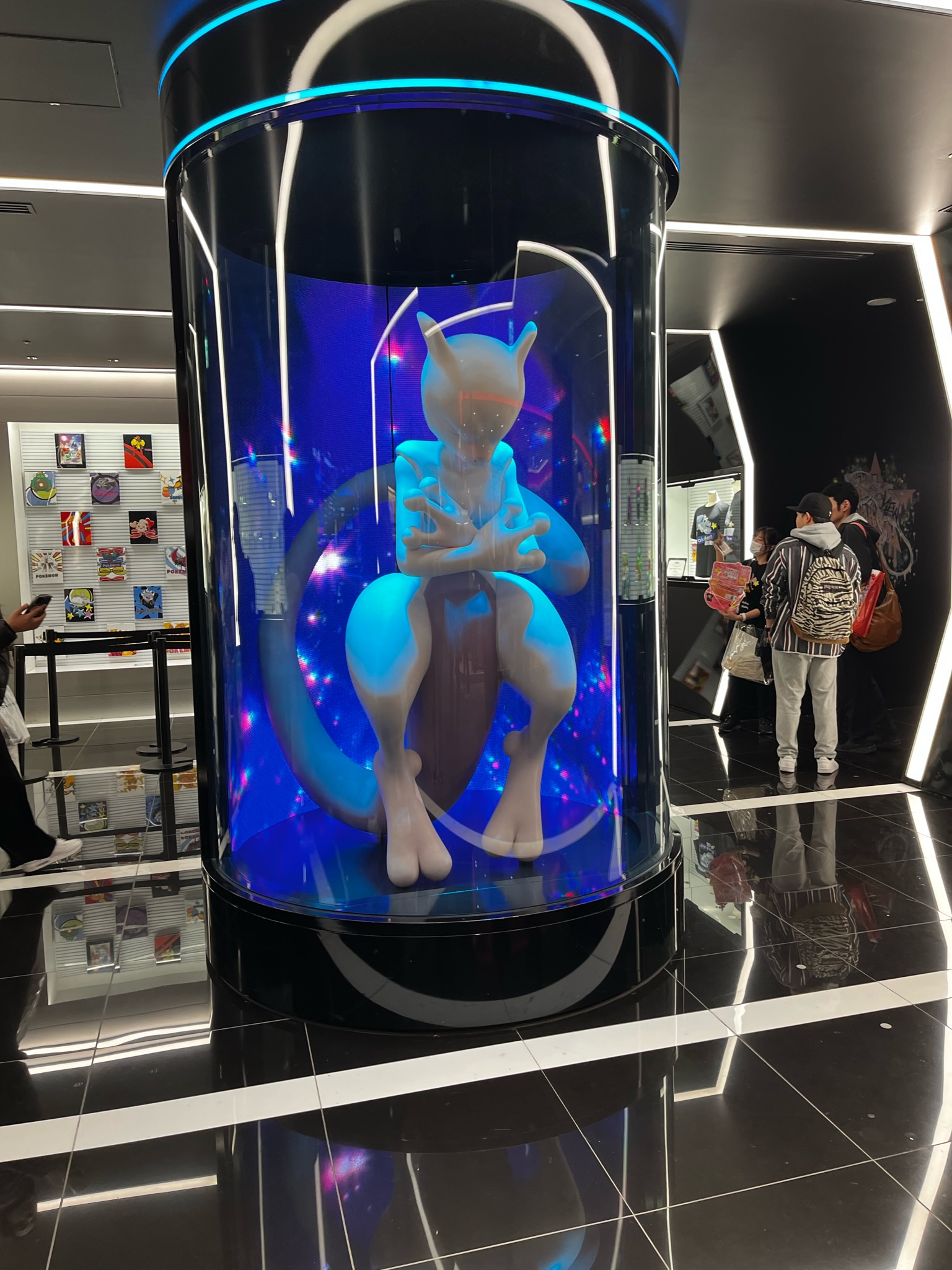
Actually, the real reason we have come this far is the Pokémon Centre, a dream of all children in the 1990s (10 min walk from the crossroads).

We take the Yamanote to Ebisu station (2 min) and from there the metro, Hibiya line, to Roppongi.

The affluent Roppongi district is home to Roppongi Hills: a complex of modern and eccentric buildings. Inside the tallest one – Mori Tower – is another viewpoint. ✴️

With enchanted eyes, we return to our base in Shinjuku with the Oedo underground line.

hours and costs

Mori Tower – viewpoint: 10:00-23:00, € 10

travel info

There are three types of Hokuriku shinkansen: Hakutaka, Asama and Kagayaki.

Kagayaki is the fastest but only has reservation seats! We recommend taking the other two, which take 1.30 hours anyway. Two to four pass every hour.

Before boarding a shinkansen, check if there are any carriages reserved for those who have booked: usually some seats are reserved and some are not.

Regarding:

  • Asama: free carriages are 1 to 5
  • Hakutaka: free carriages are 1 to 3