
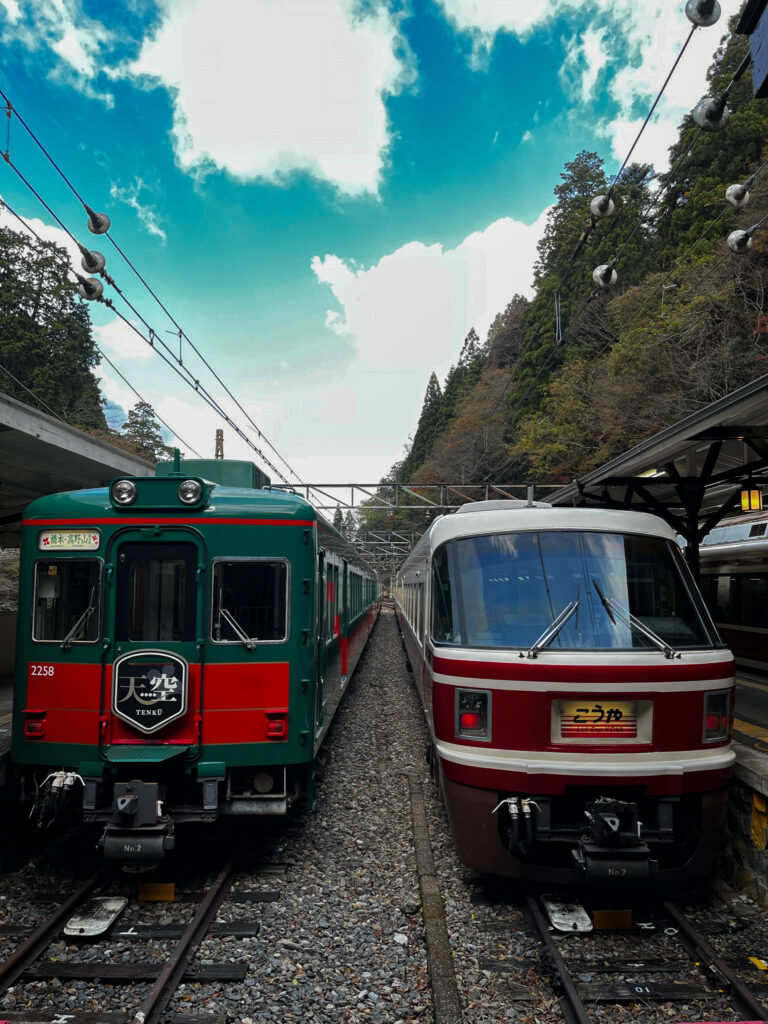
If we were to make a list of must-see experiences in Japan, in first place we would undoubtedly put a visit to the sacred Mount Koya.
It is an experience that leaves a deep mark, something to take with you and cherish forever.
Mount Koya – in Japanese, Koyasan – is located on a plateau surrounded by mountains and dense forests: a mystical place that represents one of the most important and ancient Buddhist centers in the country.
It houses more than fifty temples that offer visitors the opportunity to stay overnight and participate in some spiritual practices together with monks, such as meditation and copying sutras, the sacred texts of Buddhism.
To get there, from Nankai Namba Station (only 7 minutes from the hotel) we take a train on the Nankai Limited Express line, also known as the Koya Line, to Gokurakubashi Station.
From there, we board a funicular and continue by bus (line 22) to the Karukayado-mae stop.
Finally, we walk a short distance to the Eko-in temple, where we will stay overnight.
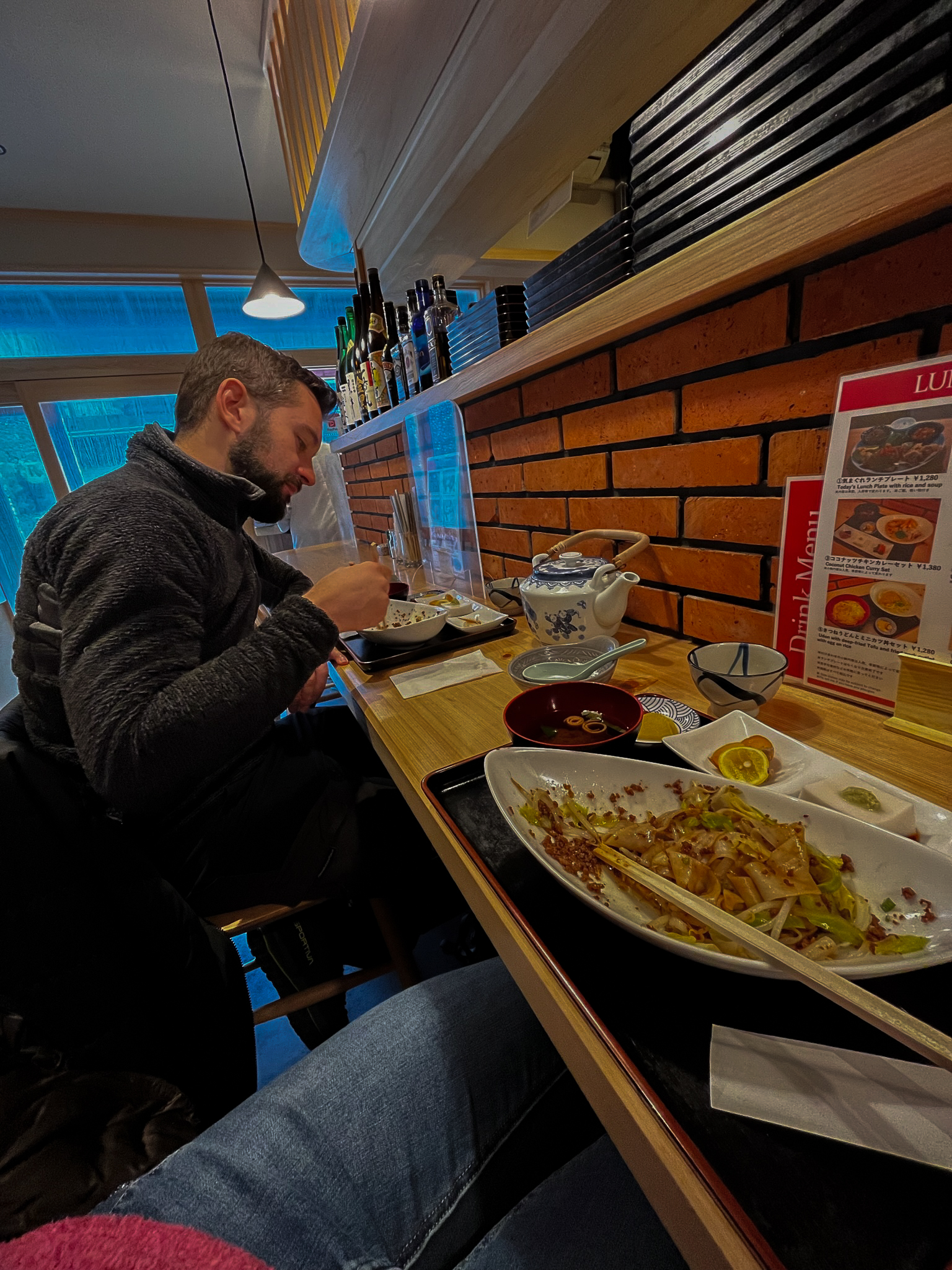
For lunch, just across the street from the temple, we discover a small family-run restaurant. Serving us is an elderly gentleman reminiscent of the main character in Up… but in a thinner version. He greets us with a kind smile and prepares the house specialty: noodles topped with a really delicious miso sauce.
In the afternoon we participate in one of the activities offered free of charge by the temple to its guests: Ajikan meditation. A monk, in a slow, relaxed voice, gives us a few but valuable instructions on how to practice it. Then he turns off the lights and, enveloped in the darkness of the room, we begin to feel the first chills down our spines.
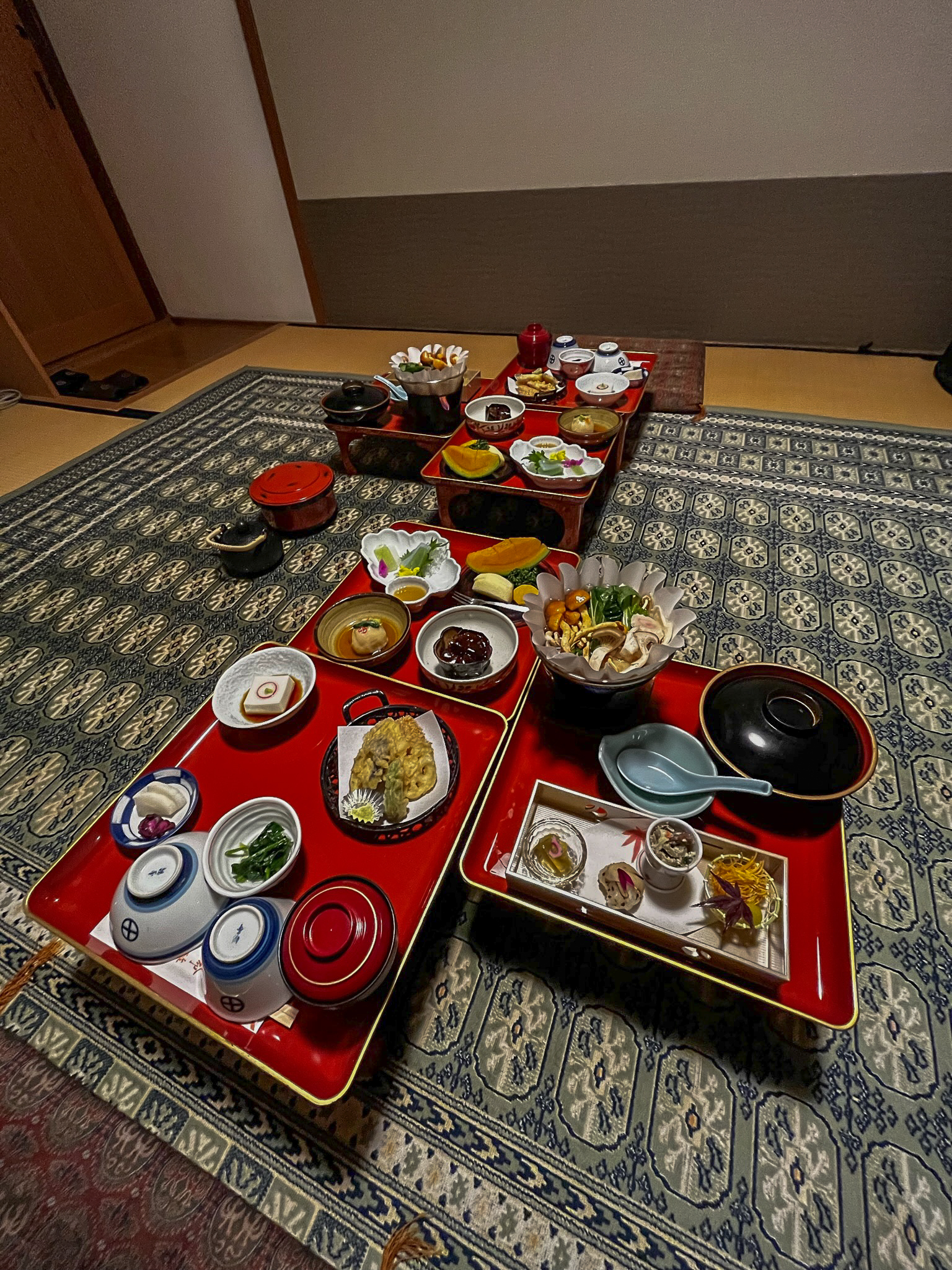
Dinner is served at 5:30 p.m., directly in the room. It consists of a multitude of small dishes, similar to the traditional cuisine found in ryokan, with the special feature that here all courses are vegan.
A curiosity: the monks follow an entirely vegan diet and fast at lunch, thus consuming only one meal a day.
The evening continues with a truly evocative activity: a guided tour of Okunoin Cemetery, the largest in Japan. Leading us is a monk from the temple, who speaks English and along the way imparts many small spiritual teachings with simplicity and depth.
Like the moon, we also change shape every day. But we must remember to always remain full and bright, like her.
The lotus flower teaches us that even immersed in mud we can blossom, remaining intact in our beauty and purity.
Before returning to the room, we stop by the front desk to pick up a sutra to copy. A way to get closer to the language and spirituality of the place.
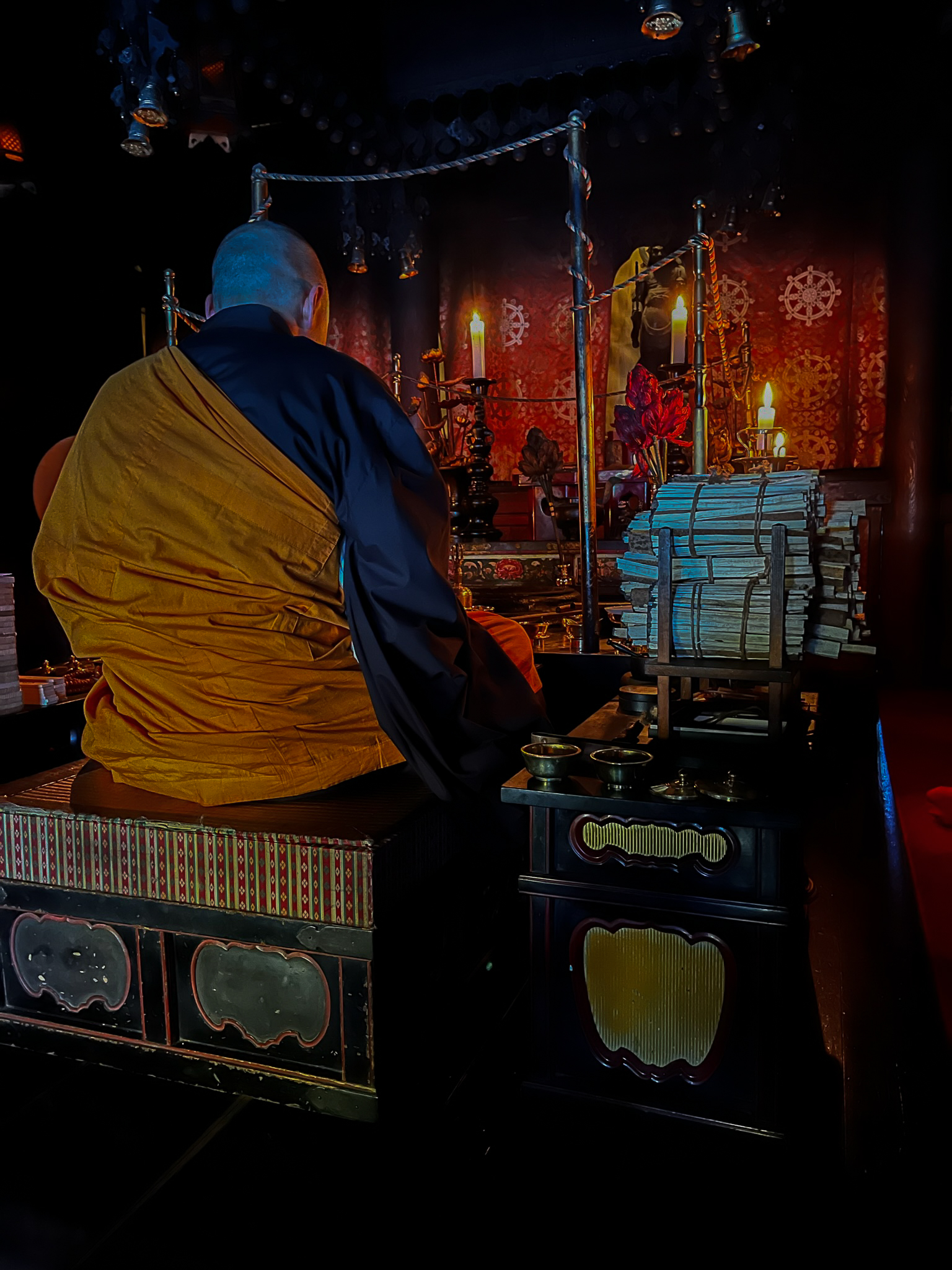
The next morning we wake up early: at 7:00 a.m. it is possible to participate in a Buddhist ritual, accompanied by the ringing of bells, scent of incense and the deep chanting of monks.
Afterwards, we move to another small temple to witness the fire ritual, called Goma.
One monk lights a brazier and throws in some pieces of wood on which wishes are written, while another recites a sutra uninterruptedly, beating out the rhythm with a drum.
Breakfast, served in the room at 8:00 a.m., is similar to dinner the night before: lots of small dishes, all strictly vegan.
It is then time to walk toward the station, ready to embark on the journey back to Tokyo.
If you come in the winter months dress well!
There is no heating in the temple, and the room is heated only by a small gas stove.
People sleep on the floor, in futons, which are laid out only after dinner.
The bathroom is shared and has a sink. Showering, however, is done in the onsen – the public baths located on the ground floor – where men and women have separate areas. In the men’s section, it may happen to share bath time with monks as well.
They open from 06:00 to 09:00 and 16:00 to 22:00.
Miso
In Japan, miso is used to flavor almost every dish.
It is a paste made by fermenting two main ingredients: soybeans, a legume, and rice, a cereal.
You will also find that most traditional Japanese dishes are made up of these very two ingredients, transformed in a thousand ways. This is one reason why Japanese cuisine is light and does not easily lead to weight gain.
Nankai Limited Express
All seats are by reservation at the following link.
It is not included in the Japan Rail Pass.
The cost is €24 A/R.
Funicular and bus
€ 4.00 + € 2.00
Okunoin cemetery visit
The cost of this activity is €32.00. It is booked online at the temple website.
Privacy Settings
This website uses cookies to improve your experience while you navigate through the website.
View the Cookie Policy View the Personal Data Policy
Google Fonts è un servizio per visualizzare gli stili dei caratteri di scrittura gestito da Google Ireland Limited e serve ad integrare tali contenuti all’interno delle proprie pagine.
Luogo del trattamento: Irlanda - Privacy Policy

