✴️ = best choice!
What we are about to describe is a truly unmissable experience that will immerse you in the rural and natural atmosphere of a small mountain village, not far from the city of Nagano.
Backpacking from Shinjuku station, we take the Yamanote (Chou line) to Tokyo station (15 minutes).
Small parenthesis regarding backpacks: for the occasion, since we wanted to have a ‘Pechino Express-style backpacking‘ adventure, we bought these 50 + 20 litre Osprey travel backpacks.
Once we arrive at our destination, we leave the 50-litre backpack at the hotel and walk around with the small one.
We then take the Hokuriku shinkansen to Nagano station.
From Nagano we take the Nagano Dentetsu line train to Yudanaka station.
Arriving at the station, we walk (20/30 minutes – alternatively there is a bus) to the small village of Shibu Onsen, where the Sakaeya ryokan is located, which turned out to be the most beautiful stay of the entire holiday. ✴️
We put our rucksacks down and get an explanation from the owners as to where to take the bus: our destination today is the Jigokudani snow monkey park. ✴️
From the bus station we set off again, first along a paved road (at the end of which is the only restaurant in the place, where we eat ramen) and then along a path through the forest.
We recommend wearing hiking boots as the thermal water creates some mud along the trail.
Just as we are climbing up we realise that it has started snowing. It is the first snow of the season and it makes it all the more magical.
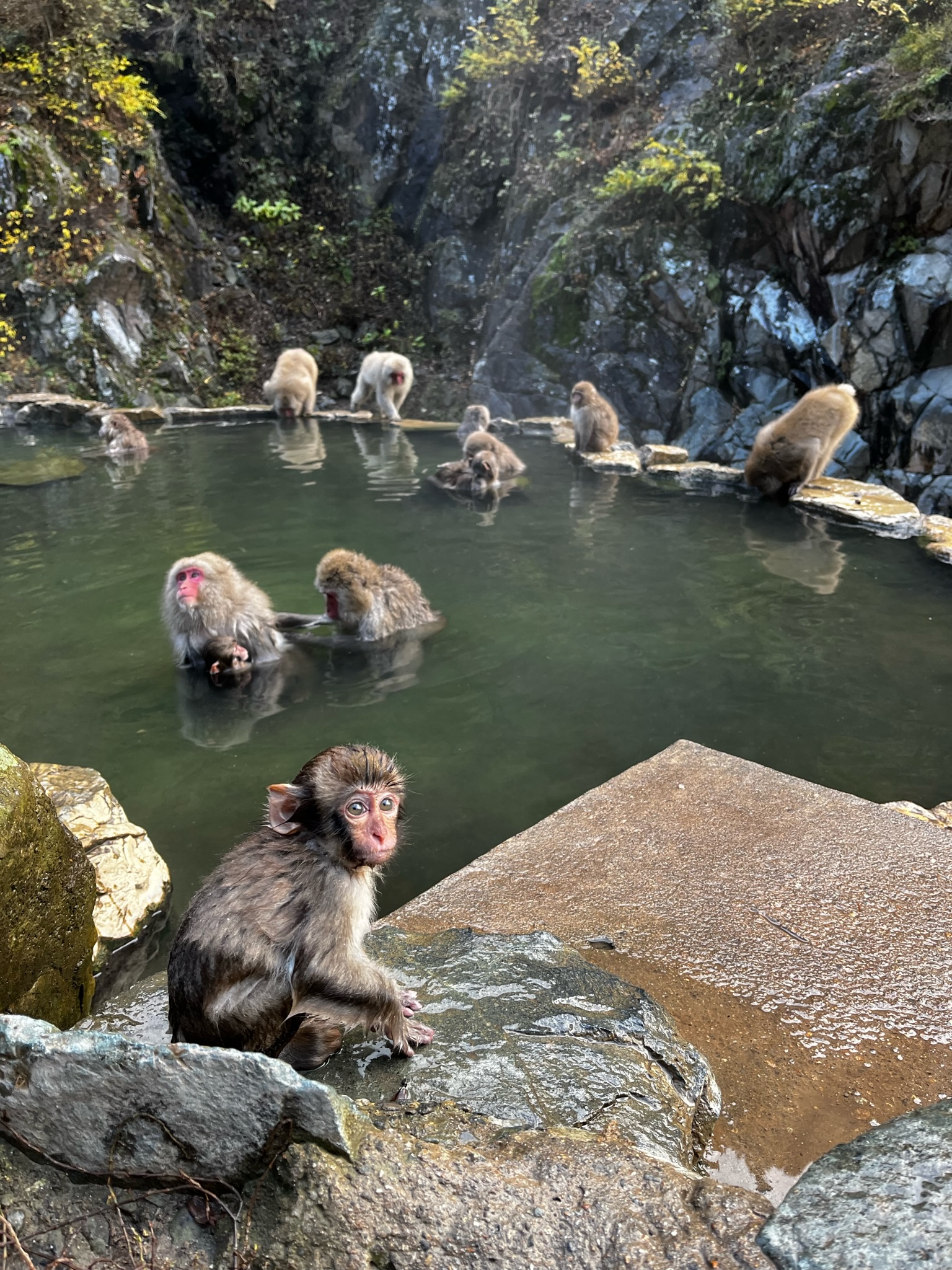
Welcoming us on arrival are the friendly Japanese macaques, who freely descend from the adjacent forest during daylight hours to bathe in their private onsen.
The monkeys live here in freedom, there are no fences but they come here for the pleasure of a hot bath and a meal kindly offered by the park managers. You can stay as long as you like, being able to observe closely, for a real “face-to-face” contact, these cute animals that you are, however, not allowed to touch.
I recommend you preview them in the beautiful National Geographic documentary Footprints in the Snow, viewable on Disney+.
Back at the hotel, we relax on the tatami, accompanied by the notes of composer Joe Hisaishi, which resonate like a music box from the playlist chosen for our room.
For dinner we decide to try the ryokan’s Kaiseki cuisine. We are seated in a small room to ourselves where a little at a time they let us taste a lot of dishes. If you want, you can wear the yukata they give you upon arrival at the ryokan.


Ryokan
Japanese-style hotel
Onsen
These are the Japanese thermal baths. They can be outdoor or indoor; public or private.
In the village of Shibu Onsen, for example, there are 9 public baths.
If you stay in a local facility, they leave you the keys to access them. Men and women have separate bathrooms, and in the bath you enter completely naked after rinsing off with a shower.
In our ryokan there was also a private bathroom, accessible only to guests.
here is the behavior guide
Tatami
Typical Japanese flooring made of woven straw panels. This is why you enter the rooms with special slippers: it’s all ‘put on slippers-take off slippers’: even to enter the bathroom you have to wear a pair!
Joe Hisaishi
Famous Japanese composer known for creating the soundtracks for Hayao Miyazaki’s films.
Cucina Kaiseki
Traditional meal consisting of many small courses, which are also enjoyed with the eyes because of their artful arrangement.
Yukata
Typical cotton clothing.
Also use it when moving between onsen.
There are 3 types of ‘Hokuriku’ shinkansen: Hakutaka, Asama and Kagayaki.
Kagayaki is the fastest but has only reservation seats. We recommend taking the other two, which still take 1.30 hours.
Before boarding a shinkansen, check if there are any carriages reserved for those who have booked: usually some seats are reserved and some are not.
Regarding:
Find the map, with the various stops here.
The Nagano Dentetsu line is not served by the Japan Rail Pass.
You can buy a ticket at the station for €8.50.
They run 1-2 every hour. Schedules can be seen on the Navitime website.
Travel time: 45 minutes.
Jigokudani Snow Monkey Park:
Admission to the park costs 500 yen.
It is open from 8:30 a.m. to 5 p.m;
November through March from 9:00 a.m. to 4:00 p.m.




We return, this time by bus, to Yudanaka Station. We take the Nagano Dentetsu line train again (which we recall is not included in the Japan Rail Pass) and continue by the Hokuriku shinkansen to Kanazawa.
Kanazawa is a historic and picturesque town that we enjoyed very much. You can get around it comfortably on foot, by bicycle or by bus.
The daily ticket for the bus, which makes a circular tour of the city,
costs €3.50.
The bike can be rented at any of the points marked ⭐ on the city’s tourist map: download it here.
We walked around it because it was raining.
This town is famous, like Kyoto, for its geisha districts.
There are two of them:
Just across the street from Shima House we found this bar specializing in sake ✴️, where we tasted a selection of their own production. The original sake is really very different from what is offered in Italy in all-you-can-eat sushi.
Much more like a wine, it can be sweet and fruity or drier.
If you would like more information regarding these districts, and the geisha shows still held there today, check out this link on the Visitkanazawa website.
In addition to geisha districts, there is also a samurai district.
We entered the old Nomura samurai house, now a museum.
If you want more information about the samurai quarter, called Nagamaki, click here.
Also definitely worth visiting is Kanazawa Castle and Myoryuji Temple, also known as Ninja Temple, where two rooms with secret trapdoors can be seen.
In Kanazawa, my love for Japanese old men was born: we met one on the street who gave us a tour of an old house under renovation and gave us a little bag he made from newspaper sheets and paper straws.
For lunch, we stopped at Omicho Market, where we had sushi.
At dinner, we walked around a few streets until we came across this cool place ✴️ , specializing in yakitori skewers of grilled meat, including offal. After a few minutes of waiting, we were seated at the counter, where we chose the types of meat and for each one they recommended the accompanying sauce.
A place frequented only by Japanese who, finally, after a day’s work, brought out their more party side that they keep well hidden during the day.
At the modern Tokyu Stay Kanazawa.
The room had every convenience, including a private washer/dryer that we used!
Shima House-Old Ochaya: Admission costs 500 yen and is open from 09:30 to 17:00; 17:30 from March to November.
Old Nomura Samurai House: 500 yen, open 8:30 a.m.-5:30 p.m., in October and March closes at 4:30 p.m.
Wake up early for a visit to Kenrokuen Garden. ✴️
The park is beautiful, 11.4 hectares wide, and is a true demonstration of Japanese botanical intellect: each tree branch is supported by an intricate system of cordage so that it grows as harmoniously as possible.
We then reach Kanazawa Station. Here, a Nohi Bus line bus takes us in just over an hour to the ancient rural village of Shirakawa-go.
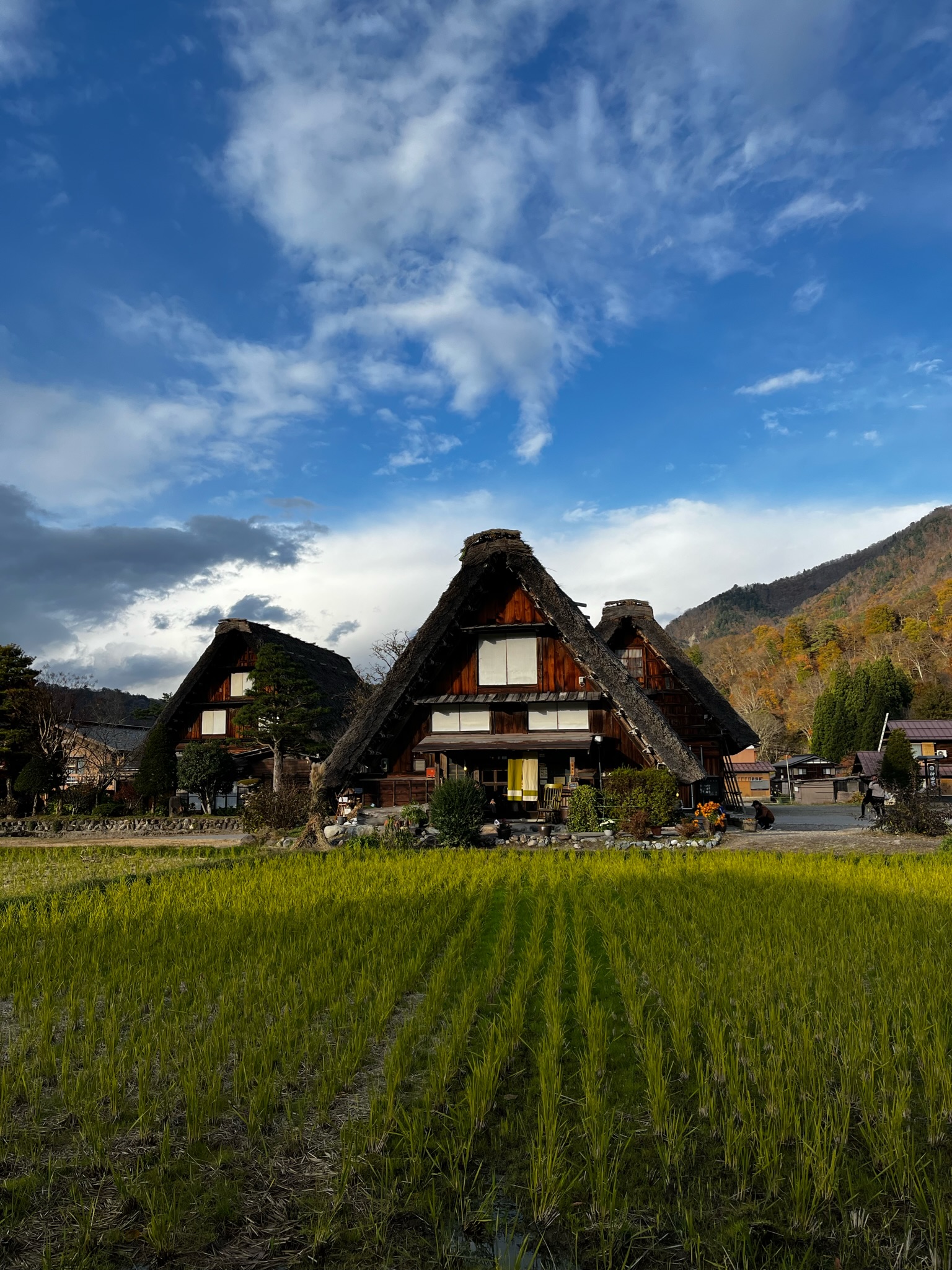
The feature of the village, recognized as a UNESCO World Heritage Site, are its traditional thatched-roof dwellings.
Some have been used as museums and can be visited today, in the area called Gassho-zukuri Minka-en.
The scenery is relaxing, and on the bus ride you can see typical villages, far removed from modern cities.
For lunch we stopped at one of the typical houses, where we had rice dumplings in broth and cold soba. The real standout, however, are the fried meatballs they serve in the little shacks…delicious!
Back in Kanazawa we had an Okonomiyaki (a mix of omelet and pancake, with everything in it) dinner at the Chibo restaurant, located right outside the station: it is a good chain, found in several Japanese cities. There is a huge griddle at the table on which the ‘omelet’ cooks, which you can season with whatever sauces you like. We had seconds with soba noodles, also cooked on the griddle.
We also discovered Highball: a drink composed of whiskey + soda, which is very popular in Japan.


Kenrokuen Garden: open 7 a.m.-6 p.m., cost 320 yen.
Nohi Bus: not included in the JRP. Cost €40.00 each way round trip.
It can be booked at this link.
Gassho-zukuri Minka-en: the entrance fee is 600 Yen.



Privacy Settings
This website uses cookies to improve your experience while you navigate through the website.
View the Cookie Policy View the Personal Data Policy
Google Fonts è un servizio per visualizzare gli stili dei caratteri di scrittura gestito da Google Ireland Limited e serve ad integrare tali contenuti all’interno delle proprie pagine.
Luogo del trattamento: Irlanda - Privacy Policy