✴️ = best choice!
Numerous villages sprang up along this road, serving as rest stops for travellers, merchants and samurai.
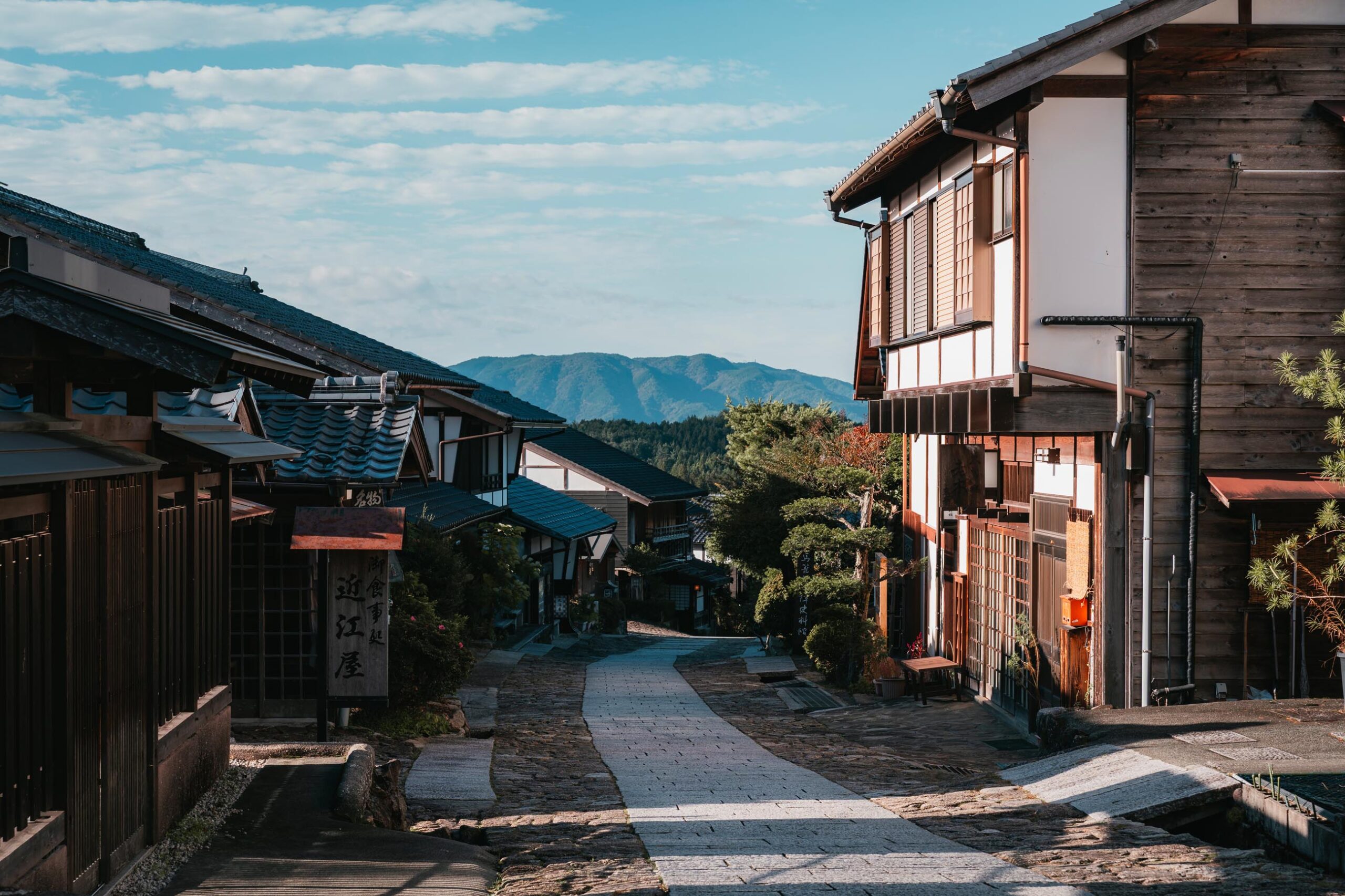
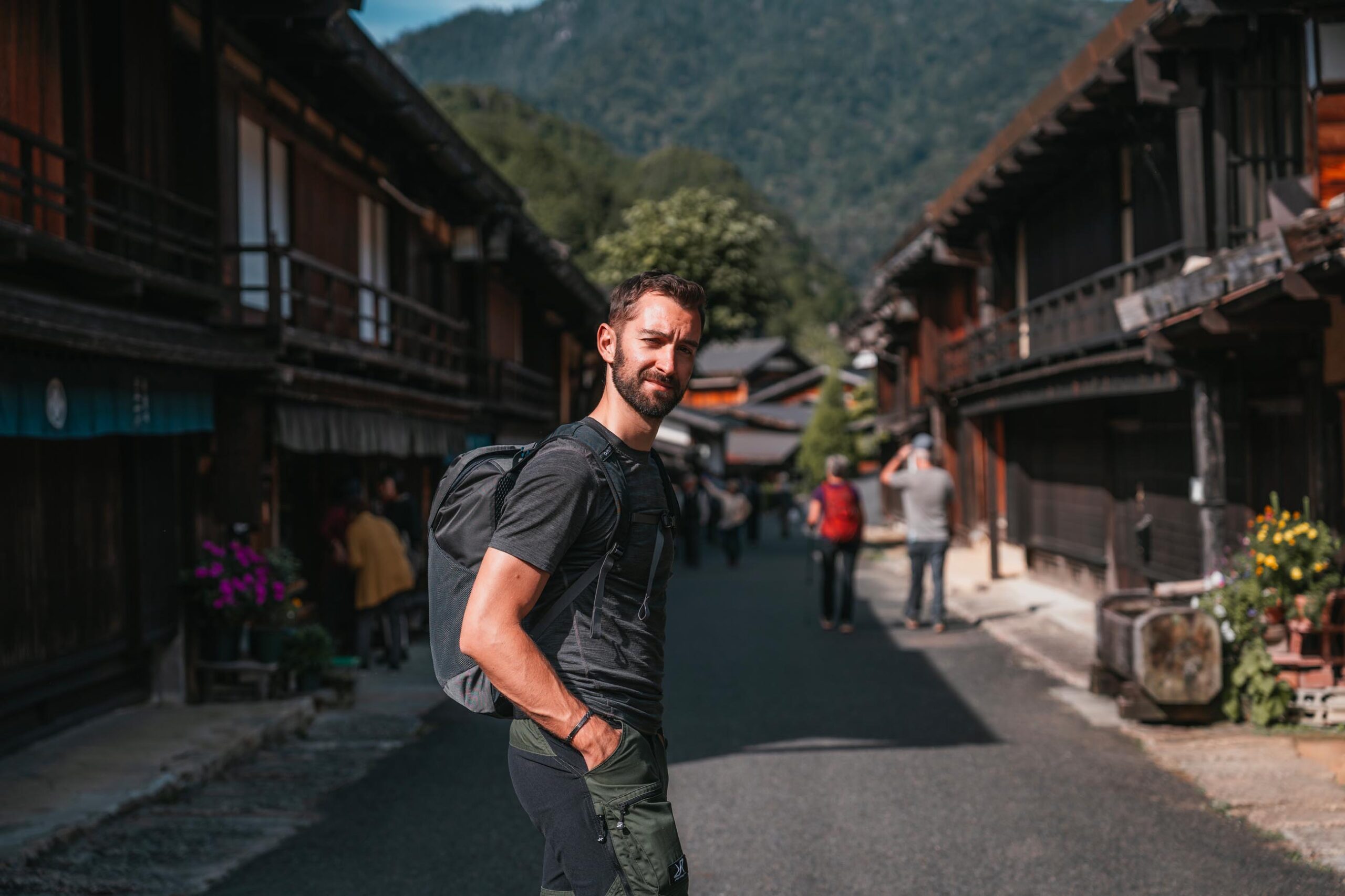
Among these, the two best preserved are Magome and Tsumago, which still retain the atmosphere of the Edo period.
You can visit them by walking along the stretch of road/path that connects them, now transformed into one of the most popular destinations for those seeking a more authentic Japan, far from the big cities and mass tourism.
The alarm clock rings at dawn. We have breakfast at the hotel and in just twenty minutes by car we are already in Magome.
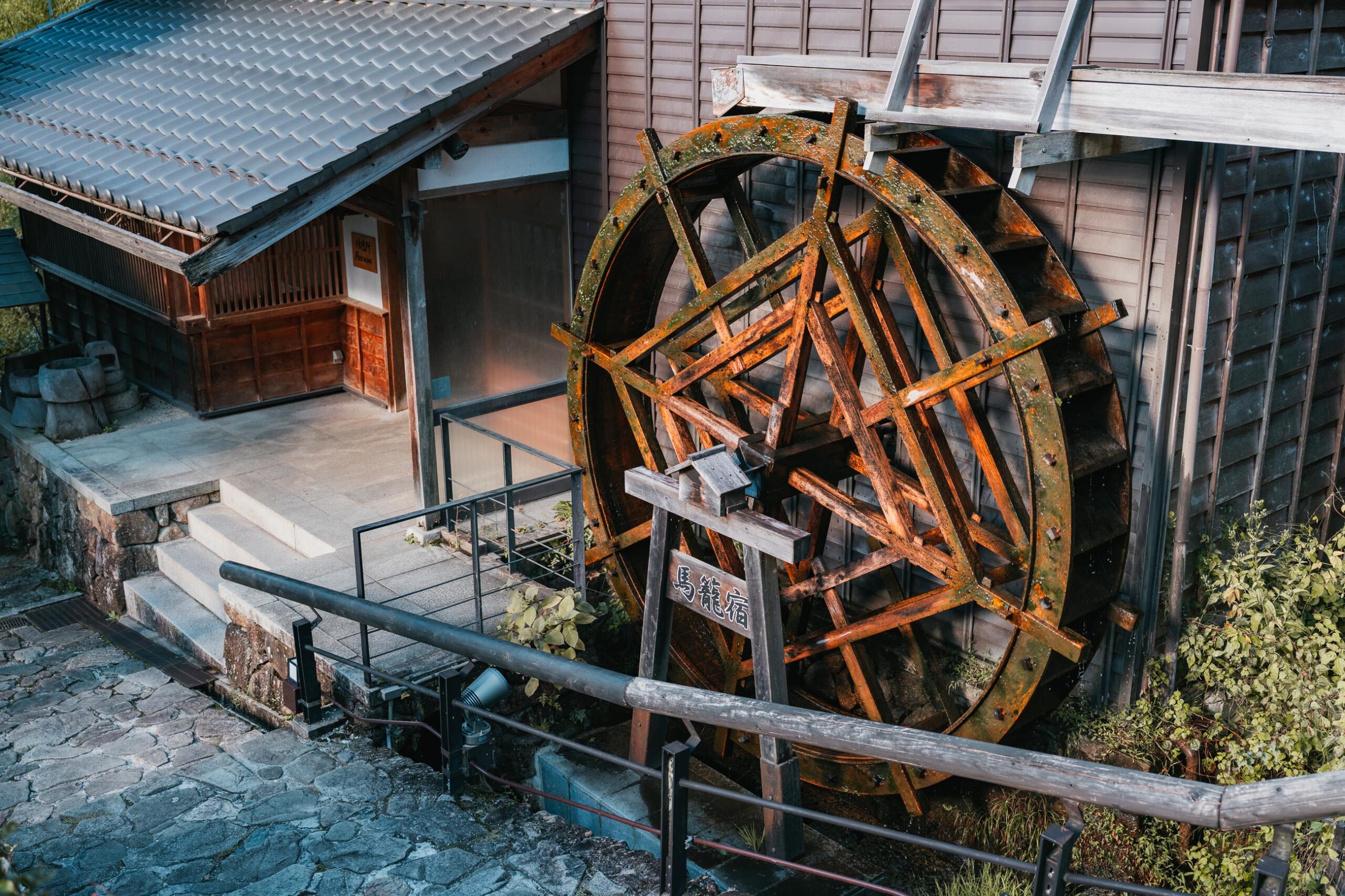
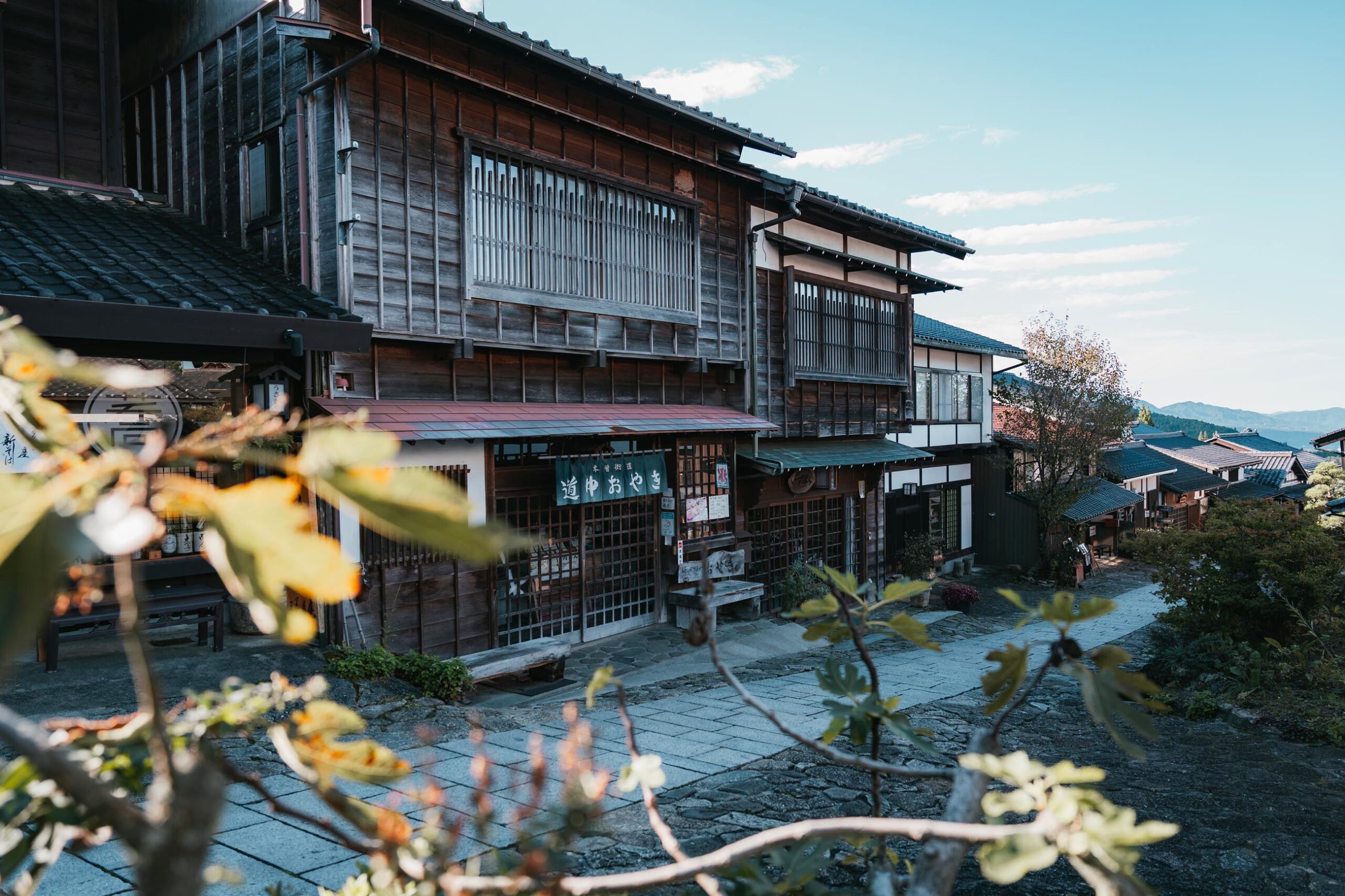
The village, made up of narrow stone streets, mills and ancient wooden buildings, is still deserted and immersed in silence. The only sound accompanying the morning is that of water flowing through the mills, while the small shops slowly begin to open their doors.
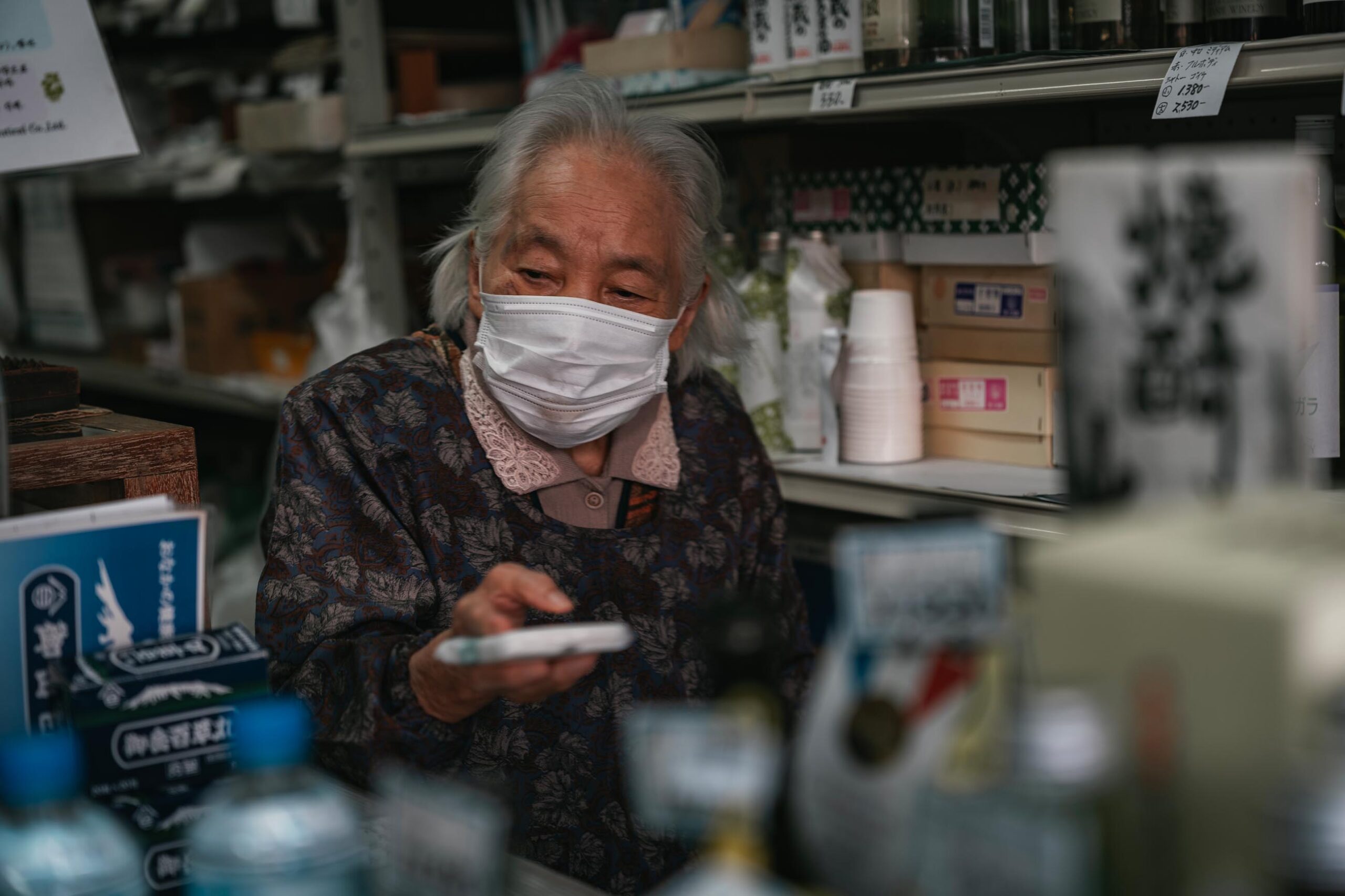
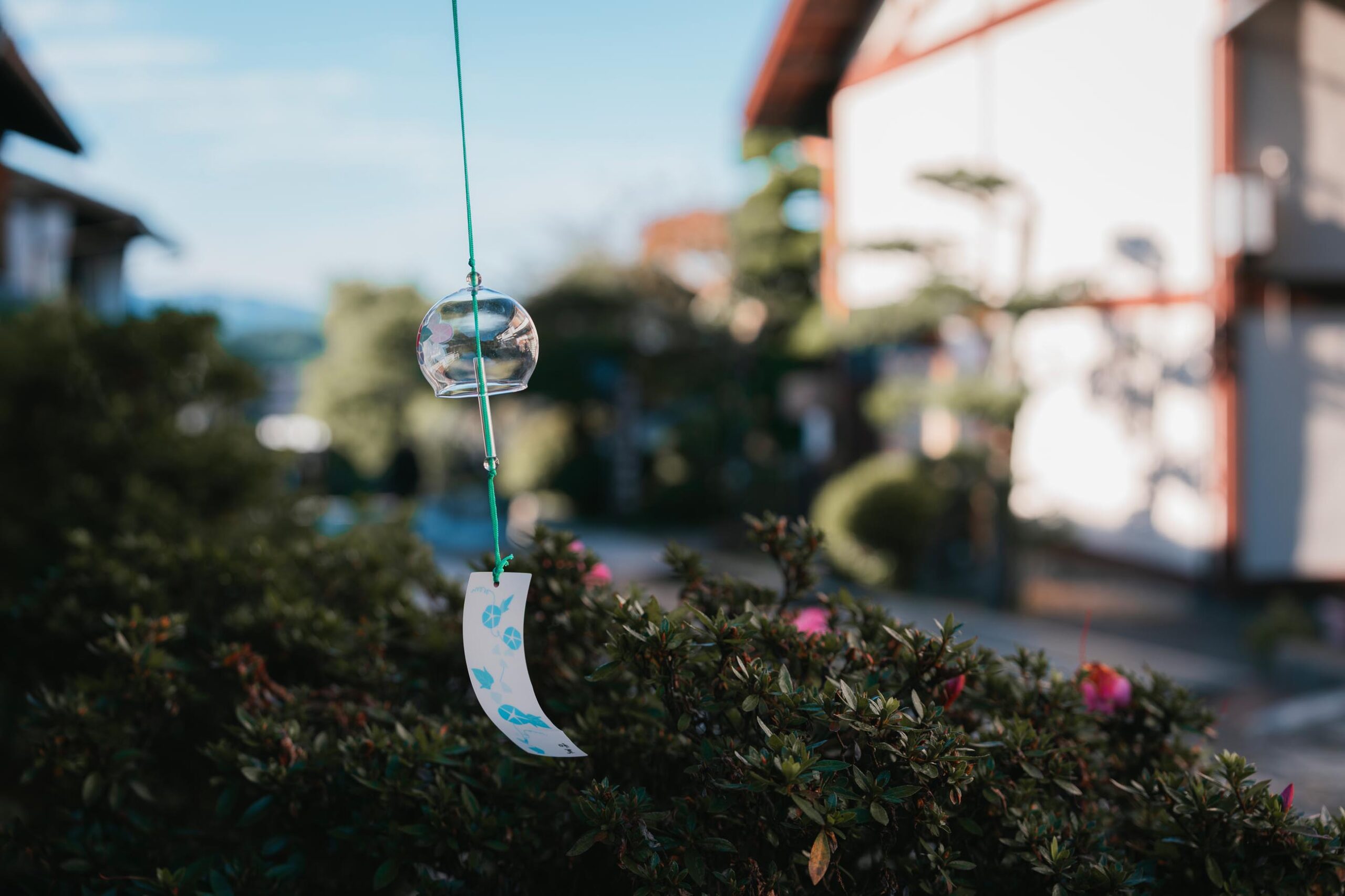
We take the opportunity to savour the calm and timeless atmosphere of the place, take a few photos and buy some souvenirs in the local craft boutiques — they will certainly be the most appreciated.
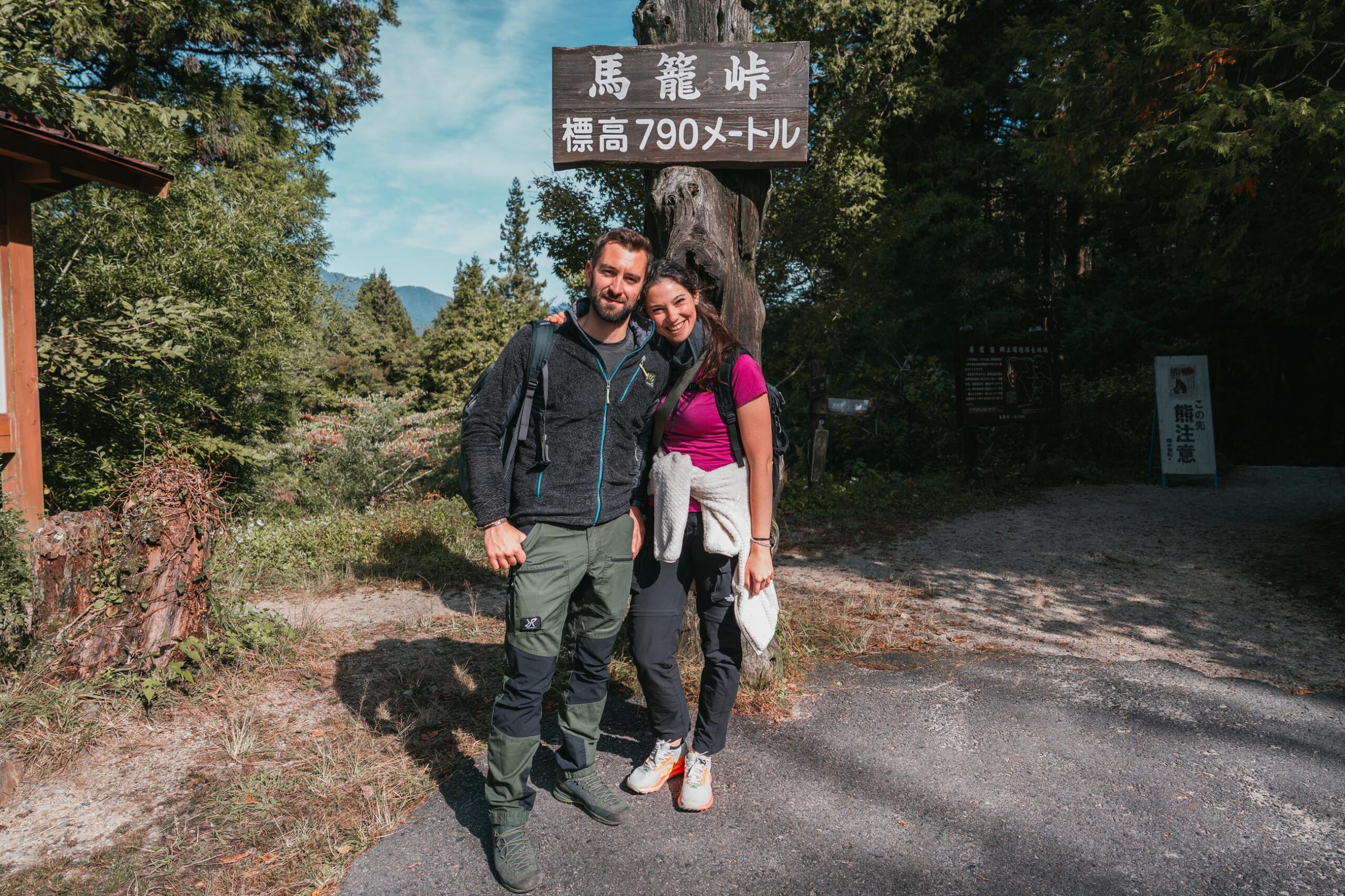
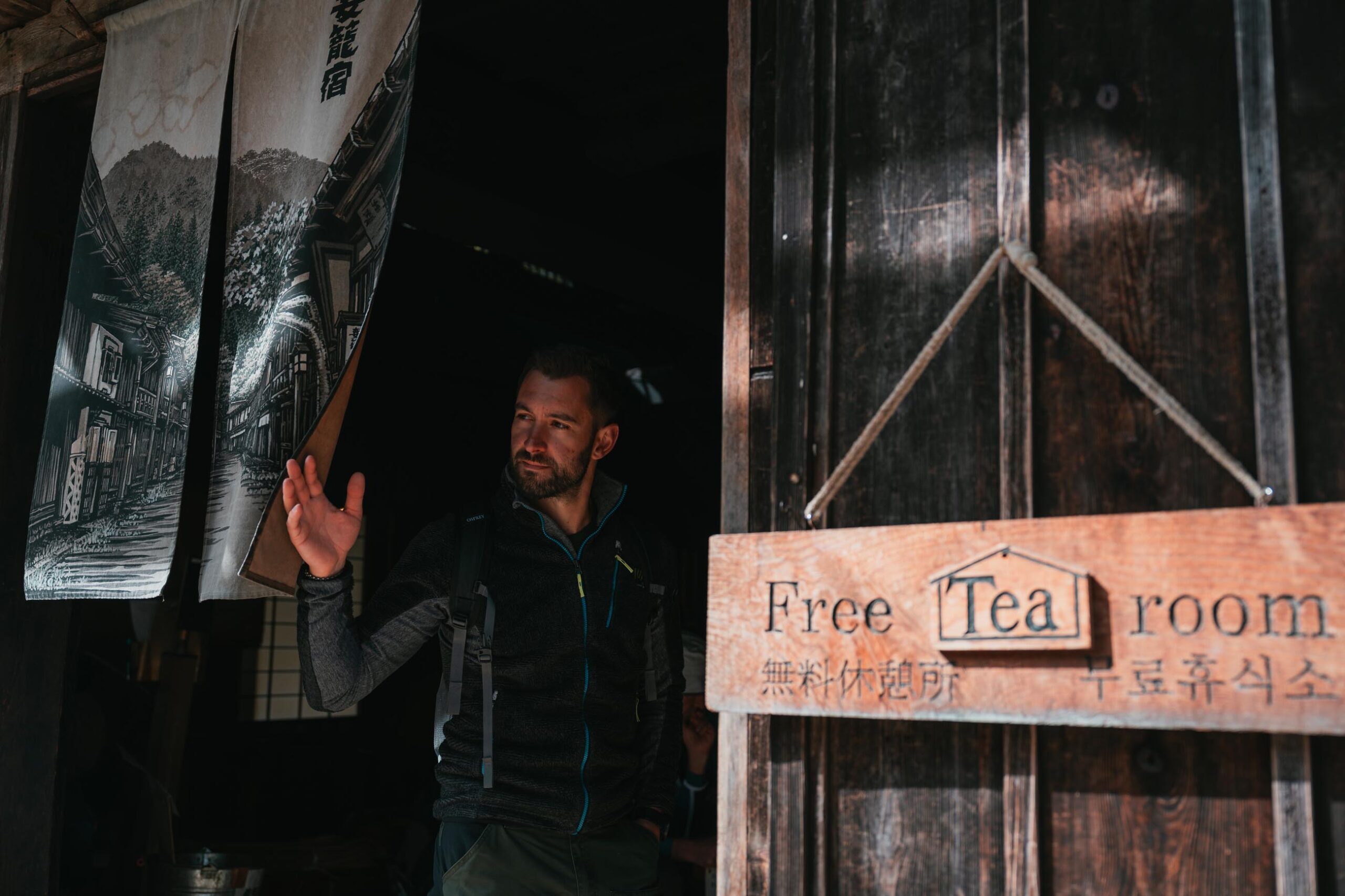
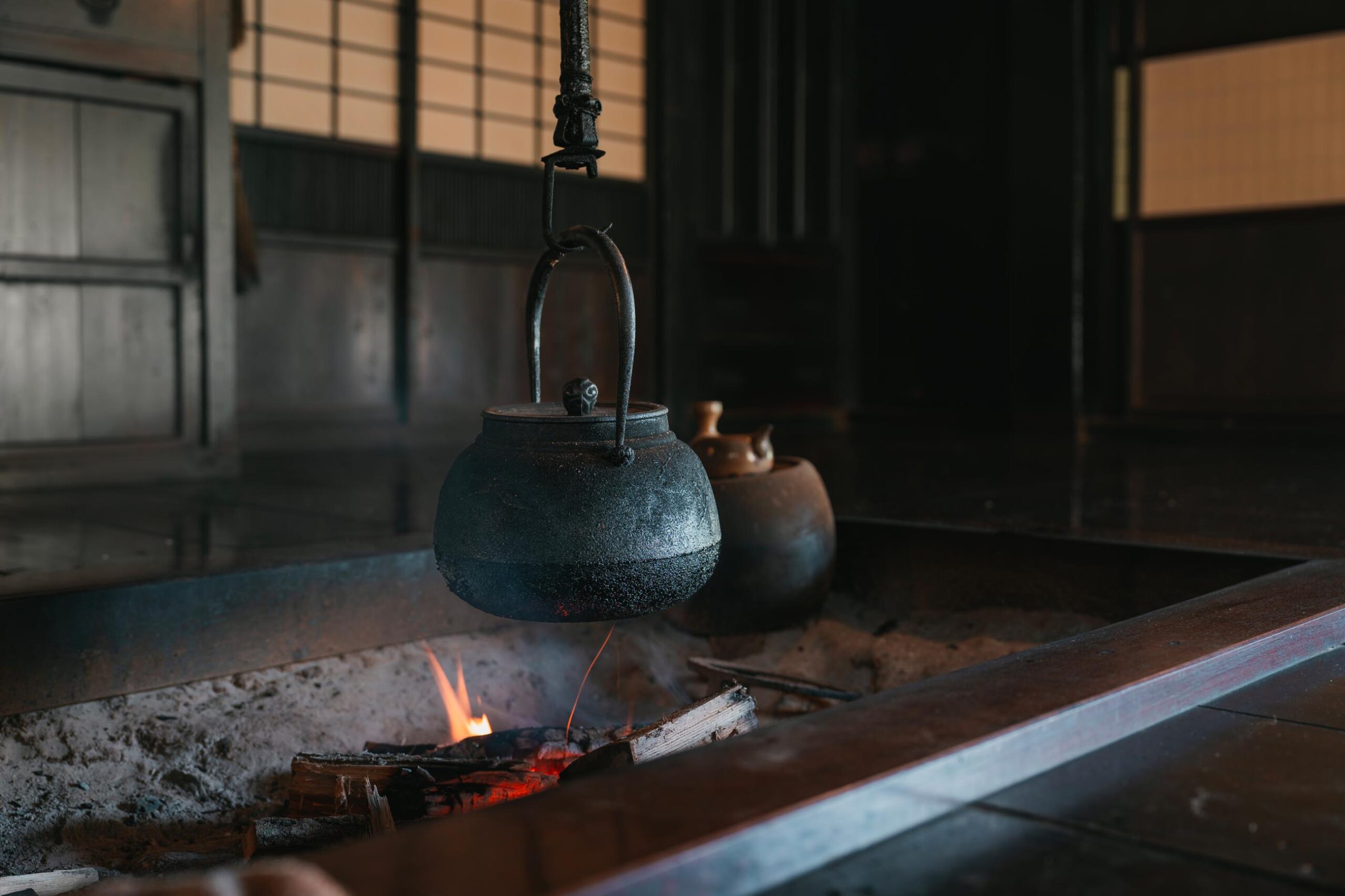
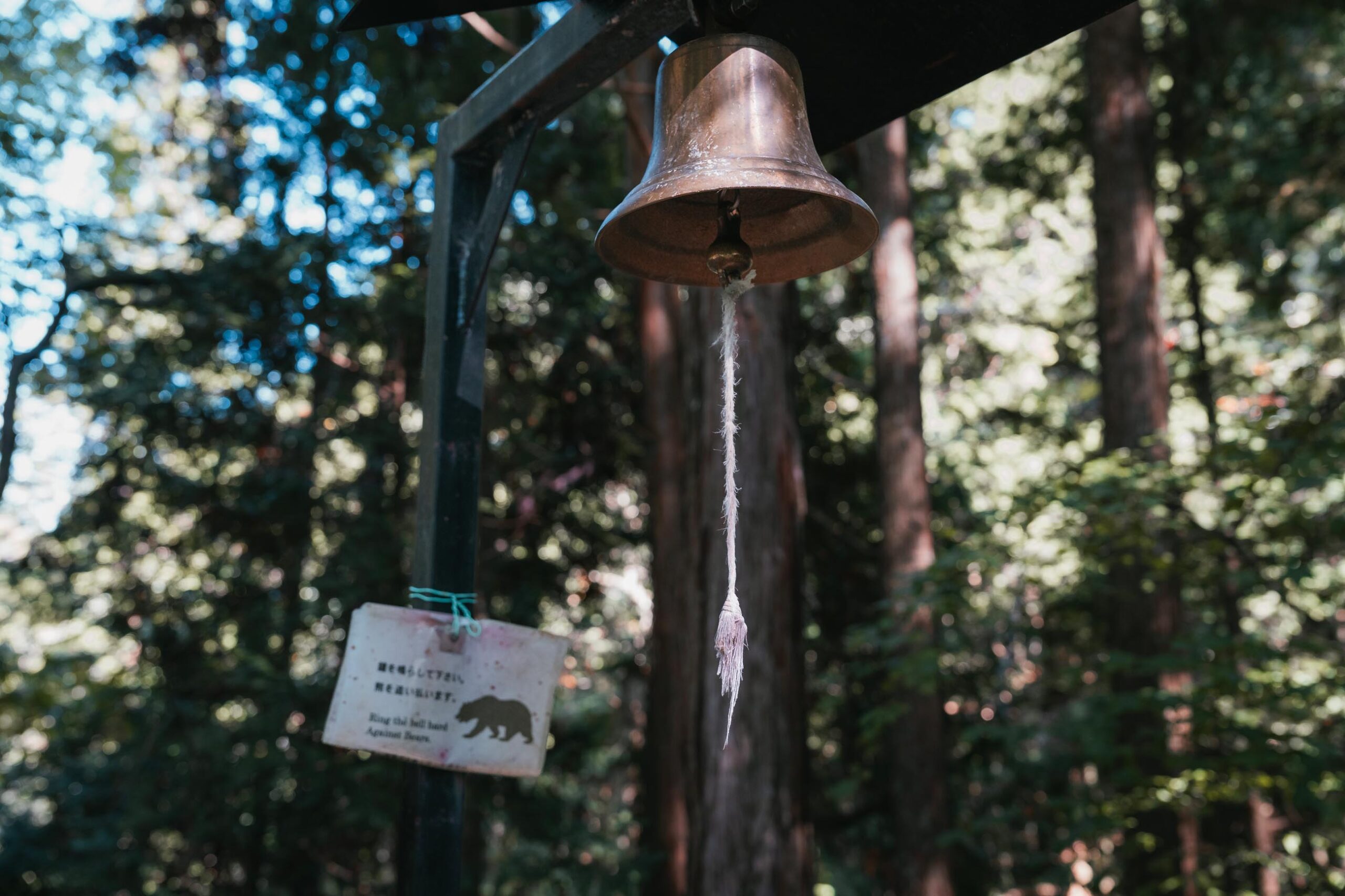
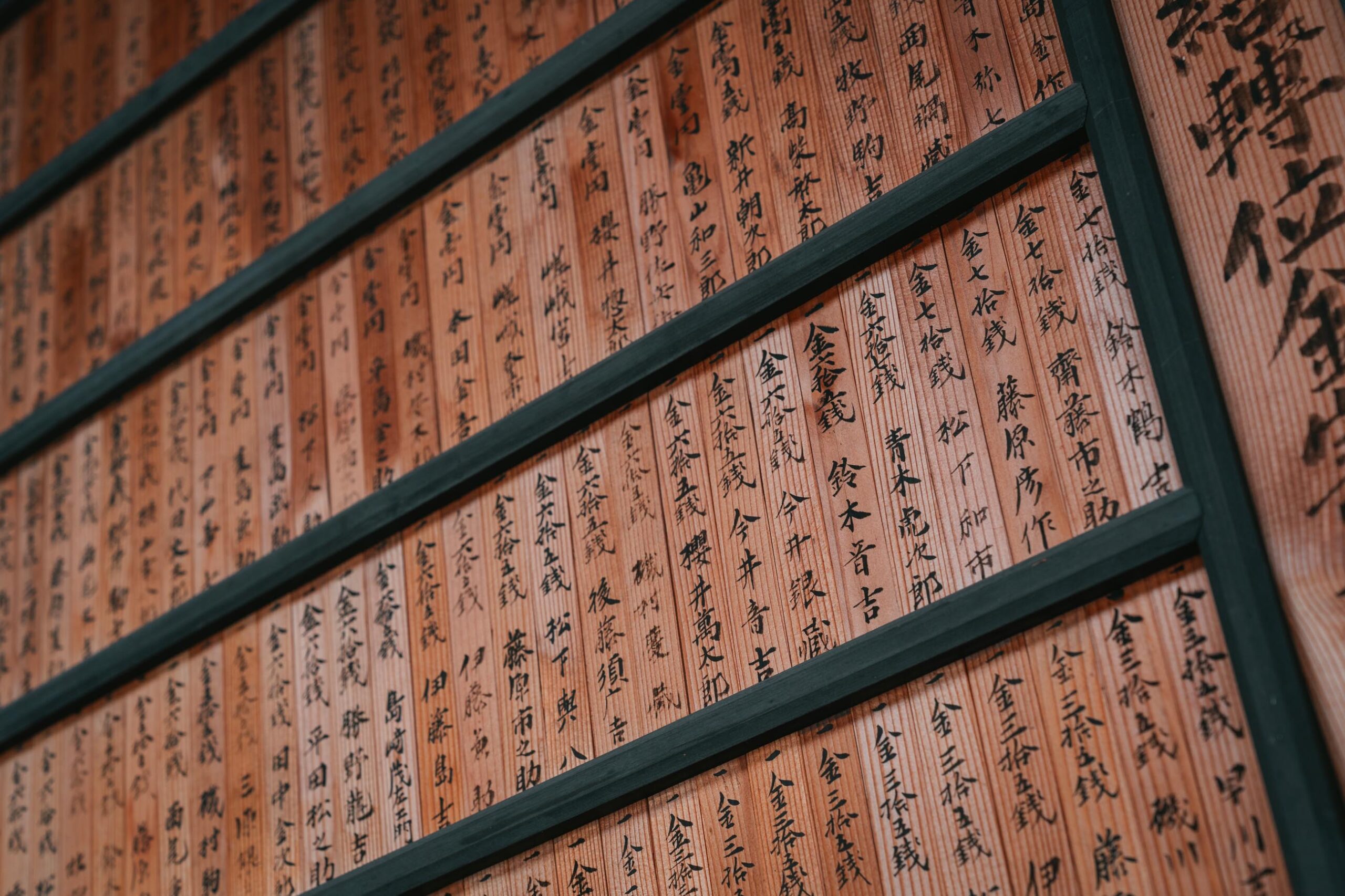
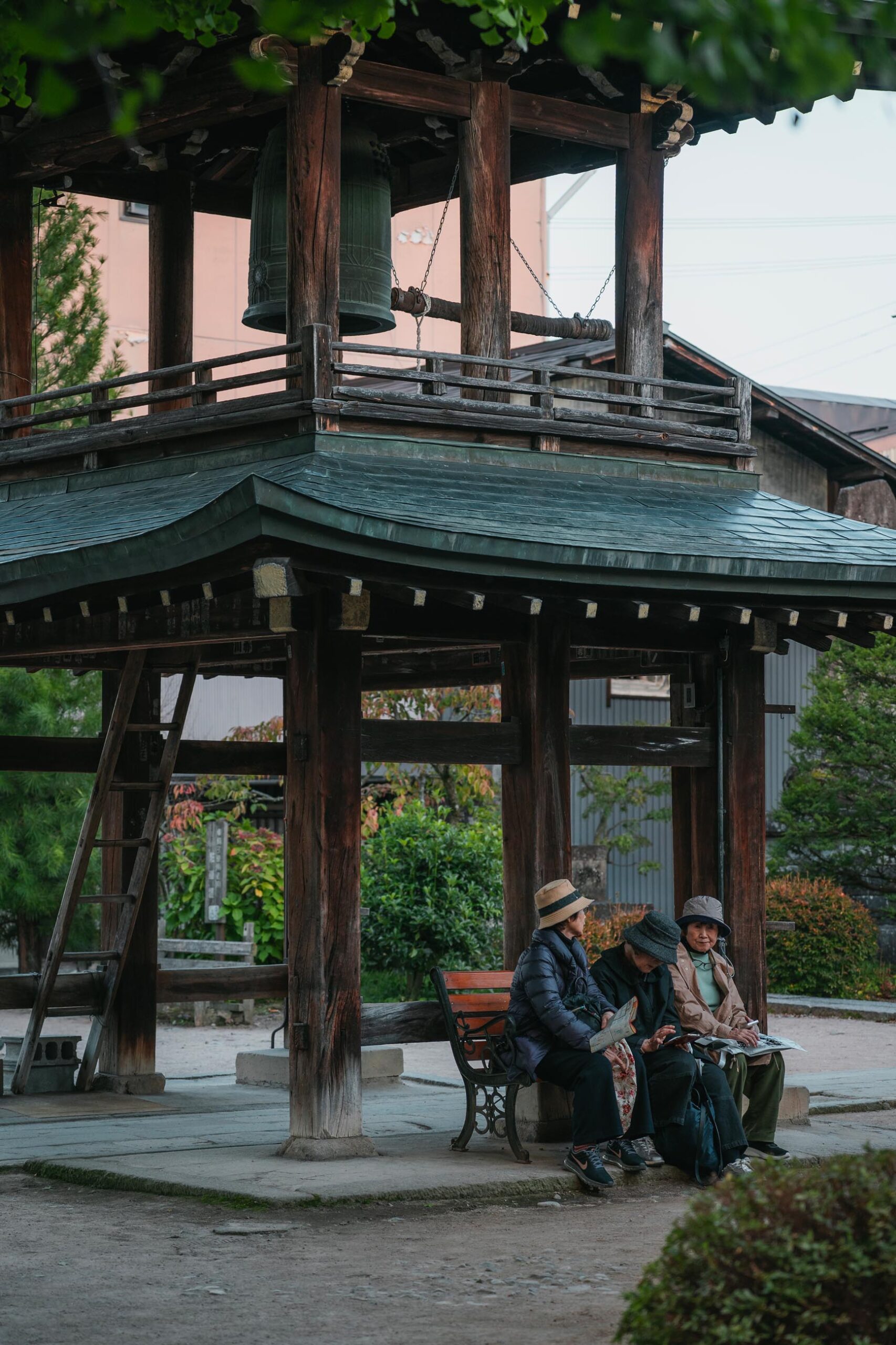
Afterwards, with our backpacks on our shoulders, we set off along the ancient Nakasendō trail that connects Magome to Tsumago. It is about an 8 km route that winds through lush vegetation, among cypress trees and bamboo. Here and there, we encounter bells to ring to keep away the bears that inhabit these mountainous areas. Along the way, we also find a tea house, where we stop for a short break and to leave a dedication, as well as small shrines dotted along the path.
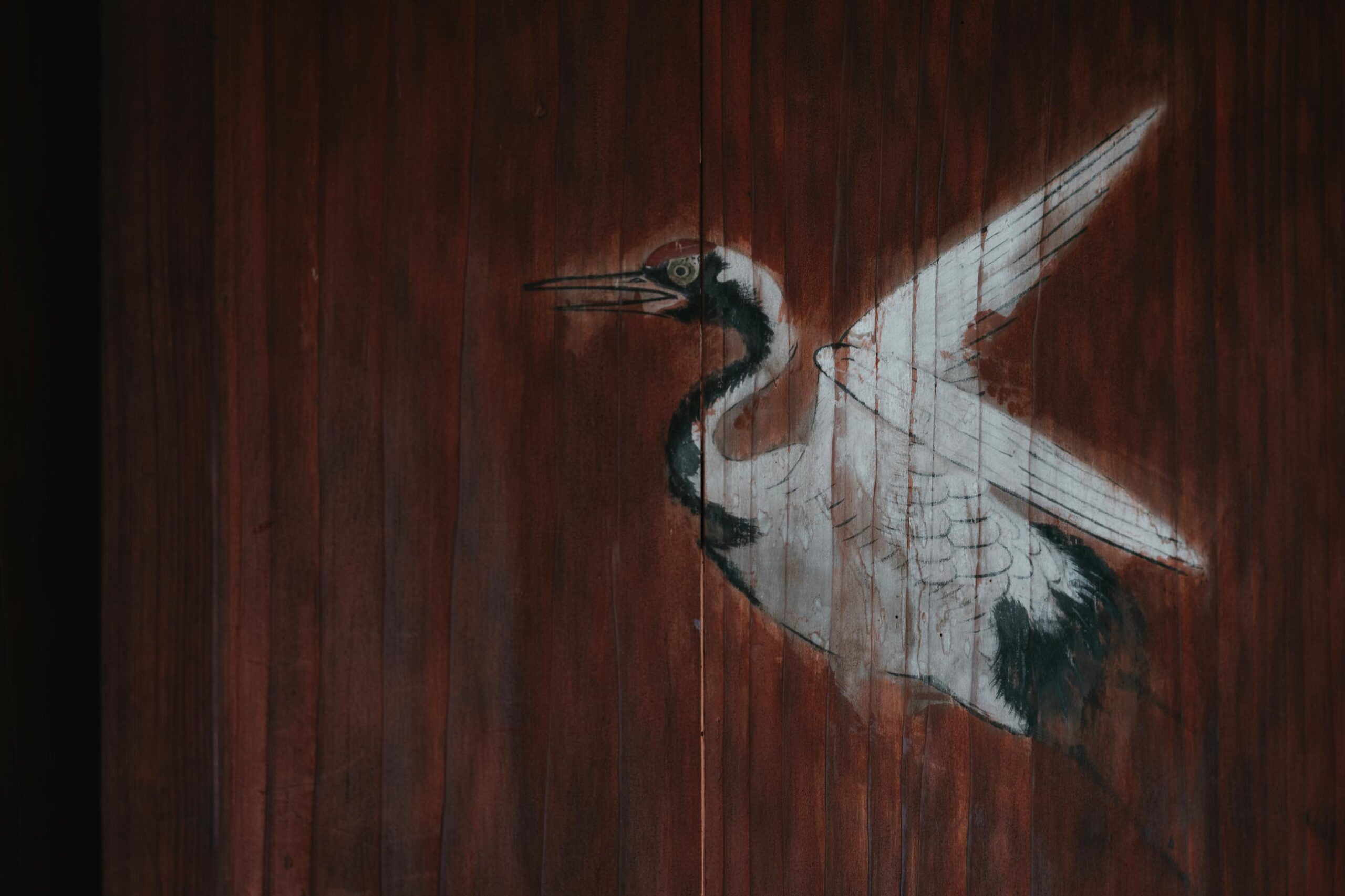
We reach Tsumago in about two and a half hours. Compared to Magome, the village appears even older and retains its own unique, intimate and authentic atmosphere. Not far from the centre, a short walk uphill takes you to Kotoku-ji Temple, which is open to visitors and particularly impressive.
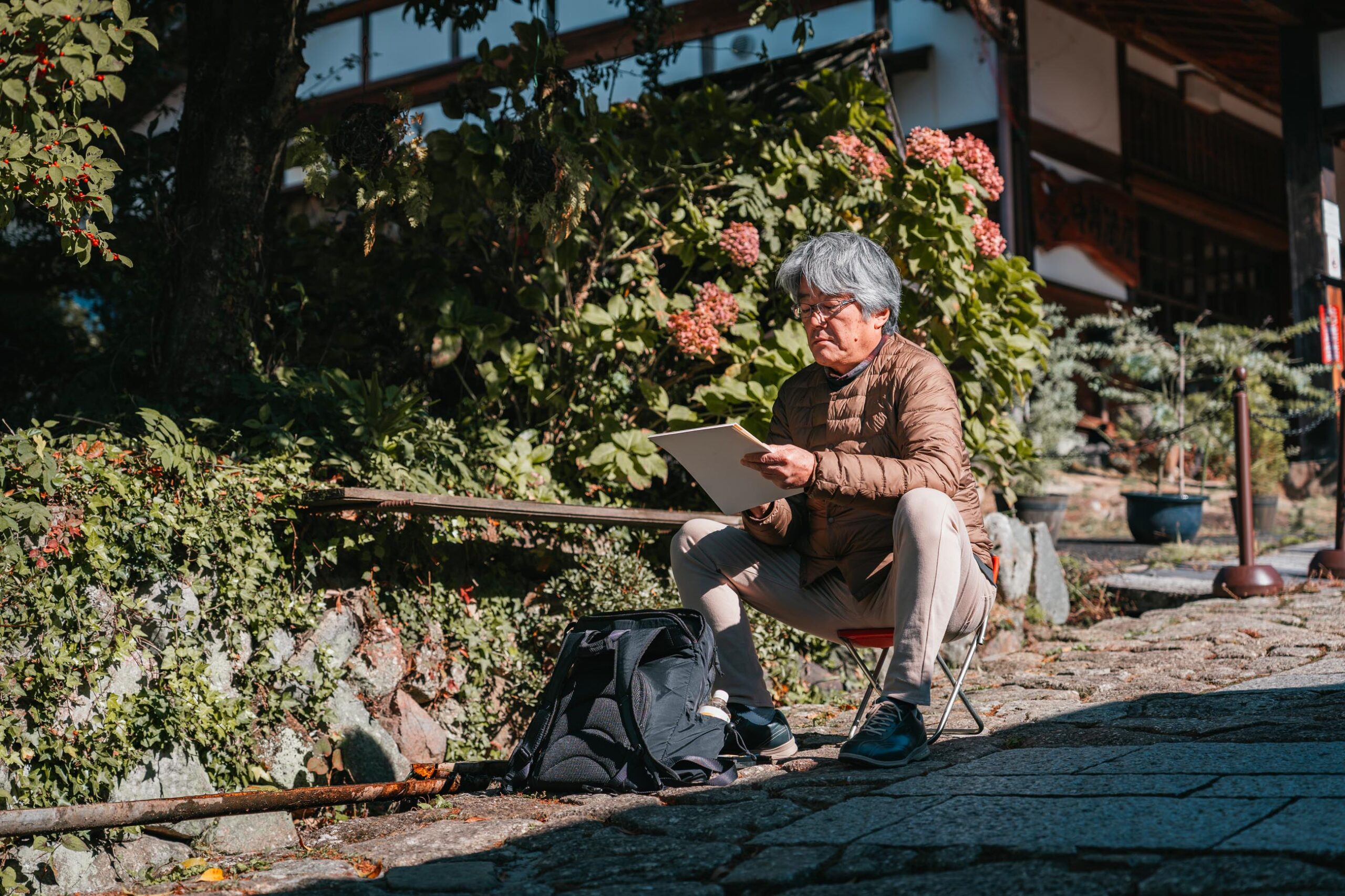
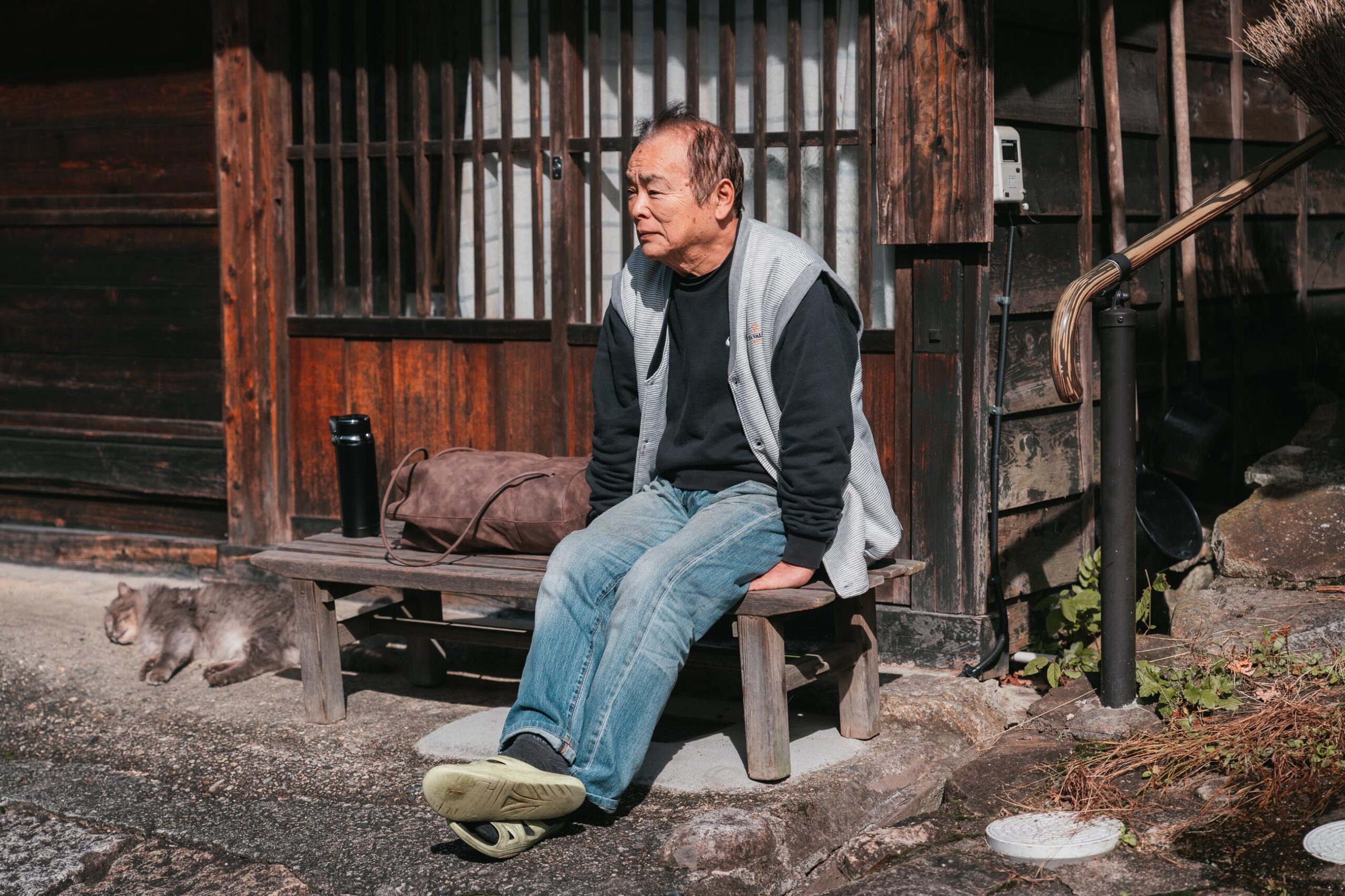
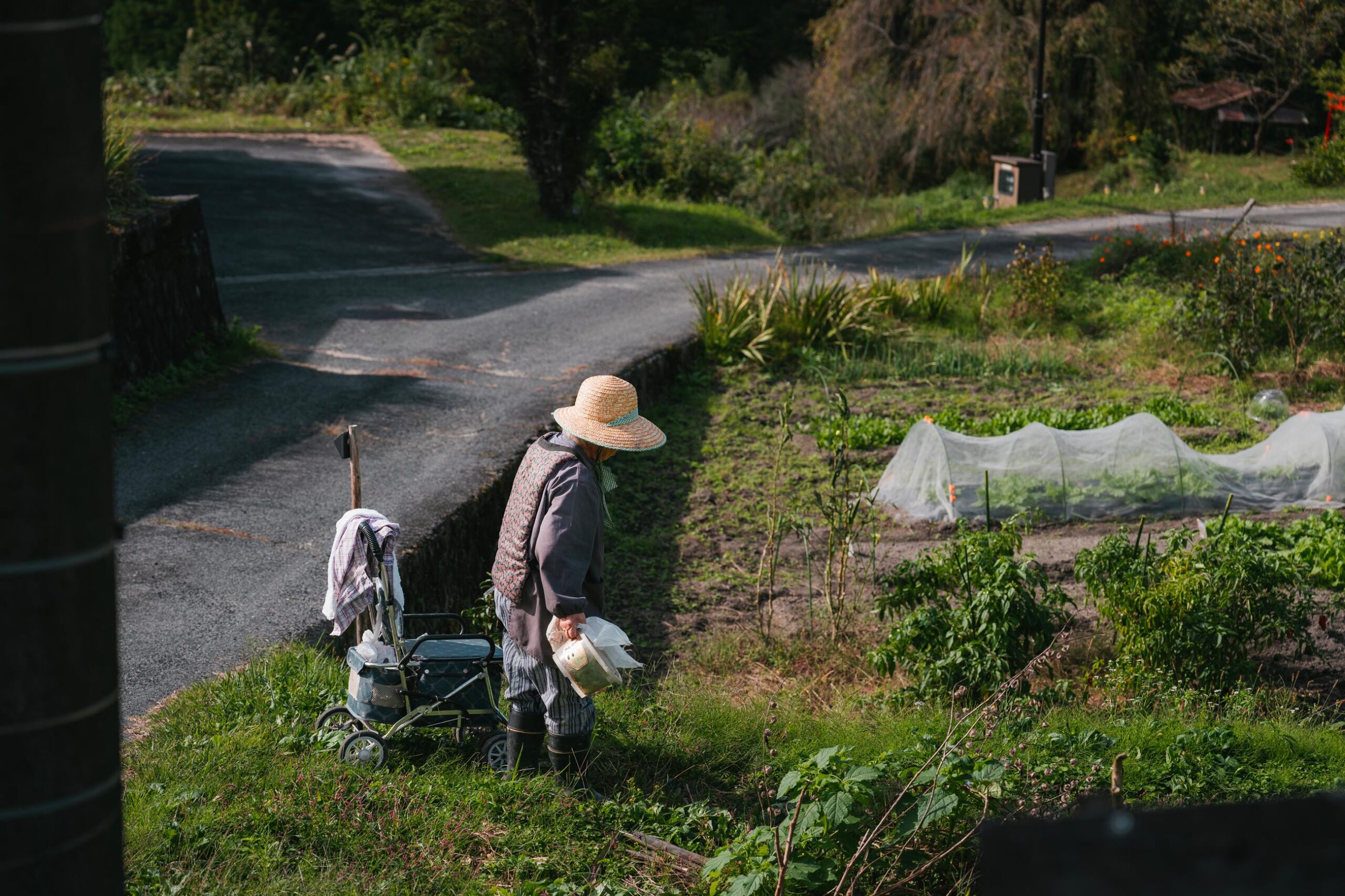
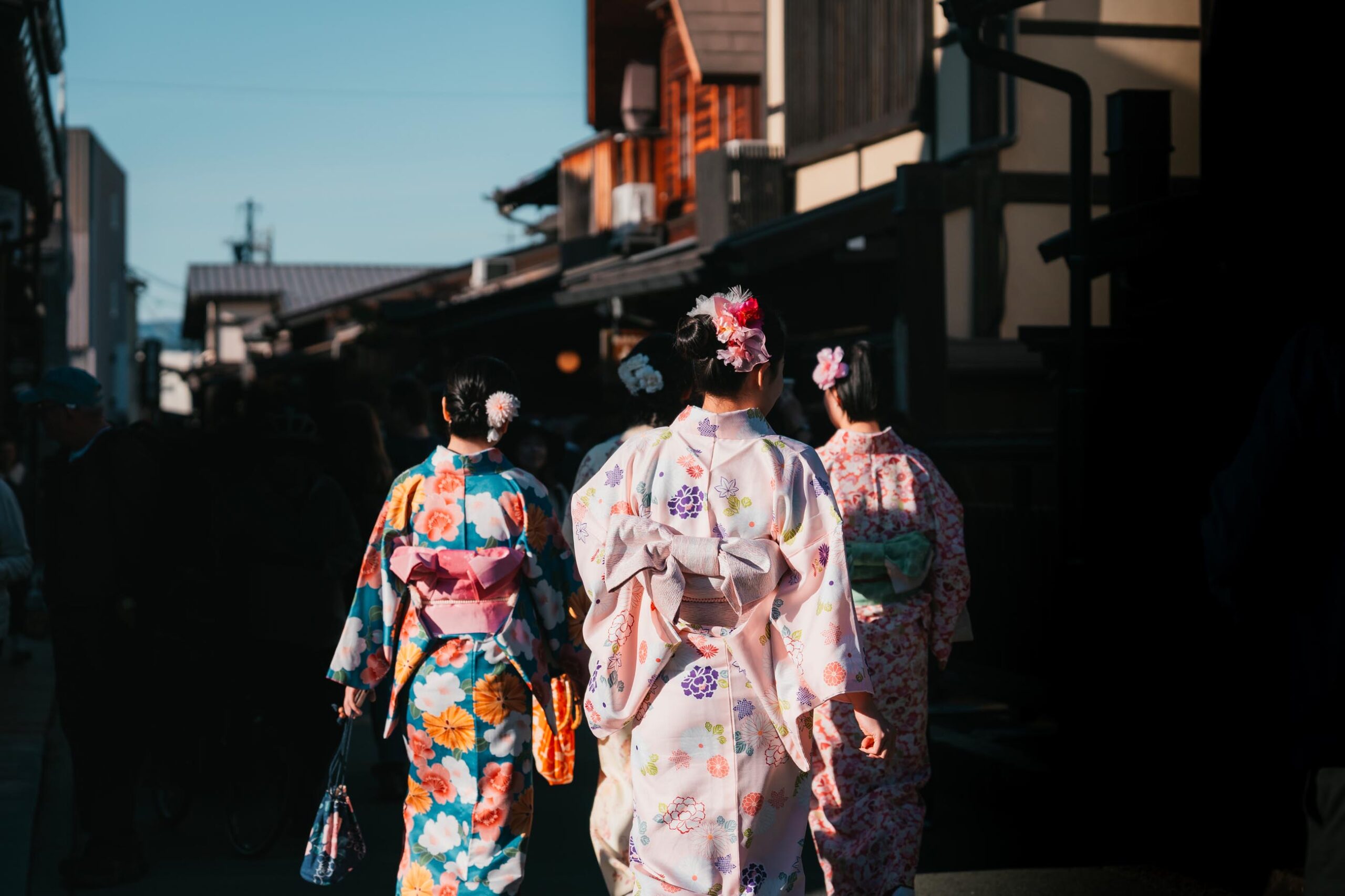
We then lose ourselves in the streets that stretch out just above the village: occasionally, a cat appears or we meet elderly residents busy cultivating their small plots of land. Here too, there is no shortage of shops, including one selling second-hand kimonos, where I buy two haori, the traditional jackets worn over kimonos.
For the return journey, we take a taxi to Magome, collect our car and spend the rest of the afternoon in Nakatsugawa, thus concluding one of the most authentic days of the trip.
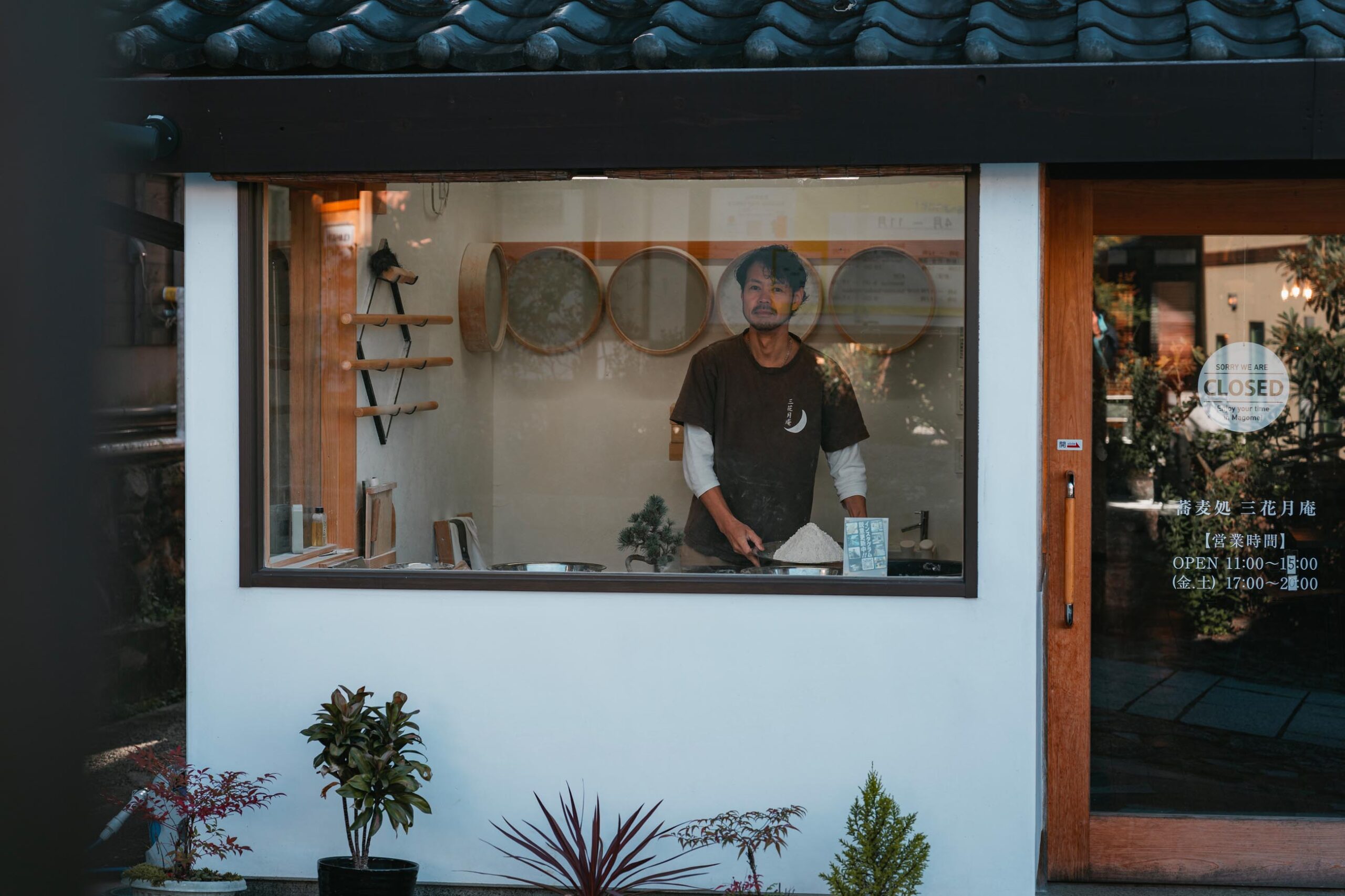
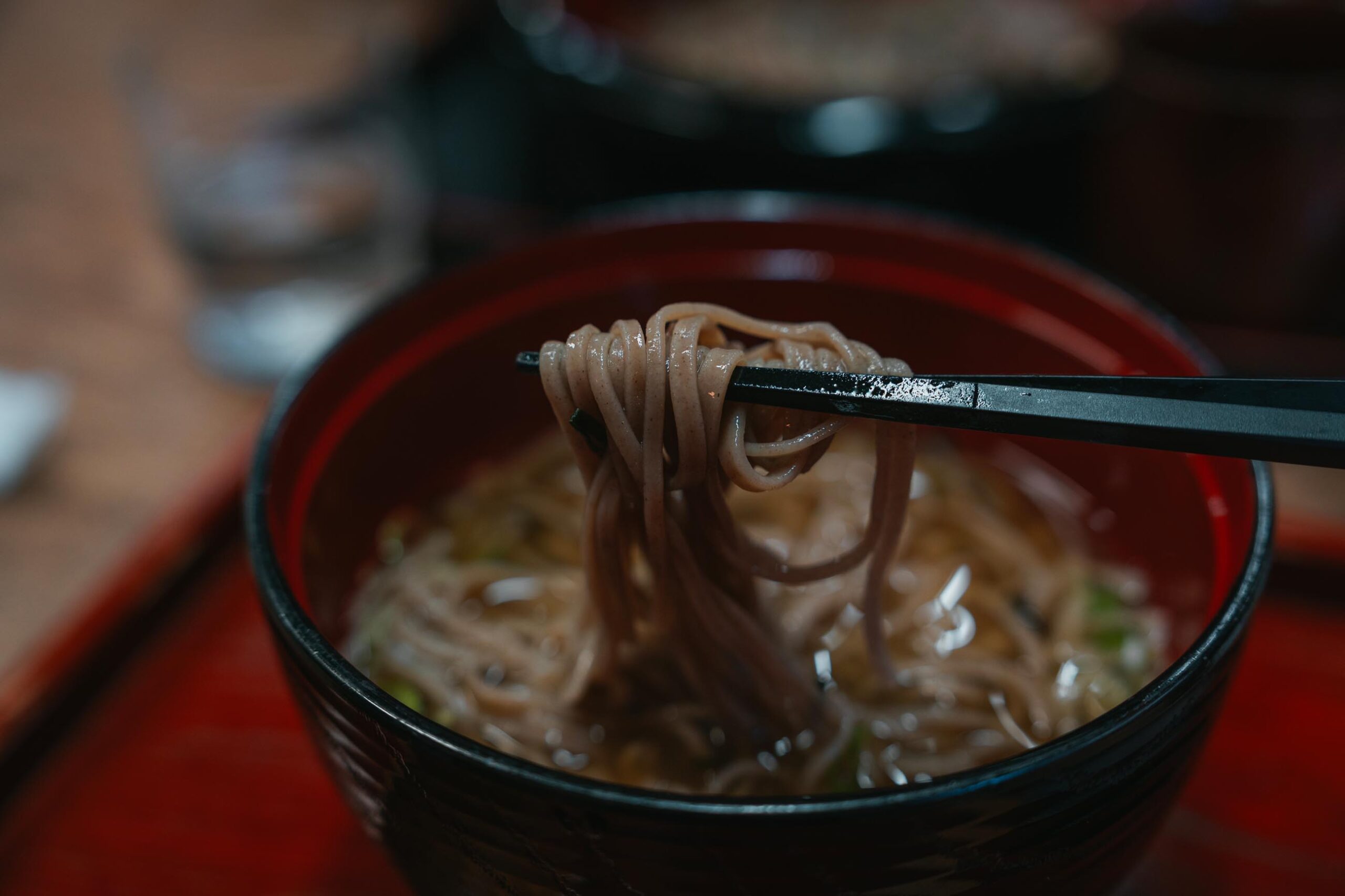
For lunch, soba noodles in Tsumago, at Yoshimuraya, which offers buckwheat soba noodles, served hot or cold.
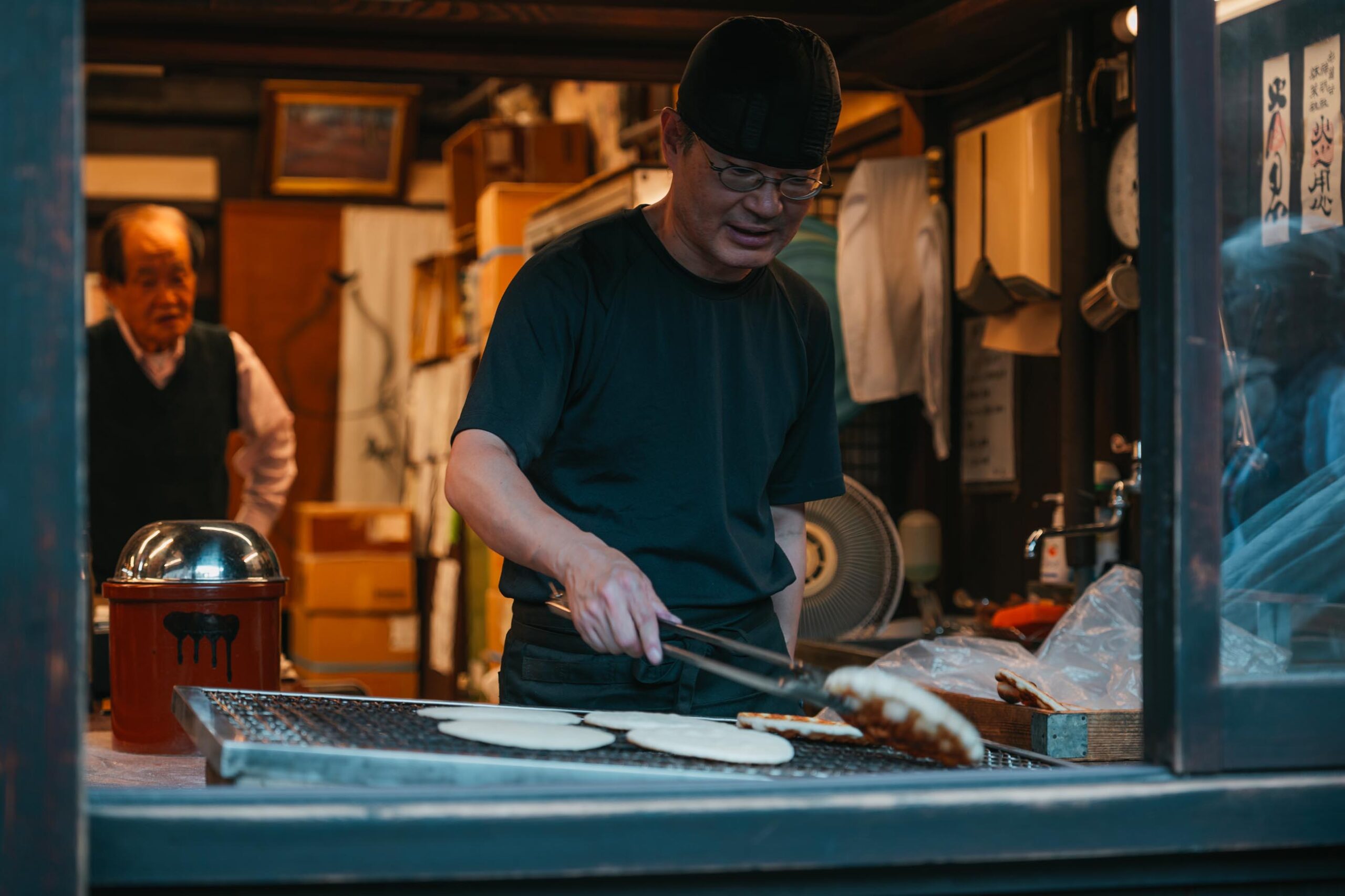
For a snack, delicious chestnut ice cream at Suzuya ✴️ (amazing!)
For dinner in Nakatsugawa, skewers from Toriyasu: pleasant atmosphere, friendly staff, English menu, excellent skewers ✴️
‘A trip to Japan should not be limited to just the major cities, but should also include smaller towns such as Takayama,’ says the website of the Japan National Tourism Organisation (JNTO). And that’s exactly right: it is in these historic towns that you can truly experience the real Japan.
We are in the Japanese Alps, in Gifu Prefecture. Before arriving here, we stopped with our car in Gero Onsen, a hot spring town surrounded by mountains.
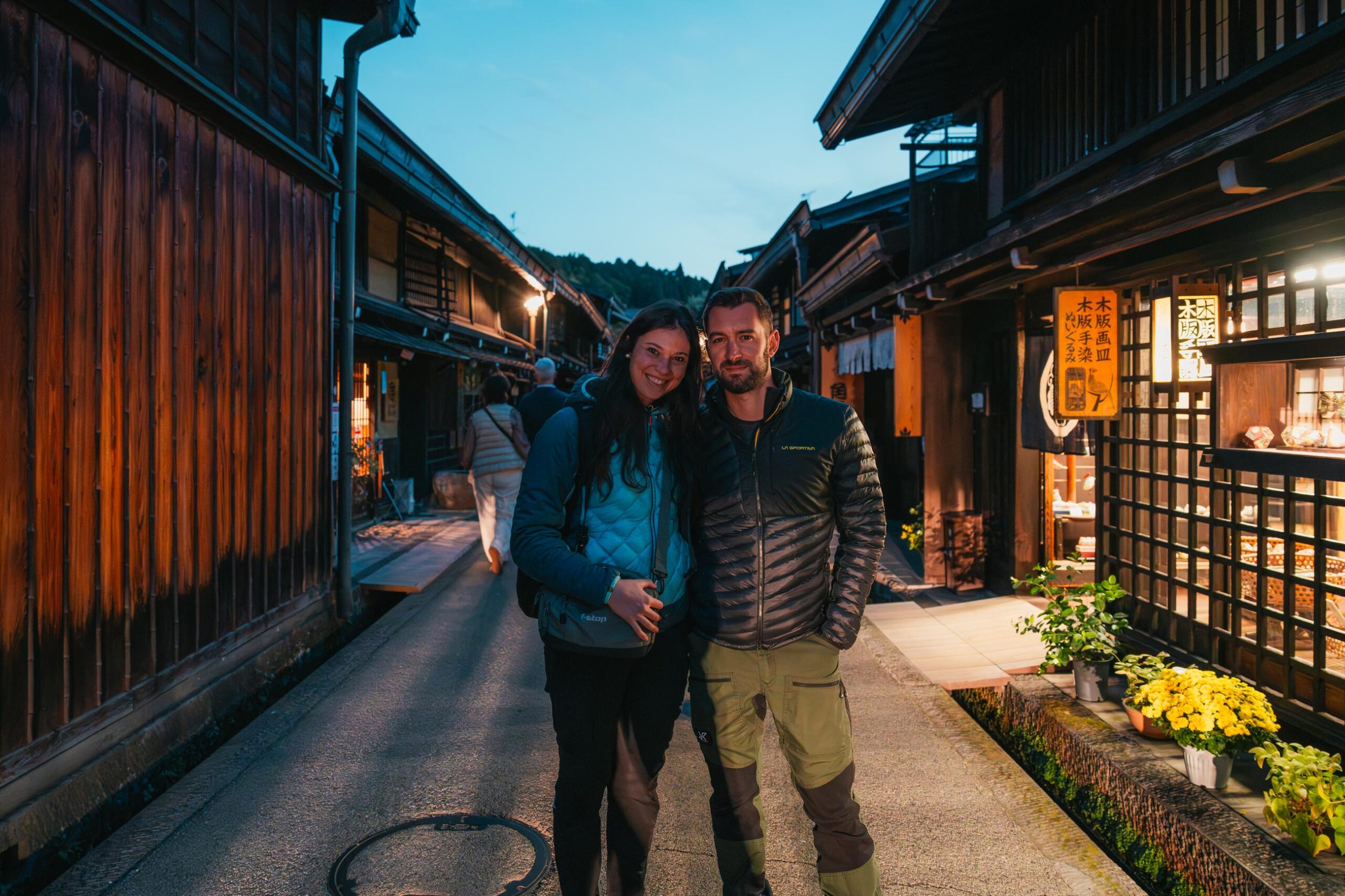
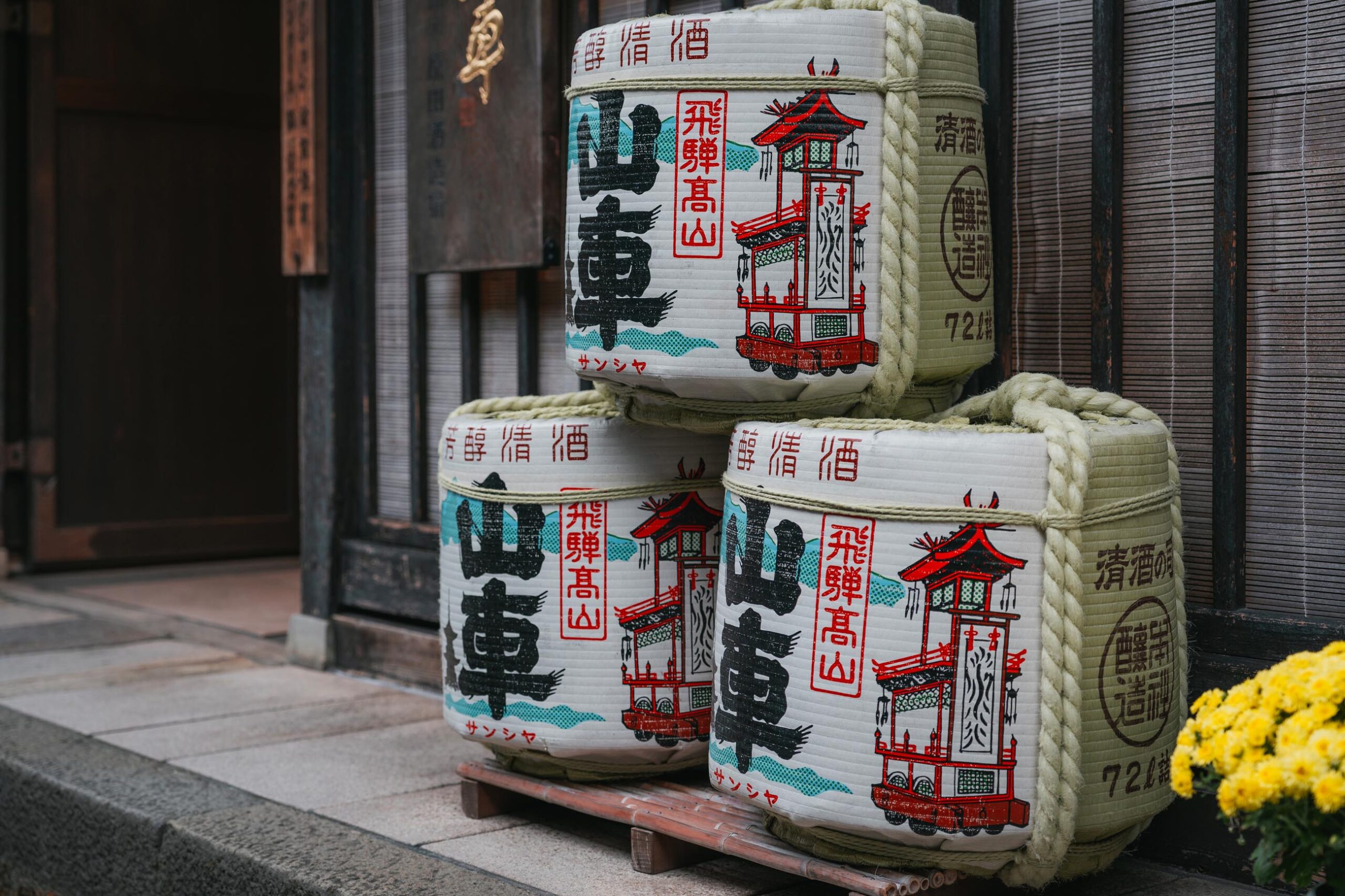
Although Takayama is larger and more touristy than Magome and Tsumago, it has not lost its charm. History and tradition emerge as you stroll along the narrow streets of the Sanmachi Suji district, dotted with ancient houses from the Edo period. Some now house craft shops, while others have been transformed into small museums, preserving centuries of local culture. It is reminiscent of a small Kyoto, historic but less touristy. There are lovely shops where you can buy quality items at reasonable prices.
Not far away is the Hida Folk Village, with its ancient houses featuring characteristic thatched roofs. We skipped it, having already visited a similar village, Shirakawa-go, on a previous trip.
For lunch, we had ramen at Ramen Sanmachi: simple but really good, with thinly sliced pork, egg and a few other ingredients.
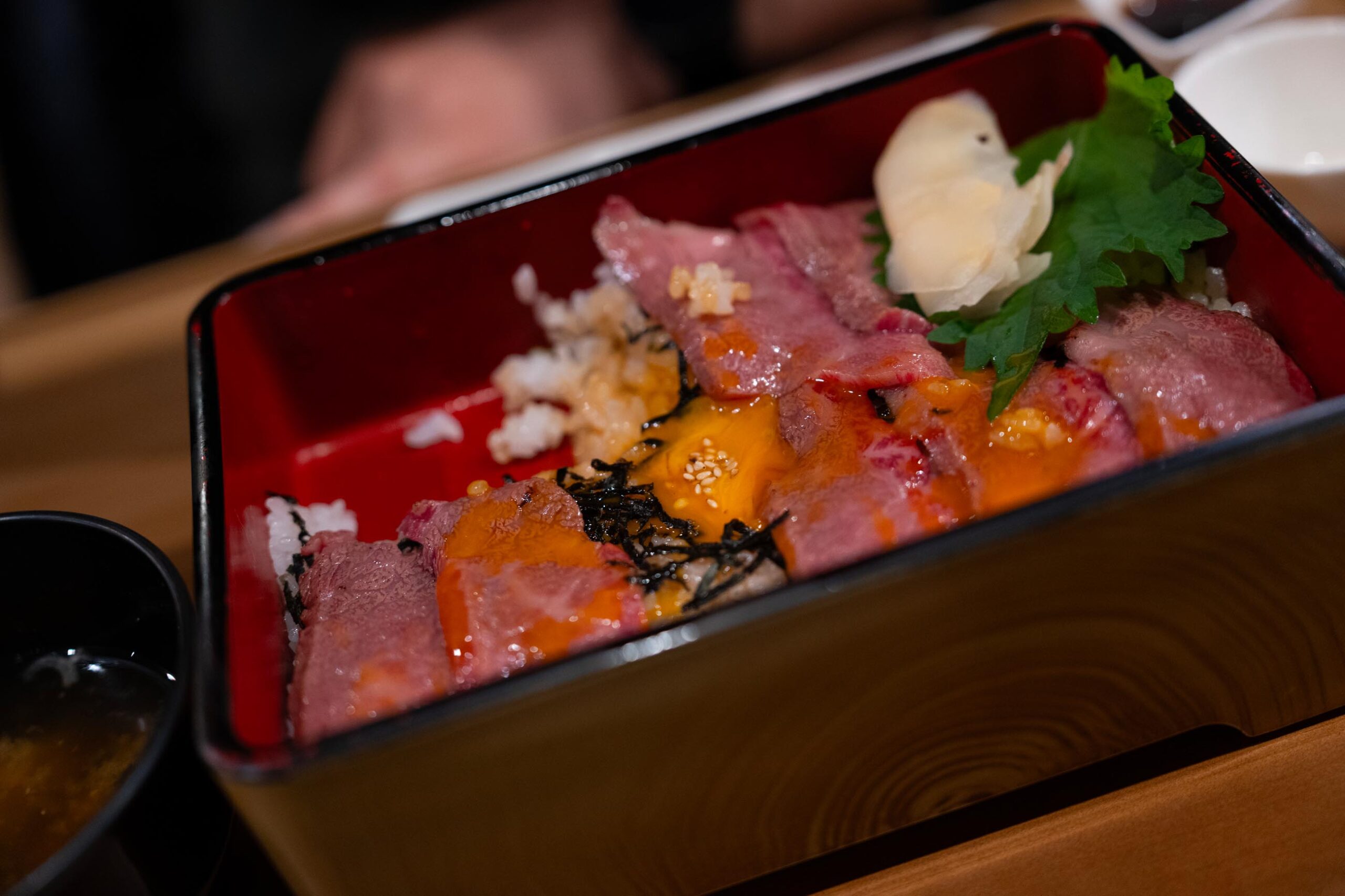
For dinner, we tasted the special Hida Beef at Kyoshi, a restaurant specialising in meat nigiri. Truly the best ✴️
After dinner, we tasted sake and gin at Saboriba, a very unique bar frequented almost exclusively by locals. Soft lighting, skulls scattered throughout the décor, and a very good gin, Ki-No-Bi, which is a must-try.
Futons and shared bathrooms. Not bad, but there are better options.
Privacy Settings
This website uses cookies to improve your experience while you navigate through the website.
View the Cookie Policy View the Personal Data Policy
Google Fonts è un servizio per visualizzare gli stili dei caratteri di scrittura gestito da Google Ireland Limited e serve ad integrare tali contenuti all’interno delle proprie pagine.
Luogo del trattamento: Irlanda - Privacy Policy