✴️ = best choice!
The train drops us off at Lao Cai station in northern Vietnam. From here, we take a taxi to Sa Pa, the main town in the area, which takes about an hour’s drive through mountains and hairpin bends.
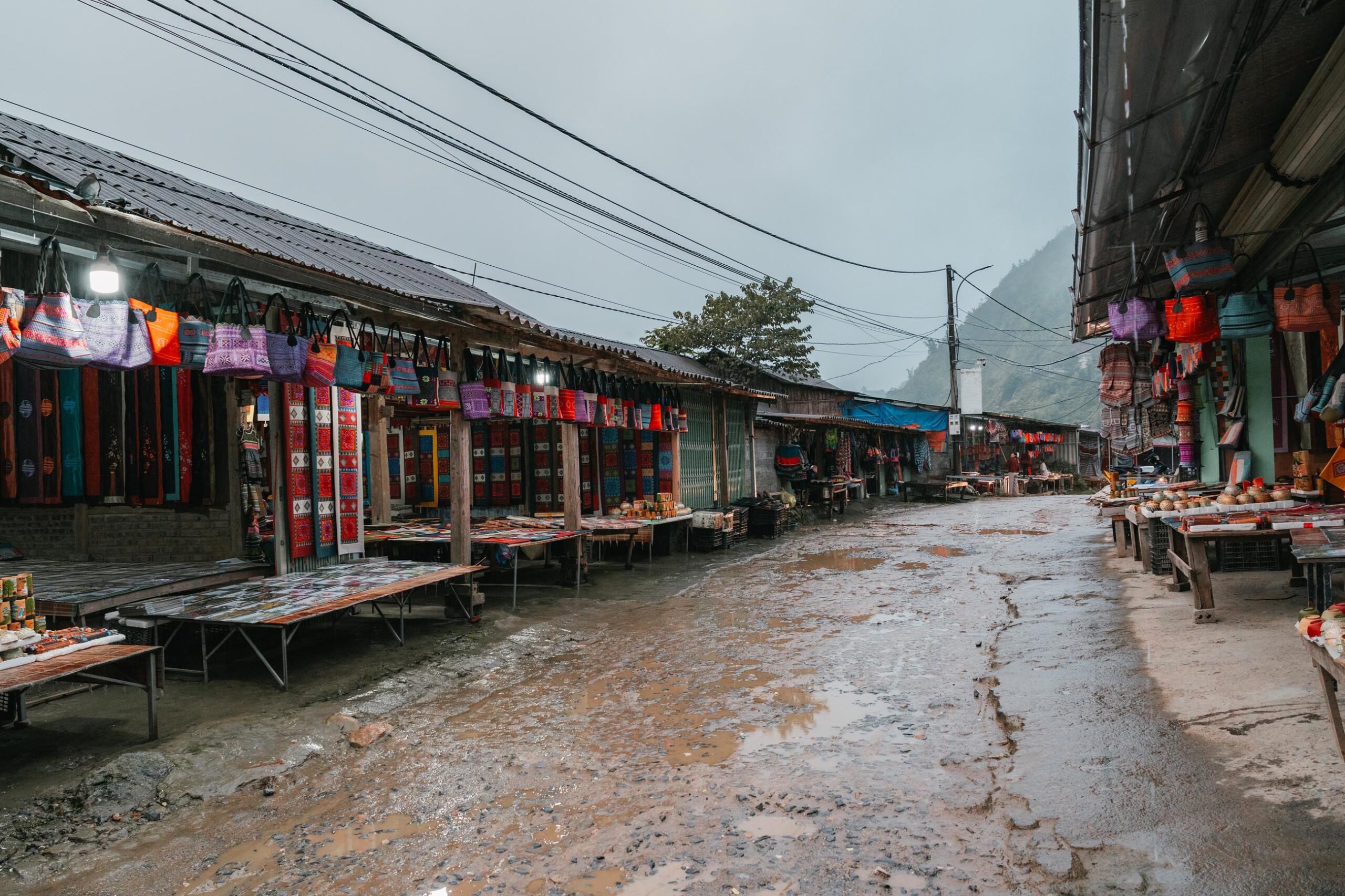
The center of Sa Pa is very touristy. Near the station where you can buy tickets for the cable car to Mount Fansipan, Vietnam’s highest peak, you will meet many women from the Hmong and Red Dao ethnic groups, who come from the surrounding villages. They sell local handicrafts or offer themselves—sometimes rather insistently—as guides to accompany visitors on foot to the villages.
Our destination is Ta Phin, a rather distant village. It wasn’t easy to find an available guide, but in the end Sa Sa (her real name is Ly Thi Sa, roughly our age) from the village of Lao Chai offered her services.
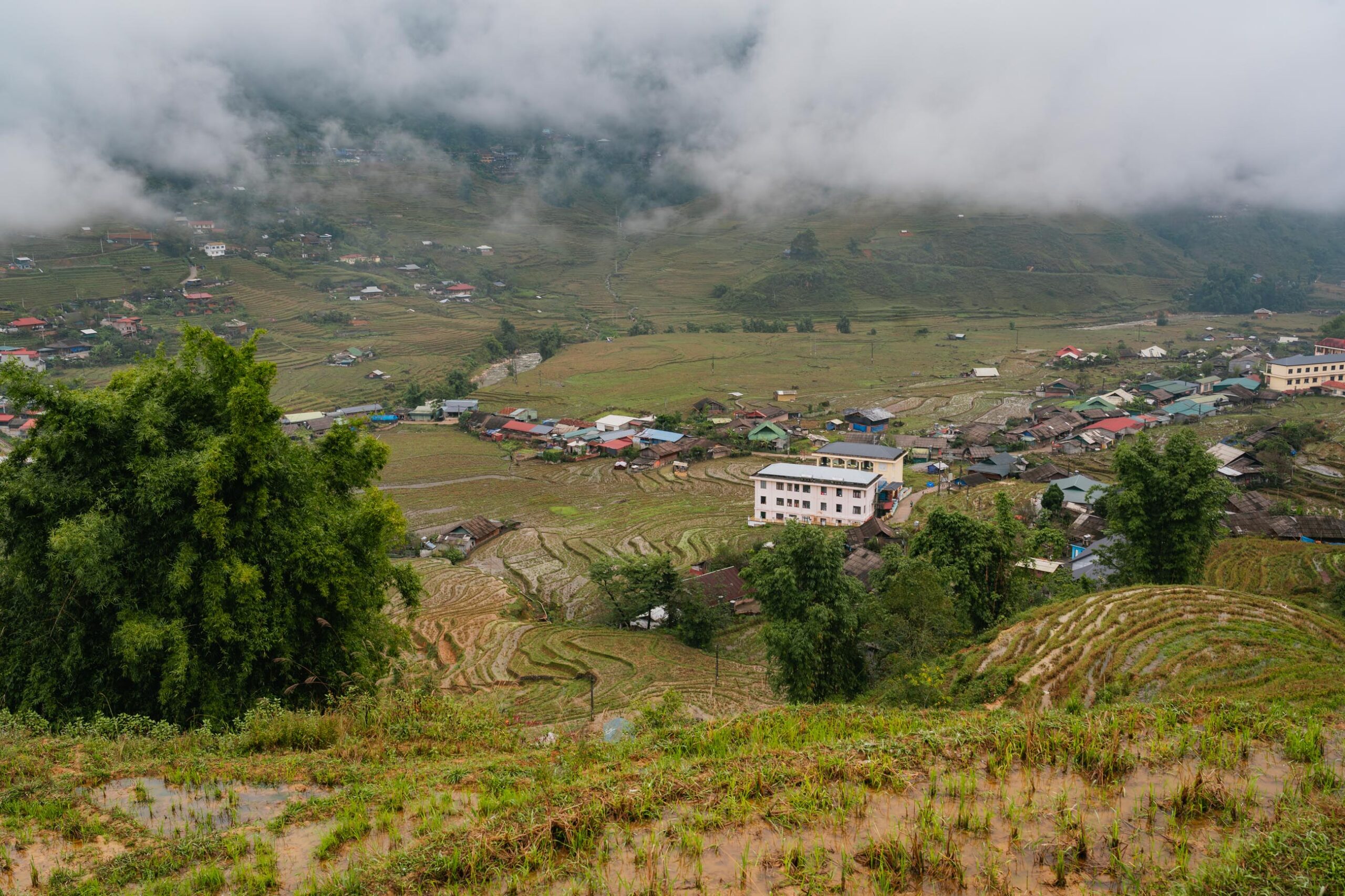
There are several routes to Ta Phin: the quickest follows the paved road, while the most scenic winds through the rice fields. Needless to say, we choose the latter. Together with Sa Sa, we venture into the rice fields. The harvest season runs from September to October, while between July and August the rice fields are at their most beautiful, with their bright green color. We arrive in November, but we still find some shades of green and, rather unusually, a clear day without fog.
The trail is not marked: sometimes there is barely a visible track. Sa Sa comes from another village and has only traveled this route once before, so at every fork in the road she calls her sister to make sure she is on the right path. Cell phones are widely used, but almost exclusively for calls: many people, even young people, cannot read or write, because only the younger generations attend school from an early age. With Sa Sa, however, we have no difficulty communicating: she learned English “on the street,” talking to tourists.
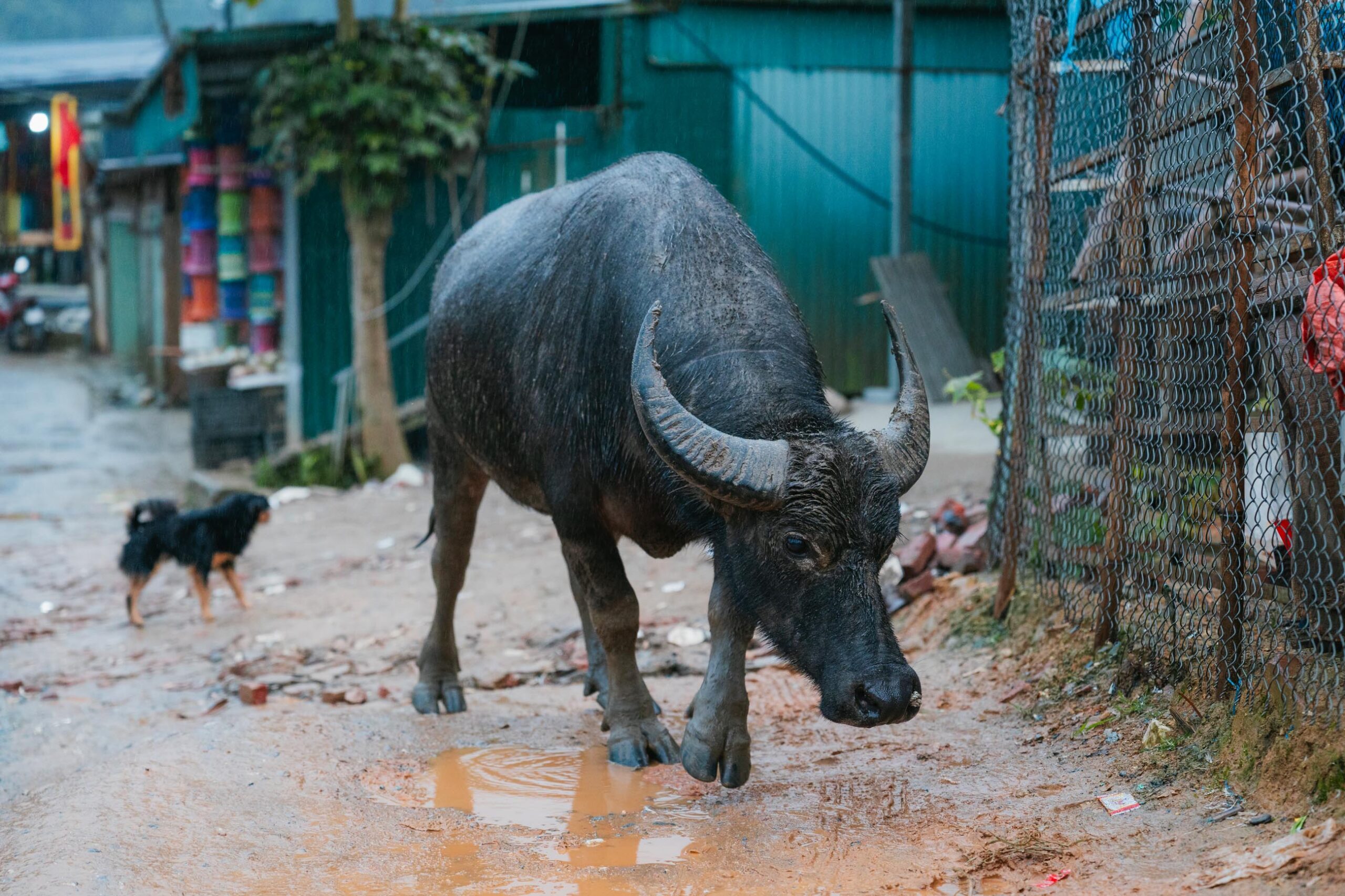
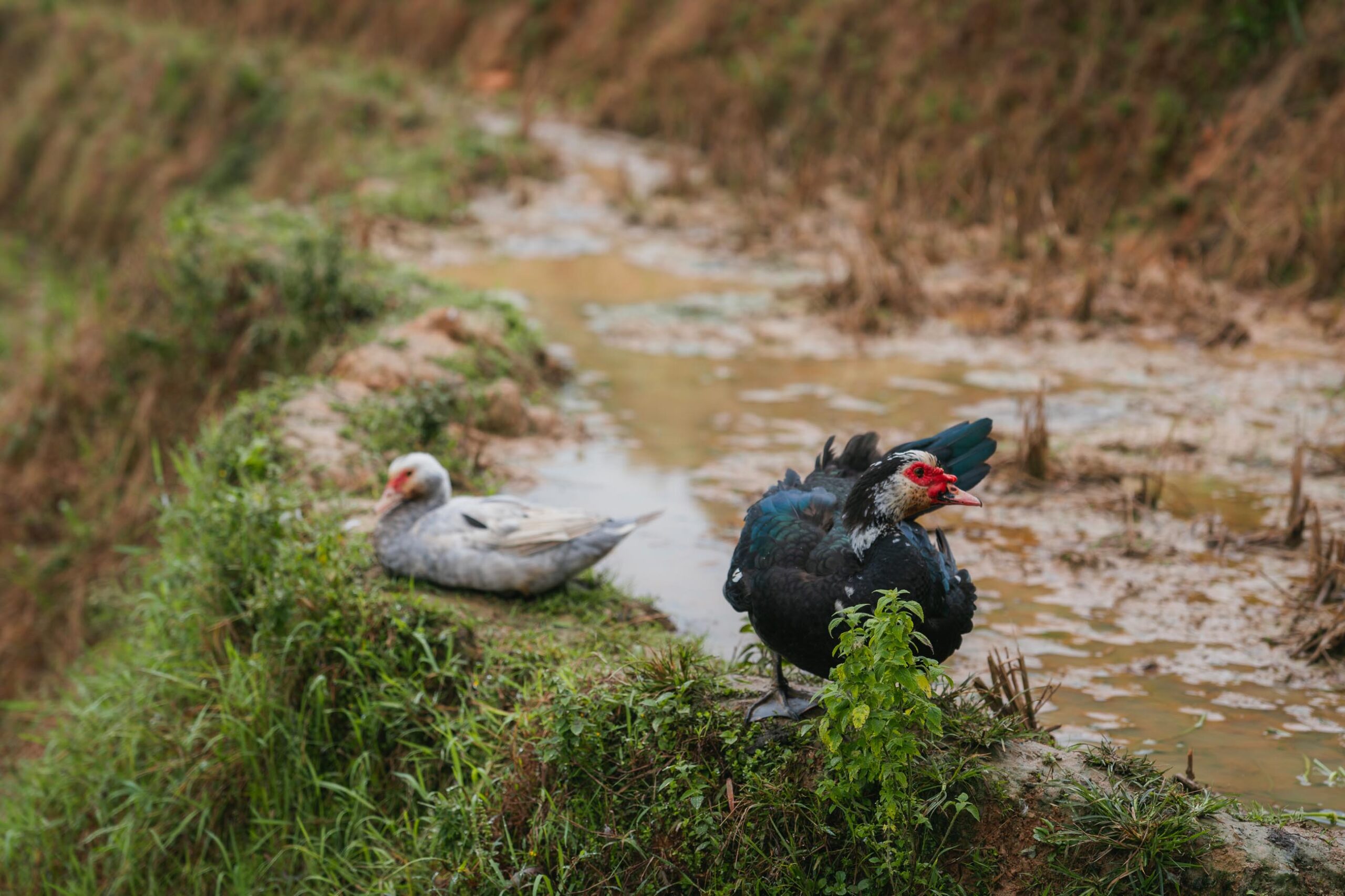
The path is often muddy and slippery. We cross terraces inhabited by buffaloes, chickens, and dogs, observe different crops—corn, rice, and flowers such as indigo, used to dye clothes—and pass by isolated houses surrounded by greenery. In one of these, we stop to meet a family: a grandmother in her eighties and two grandchildren.
We take a lunch break near Ma Tra, a village about halfway there, at the Nam Duyên restaurant. It is an ideal stopping point for hikers: very basic, but with excellent food. We order noodles and fried rice.
Along the way, we also meet three women from the village of Ta Phin, some belonging to the Black Hmong minority, others to the Red Dao. They have been working in the fields and insist that we buy some handmade bags. In exchange, they give us small items made on the spot from plants gathered nearby.
The trail continues with constant ups and downs, lots of mud, and slippery sections. We walk in short sleeves, completely overheated, while they consider the temperature rather cold—in Hanoi, incidentally, they had warned us of “extreme cold.”
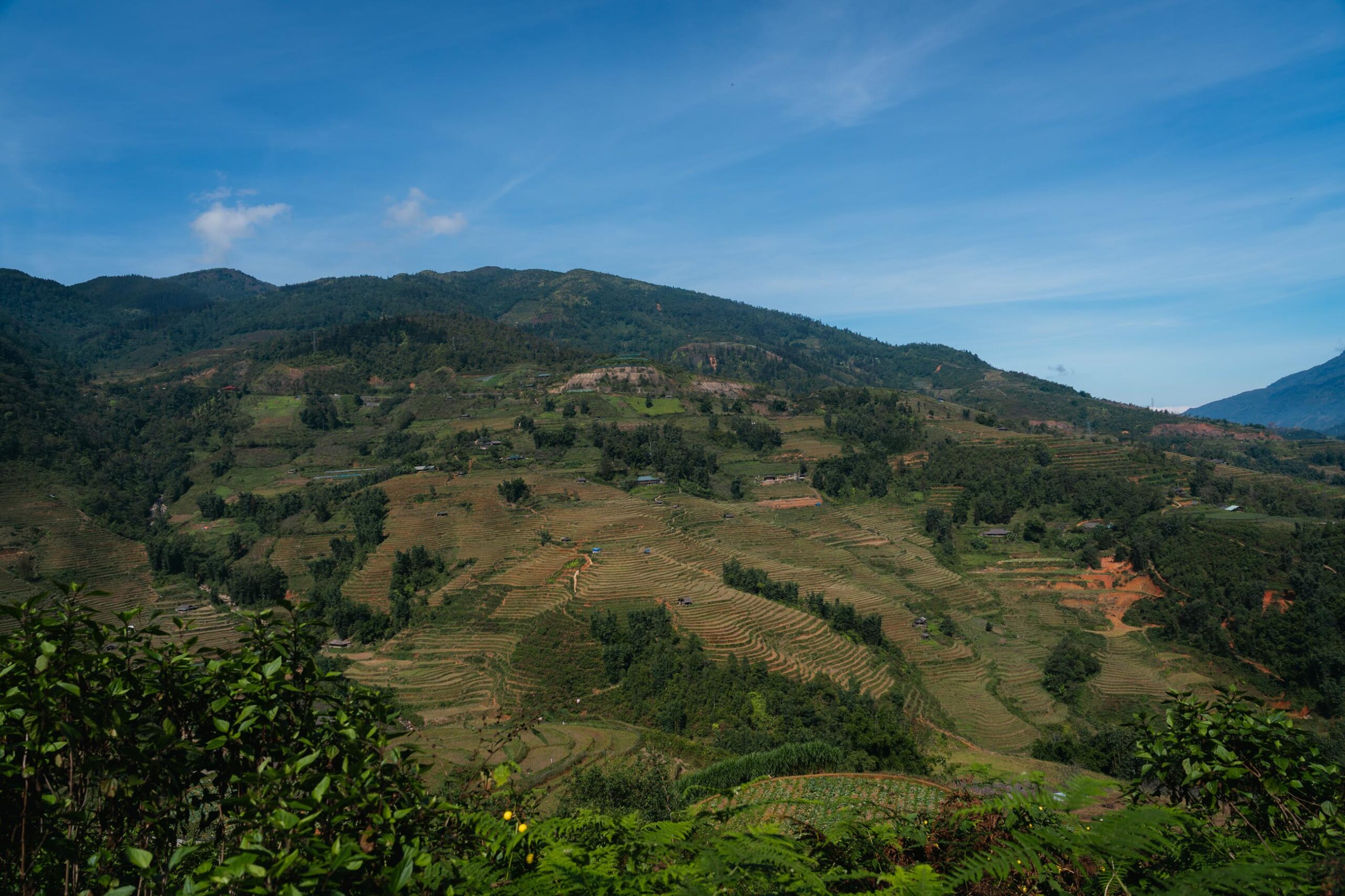

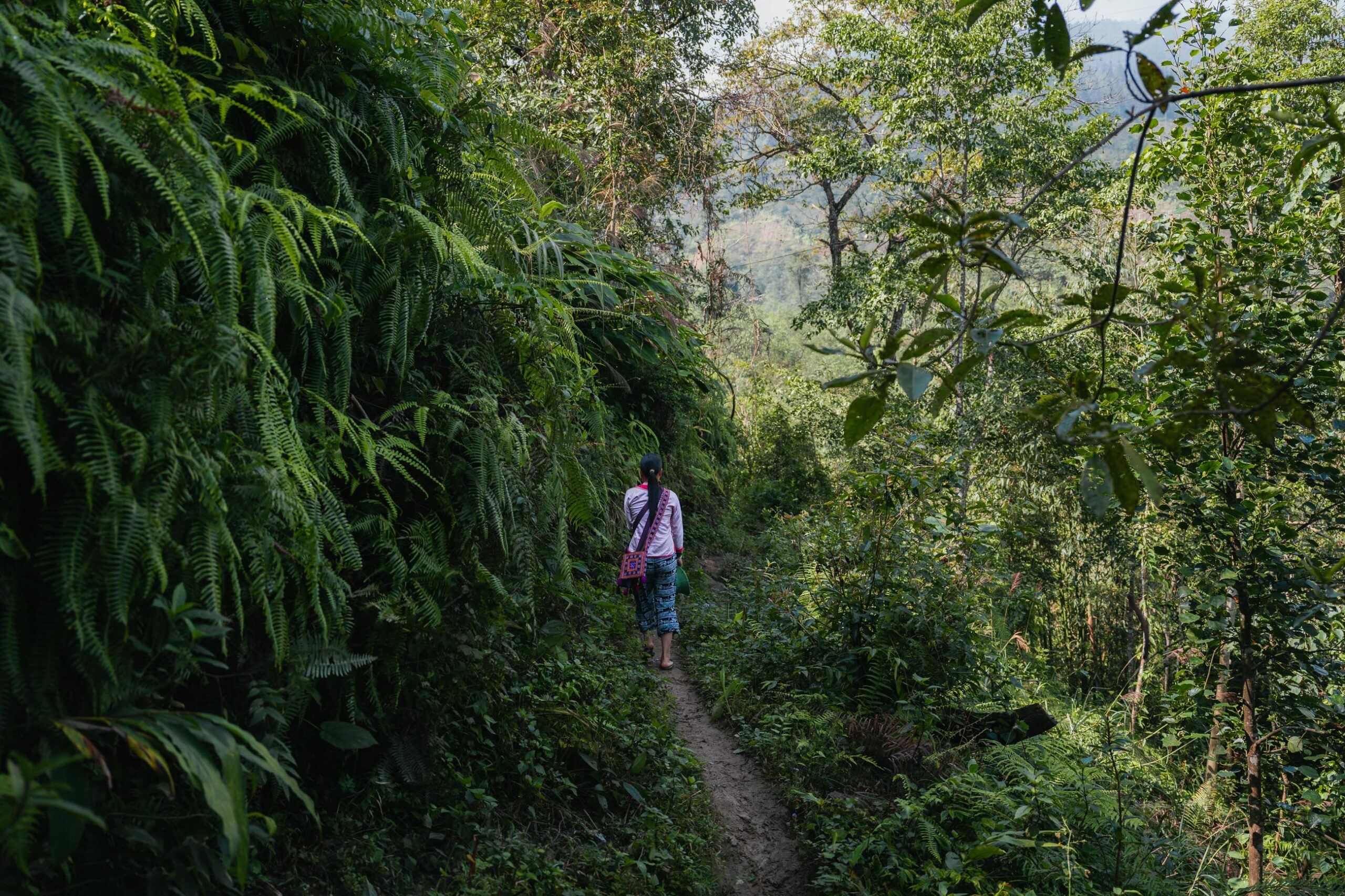

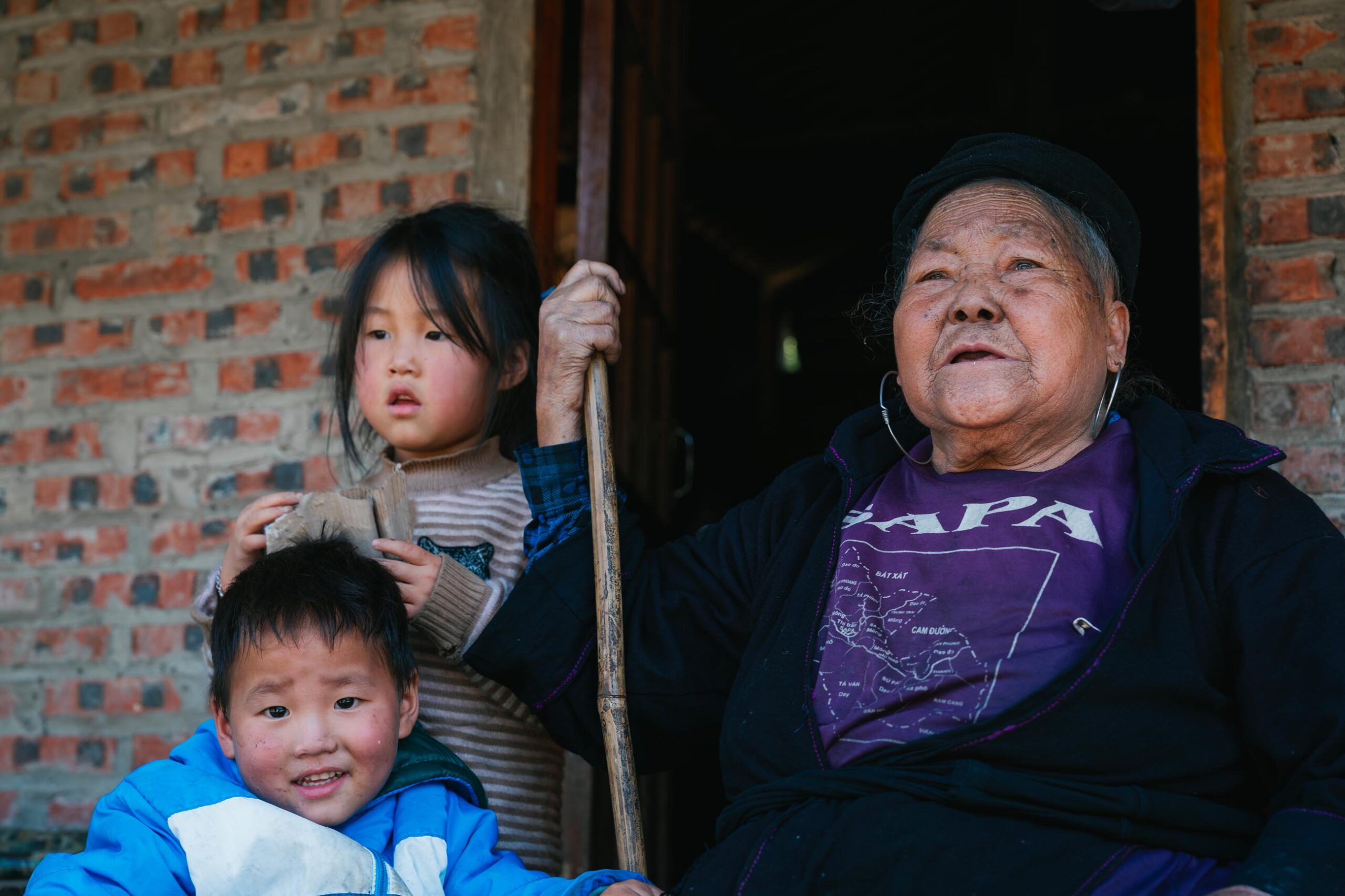
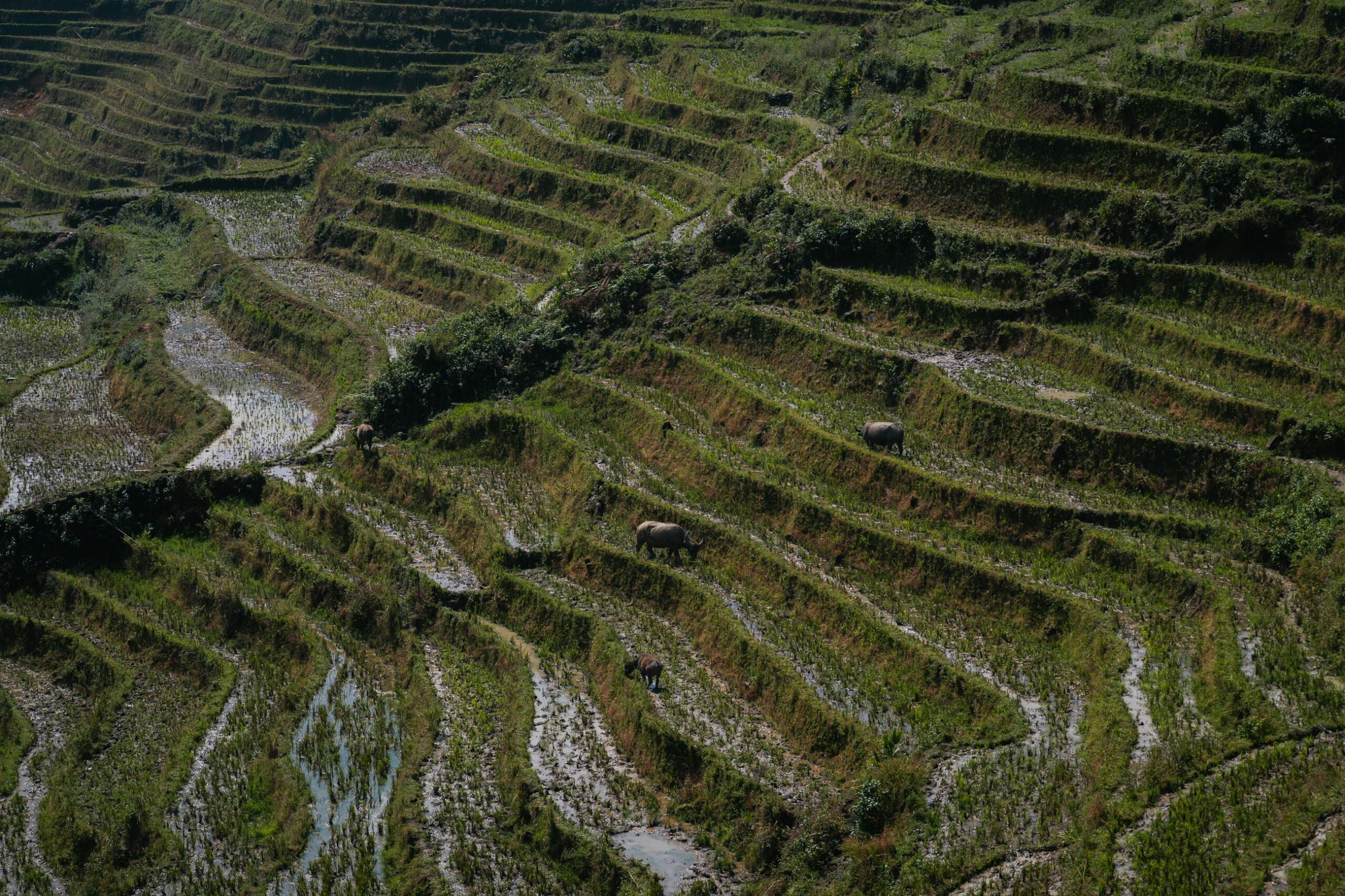


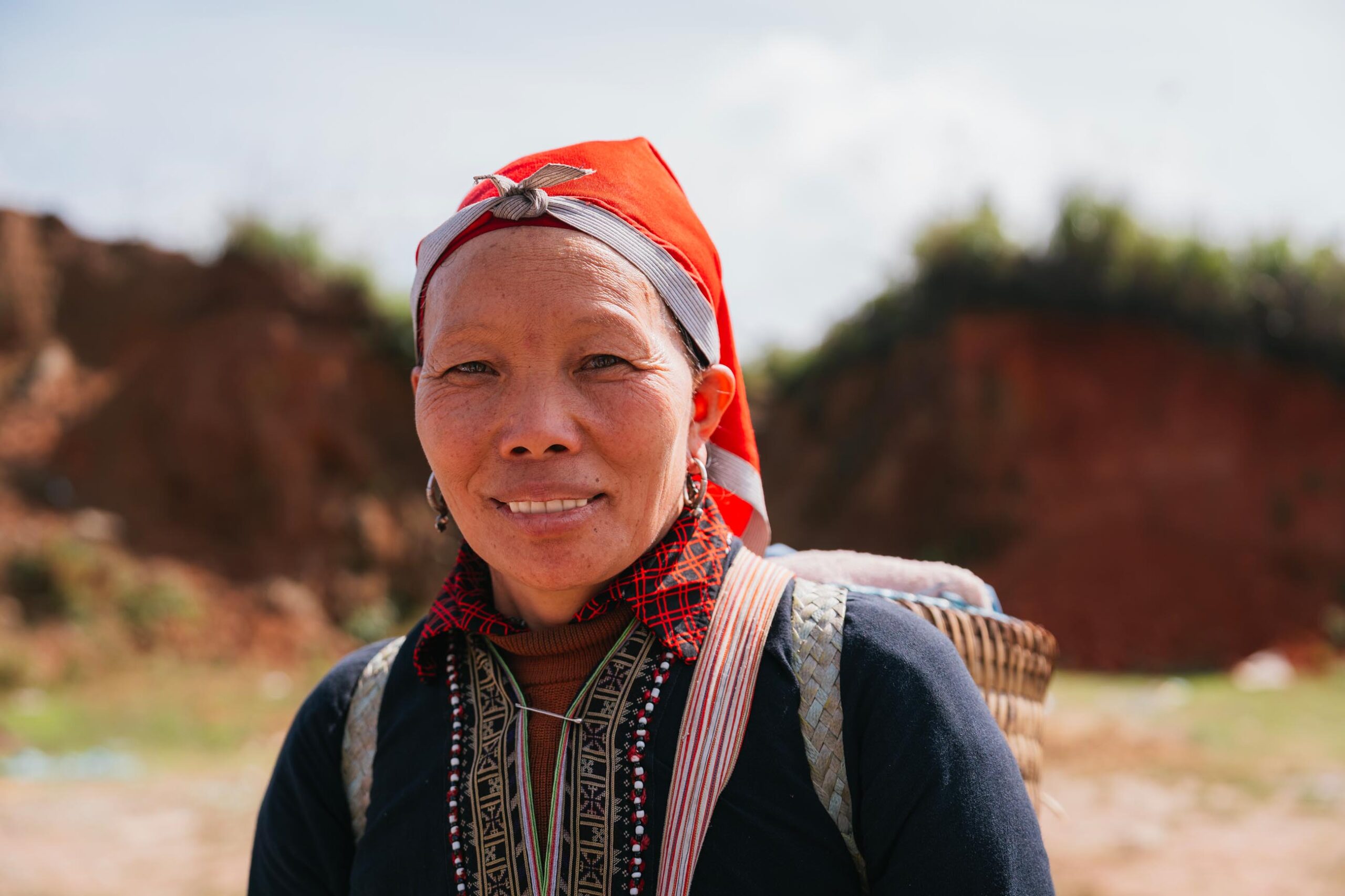
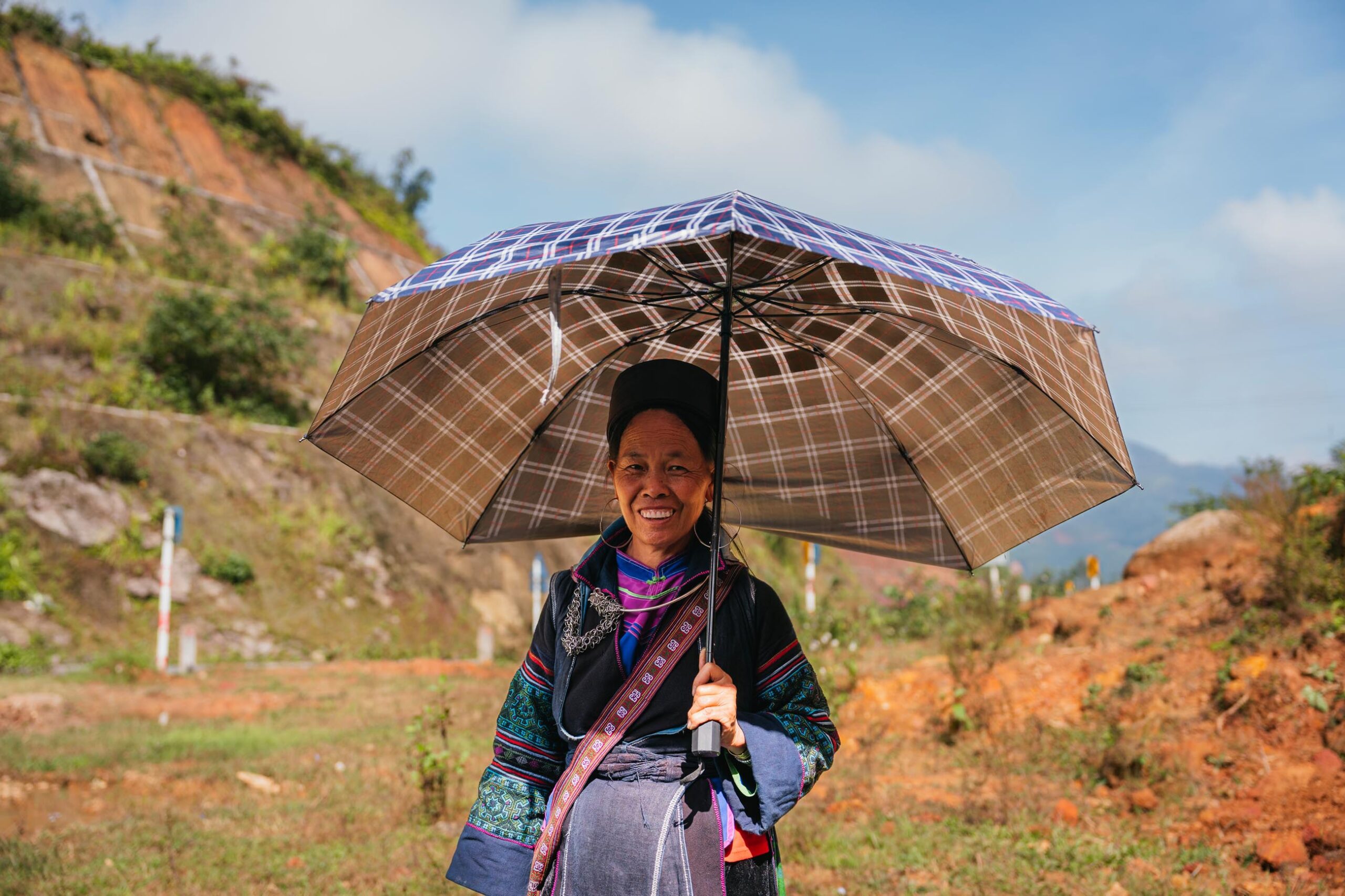
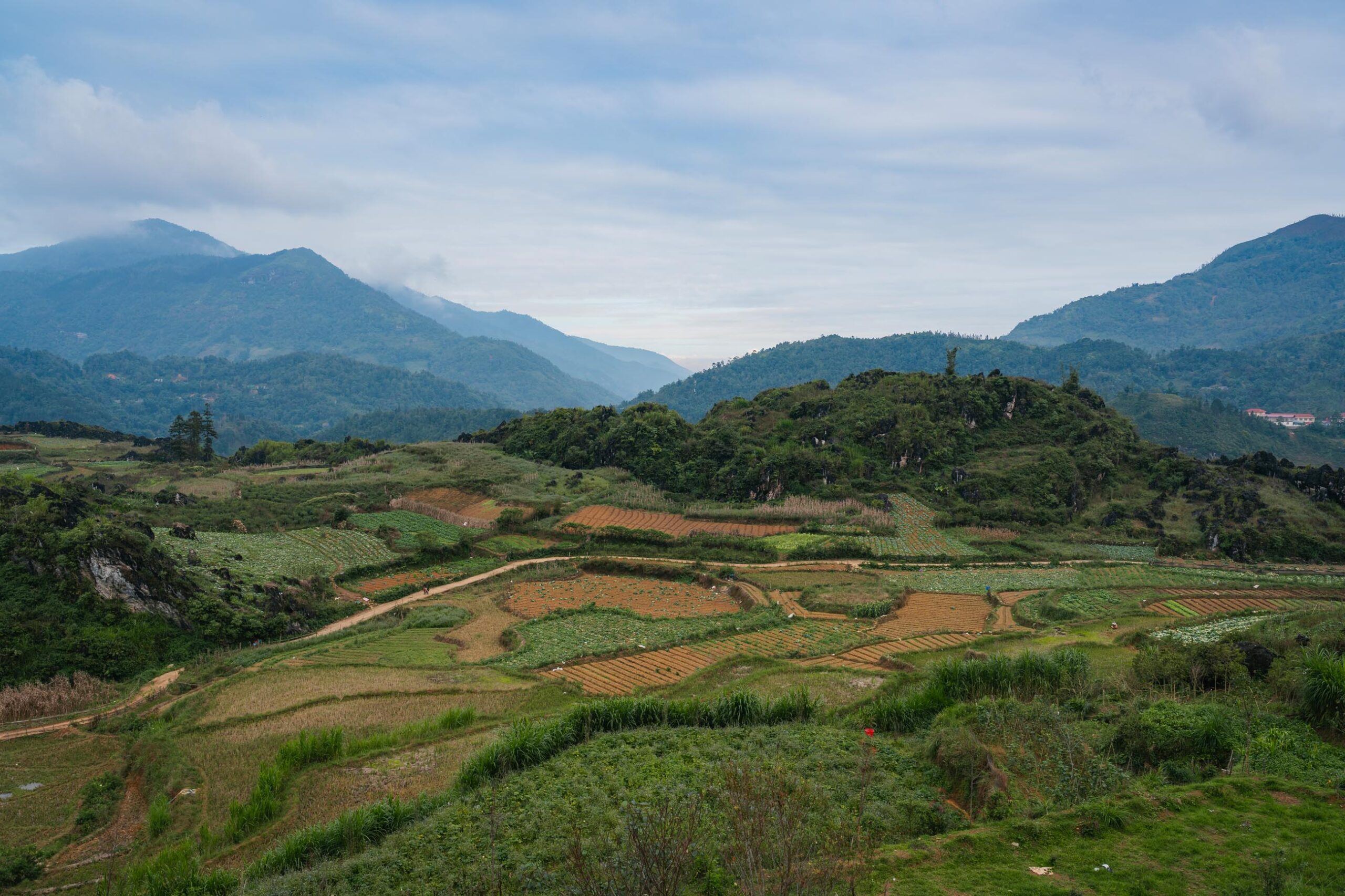
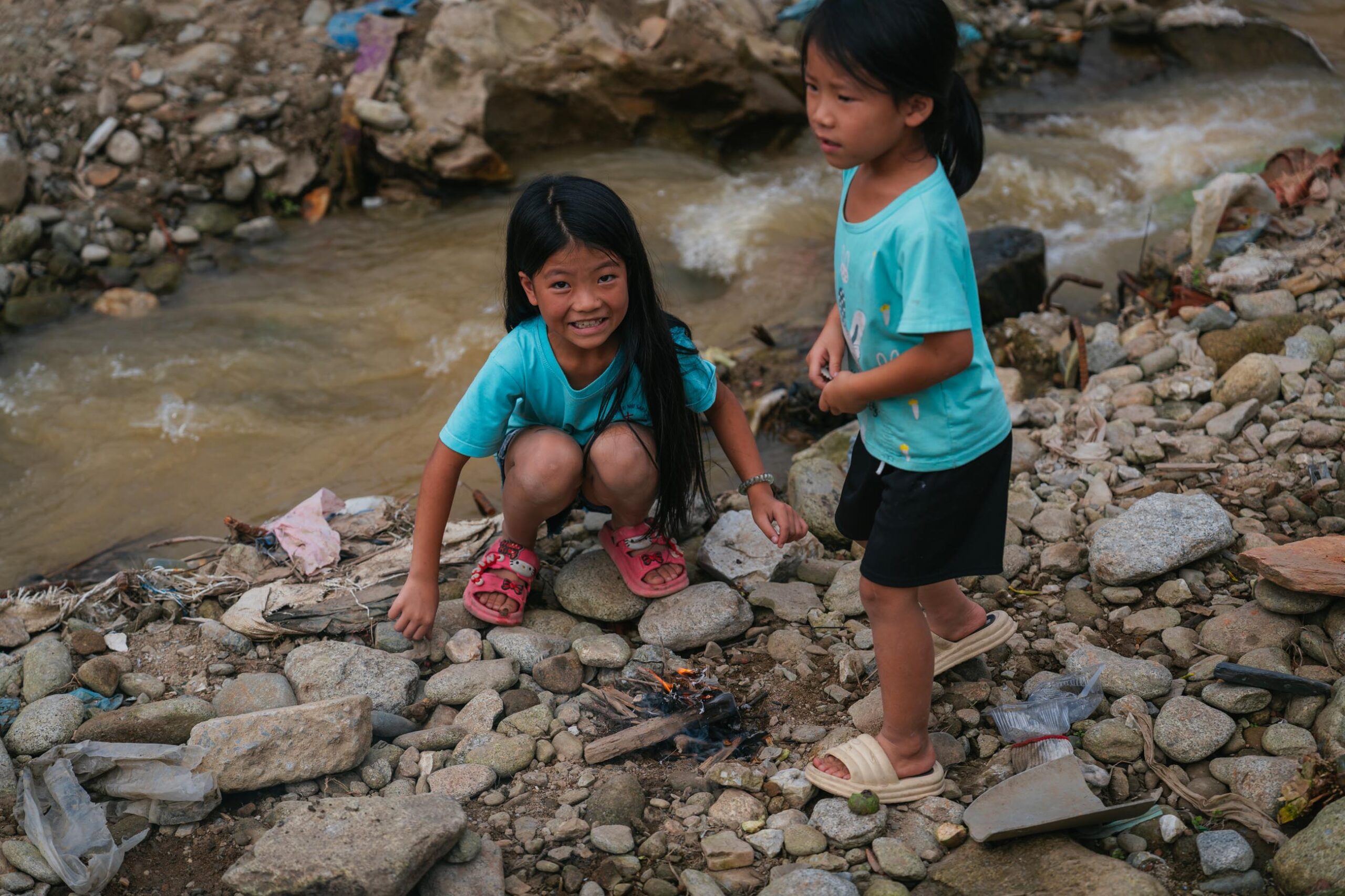
Sa Sa tells us that in her village, Lao Chai, all the inhabitants belong to the Black Hmong ethnic group, while in Ta Phin the population is made up of both the Red Dao—who represent about 70% of the inhabitants—and the Black Hmong.
More generally, five different ethnic groups coexist in the villages around Sa Pa:
Each of these ethnic groups speaks its own dialect and can only communicate with the others through the Vietnamese language. Customs, traditions, and religious beliefs also vary considerably.
The Black Hmong, for example, are mostly Catholic, while the Red Dao follow spiritual practices linked to shamanism: each village usually has a shaman who prays for the ancestors and leads the community’s rituals.
During the walk, Sa Sa opens up to us and begins to tell us something about herself. She is 28 years old, married, and has two children, whom she had very young: the first when she was just 17.
Her husband does not work: he stays at home with the children and drinks heavily. When he drinks, he becomes aggressive and she is often forced to leave, seeking refuge in other houses in the village. She tells us this with disarming calm, explaining that, for them, situations like this are considered almost normal. In the villages, they can choose their husbands, but they marry very young, without really understanding what it means. He is only a year older than her.
Sa Sa never went to school: she cannot read or write, yet she speaks surprisingly good English, as well as a few words of Spanish and French, learned simply by listening and talking to tourists. She completed the entire trek—over three hours of walking, excluding breaks—wearing simple slippers, saying that it is normal for her to walk up to four hours a day.
She owns a motorbike and lives in a wooden house. With the money she earns accompanying visitors and selling textiles, she supports her family and buys rice. It is one of those stories that stays with you: as she walks lightly through the mud, you realize how different her daily life is from ours, and yet how incredibly real.
We arrive in the village, a small cluster of houses scattered among the fields. As soon as we get out of the car, we are immediately struck by an intense scene: some young men have just slaughtered a buffalo and are cutting it up in the street. It is a powerful sight, but it is part of everyday life here.
We walk to the homestay we booked on Booking.com, probably through an agency, because the owners can’t read or write. We are welcomed by the owner’s mother-in-law, who doesn’t speak English, but immediately shows us to our room. We wash the mud off our shoes with a hose and are given slippers to wear inside the house. The room is large, with a private bathroom and shower—a small luxury in such a rural setting.
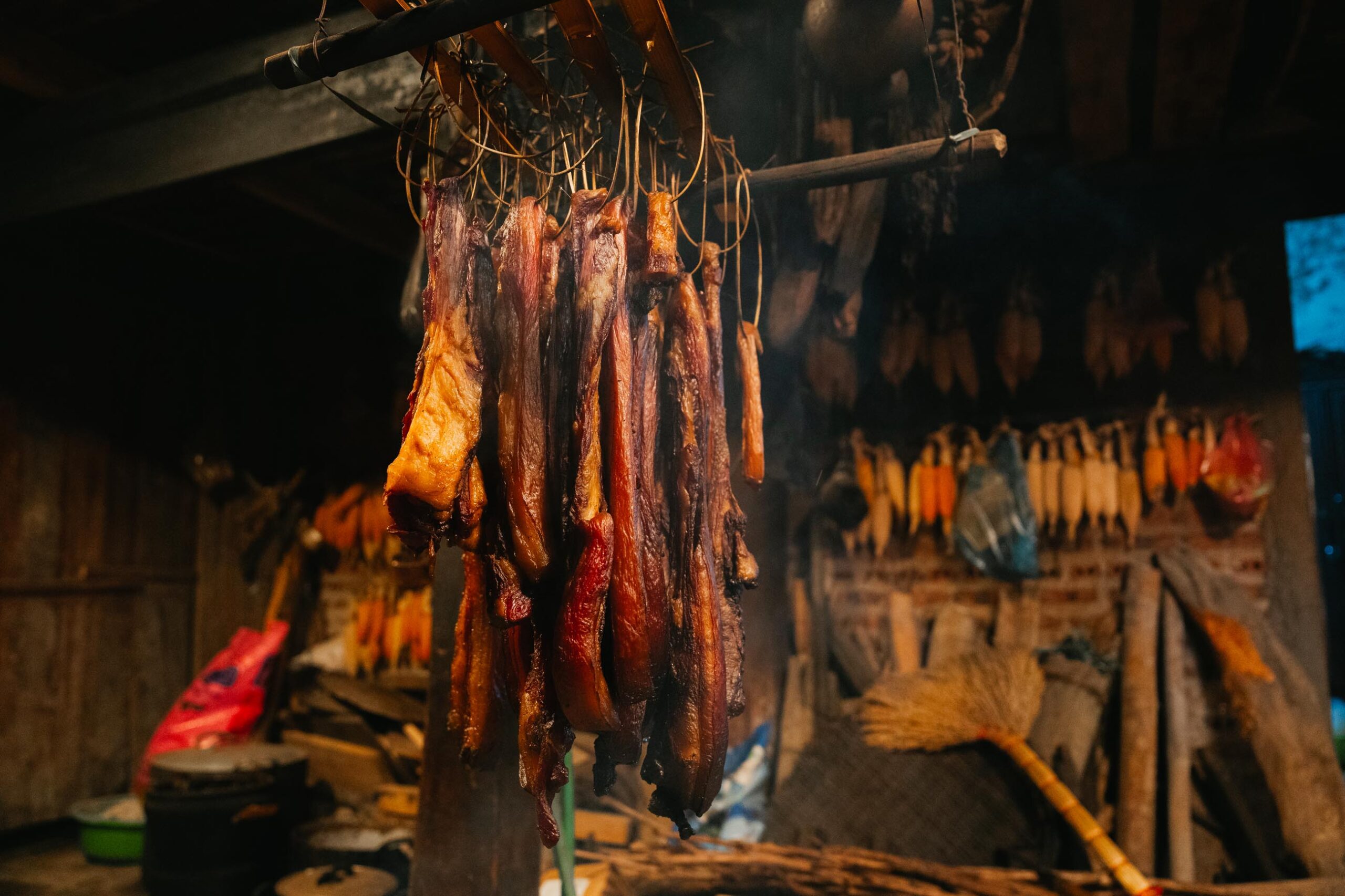
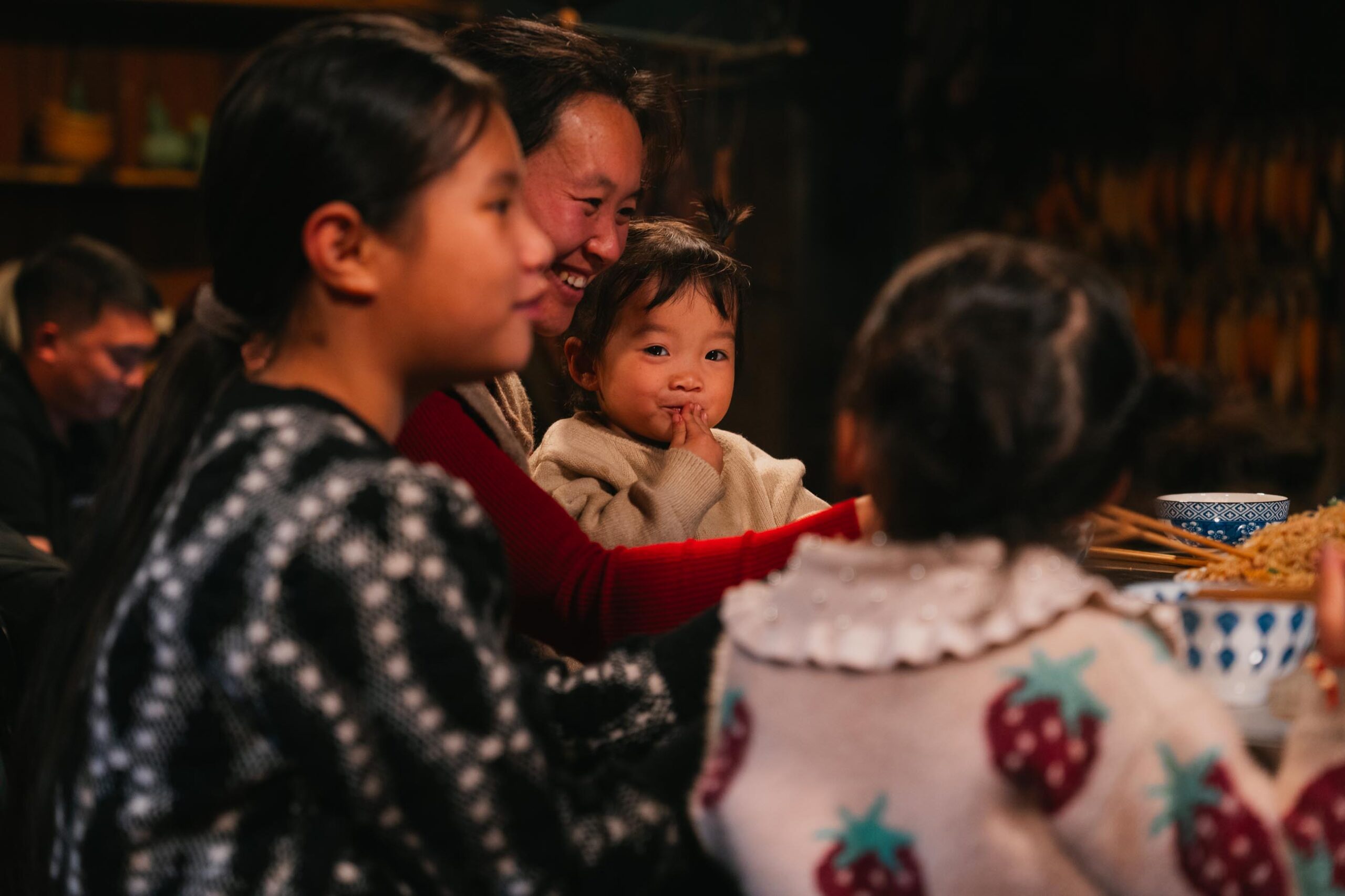
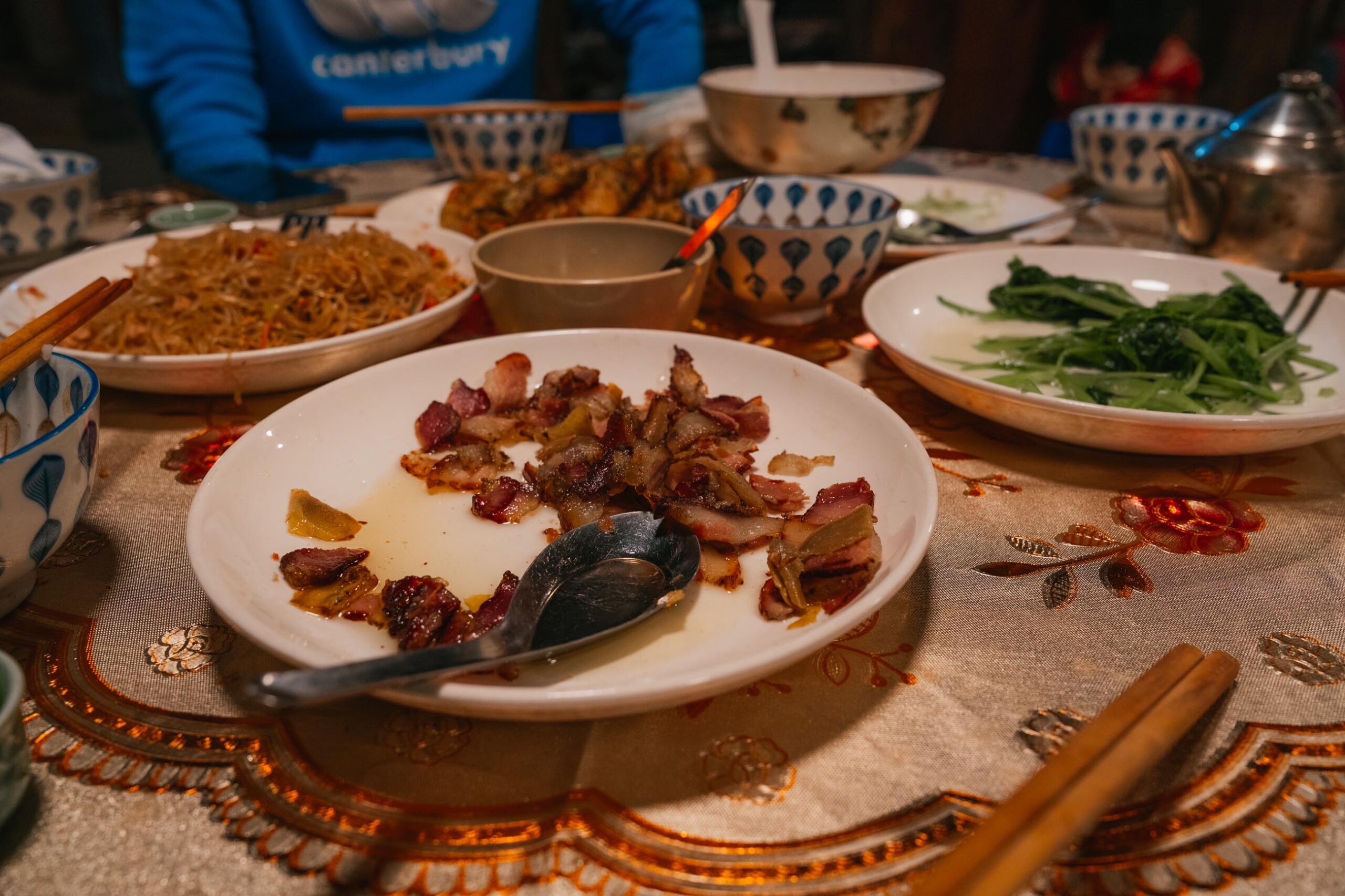
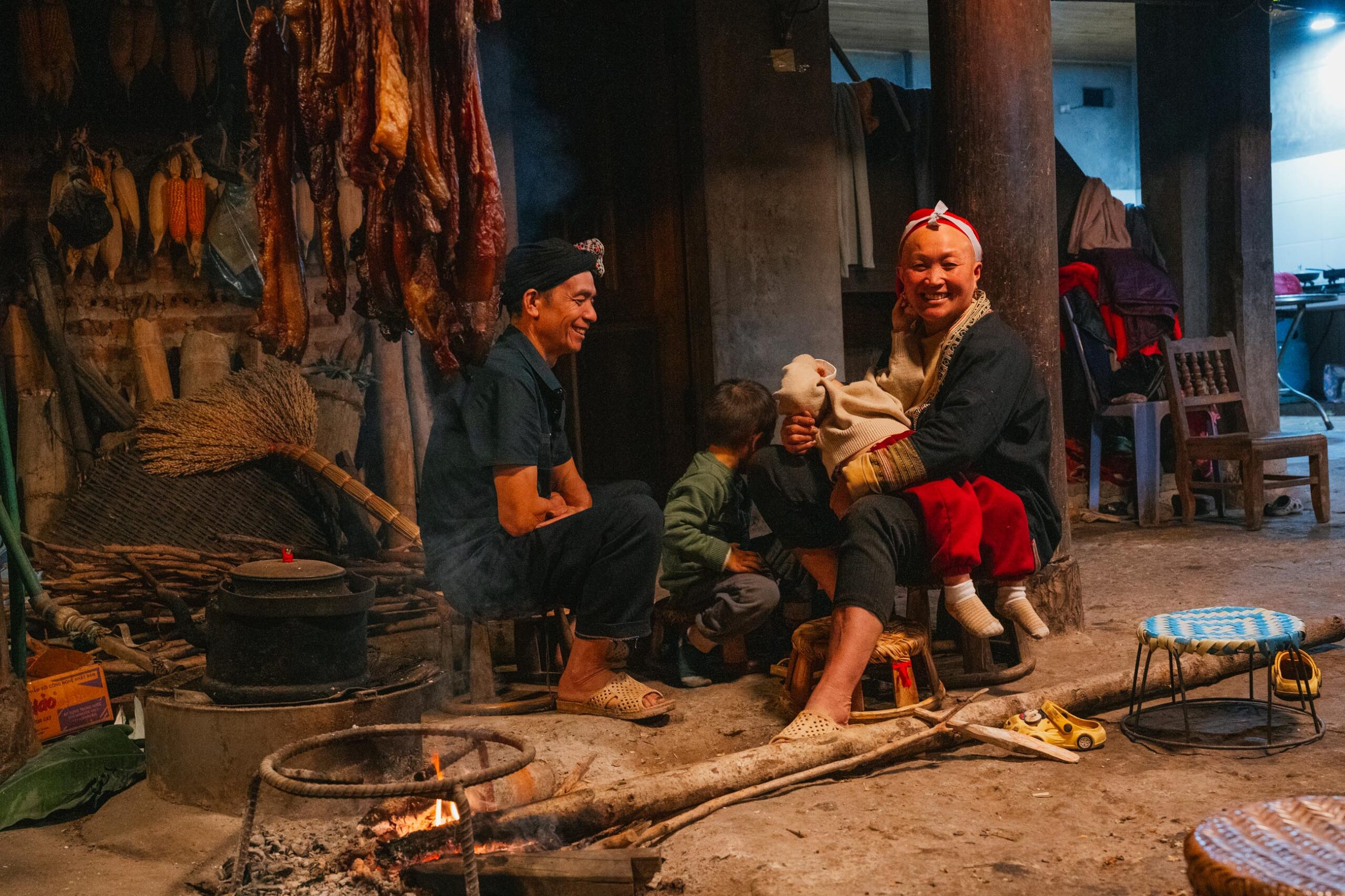
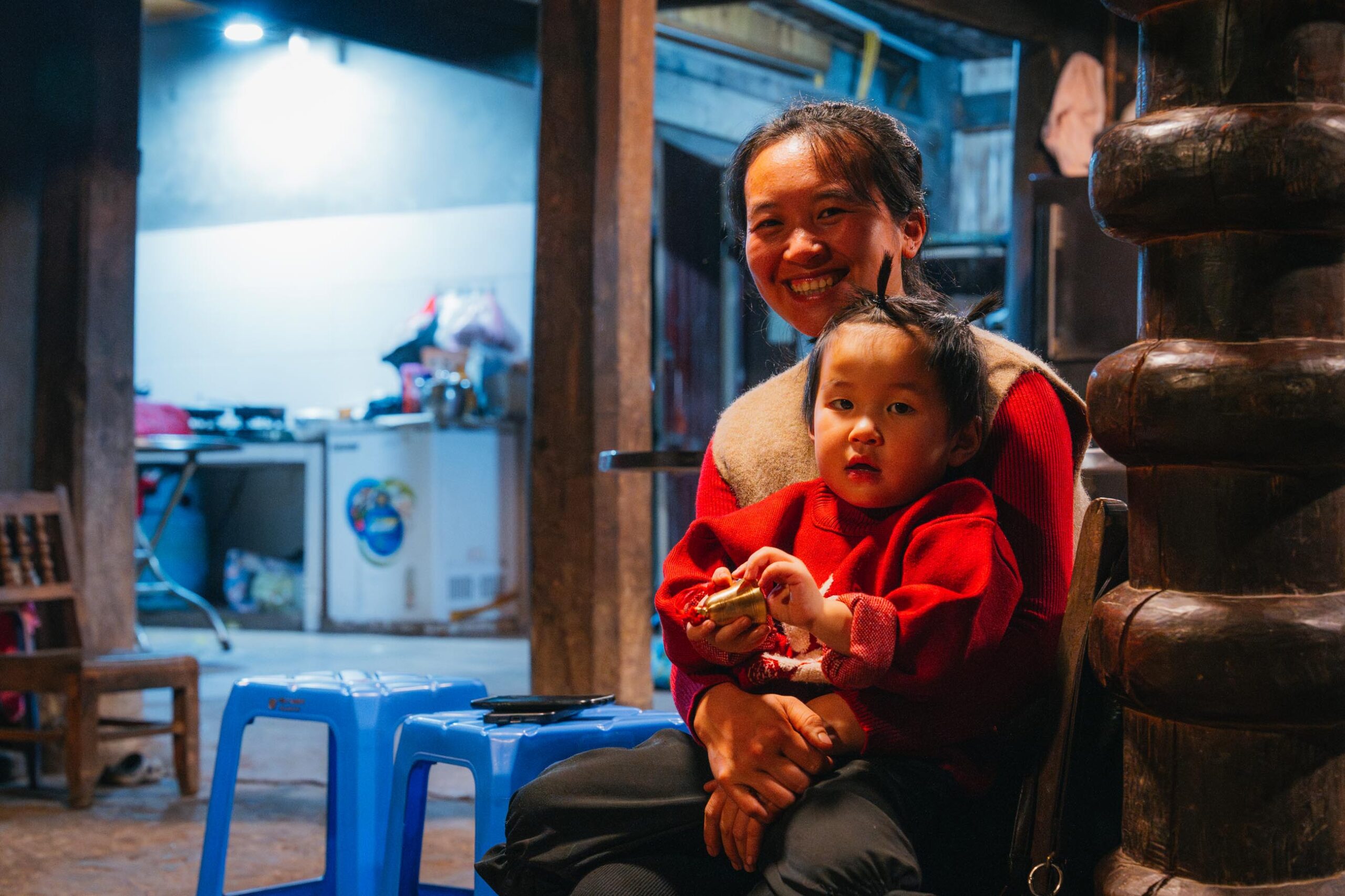
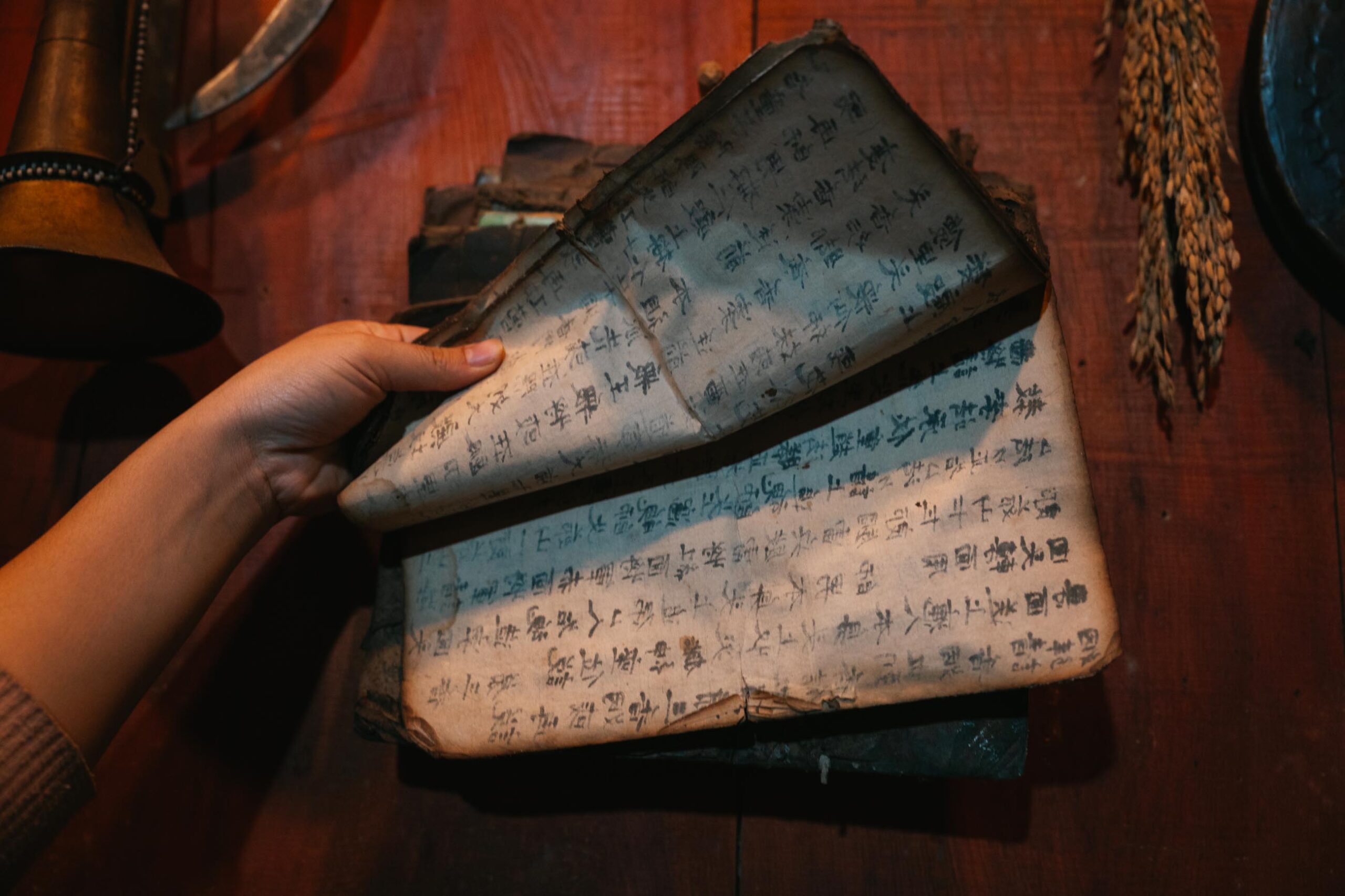
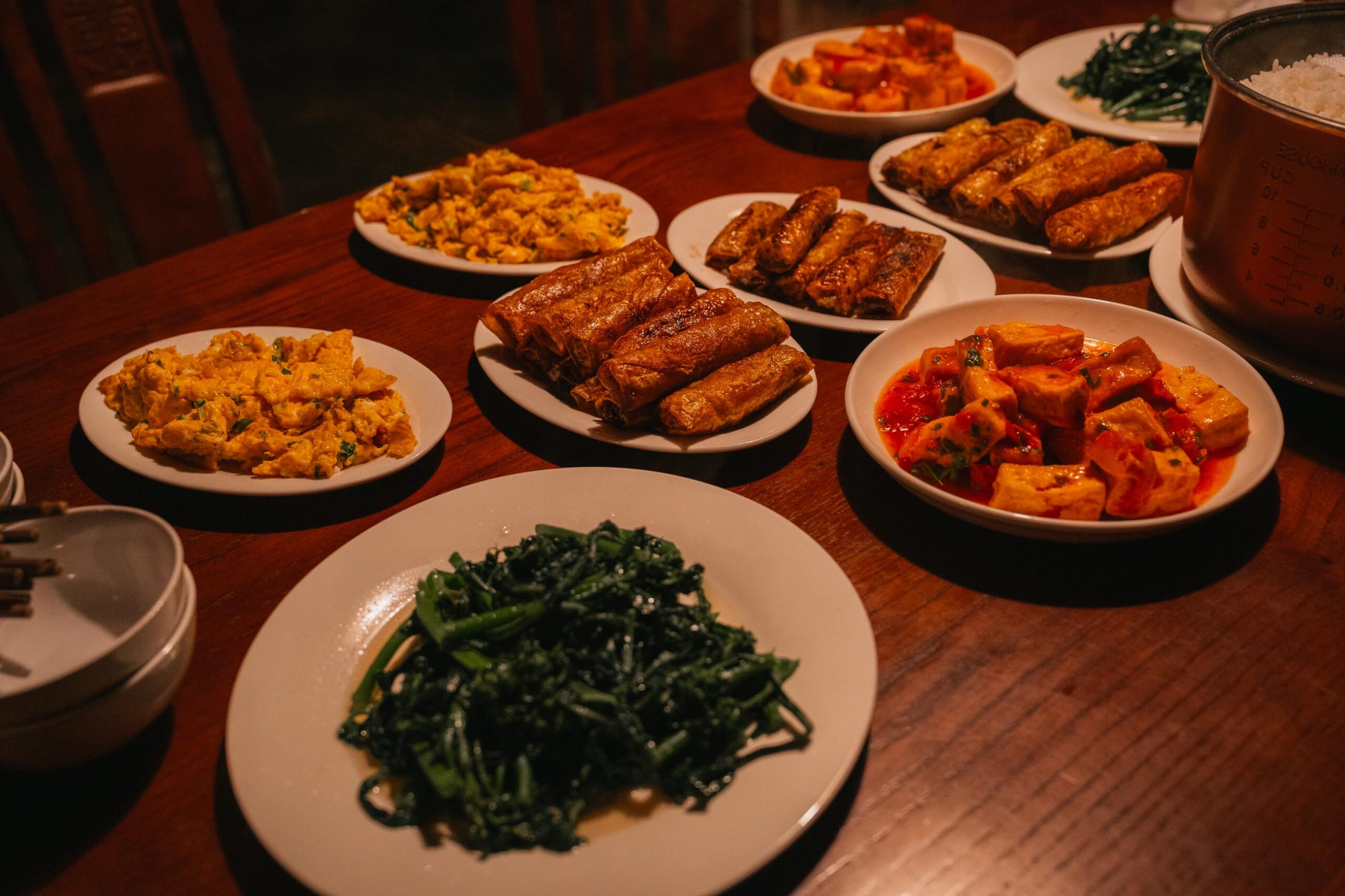
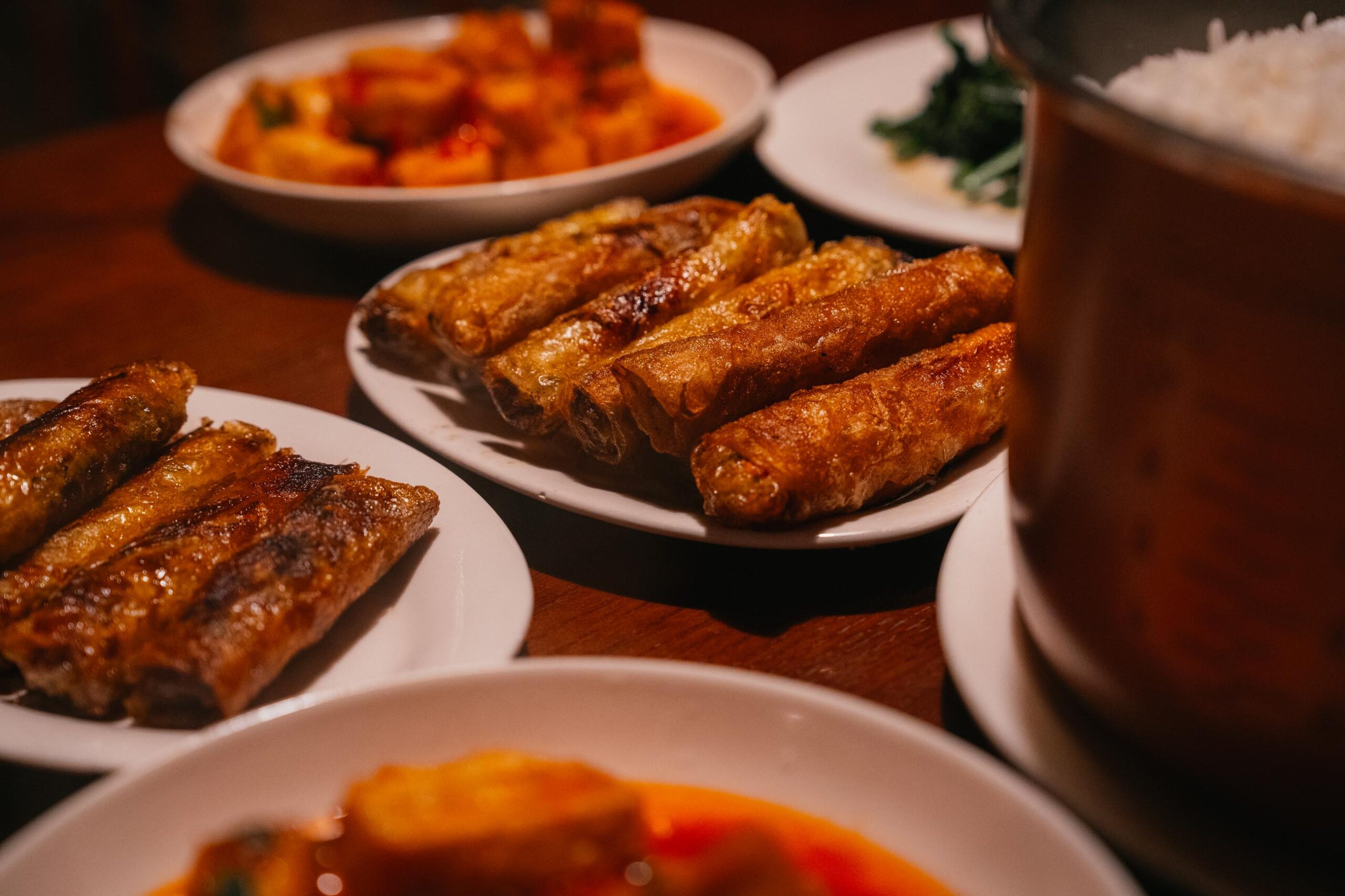
In the evening, we have dinner by the fire with the family: rice, noodles, spring rolls, vegetables including the typical susu, and smoked pork prepared by them. The owner, who speaks English well, tells us about her family and the traditions of the Red Dao. Two of the children present are her children, the others are her sister’s, who is also at dinner. She explains that in their generation, they can choose their husband, but the final decision is verified by consulting a sacred book of the shaman, who assesses compatibility based on birth dates. Previous generations, on the other hand, married very young: grandparents even at the age of 11, had many children, and often saw the face of their future spouse only on their wedding day.
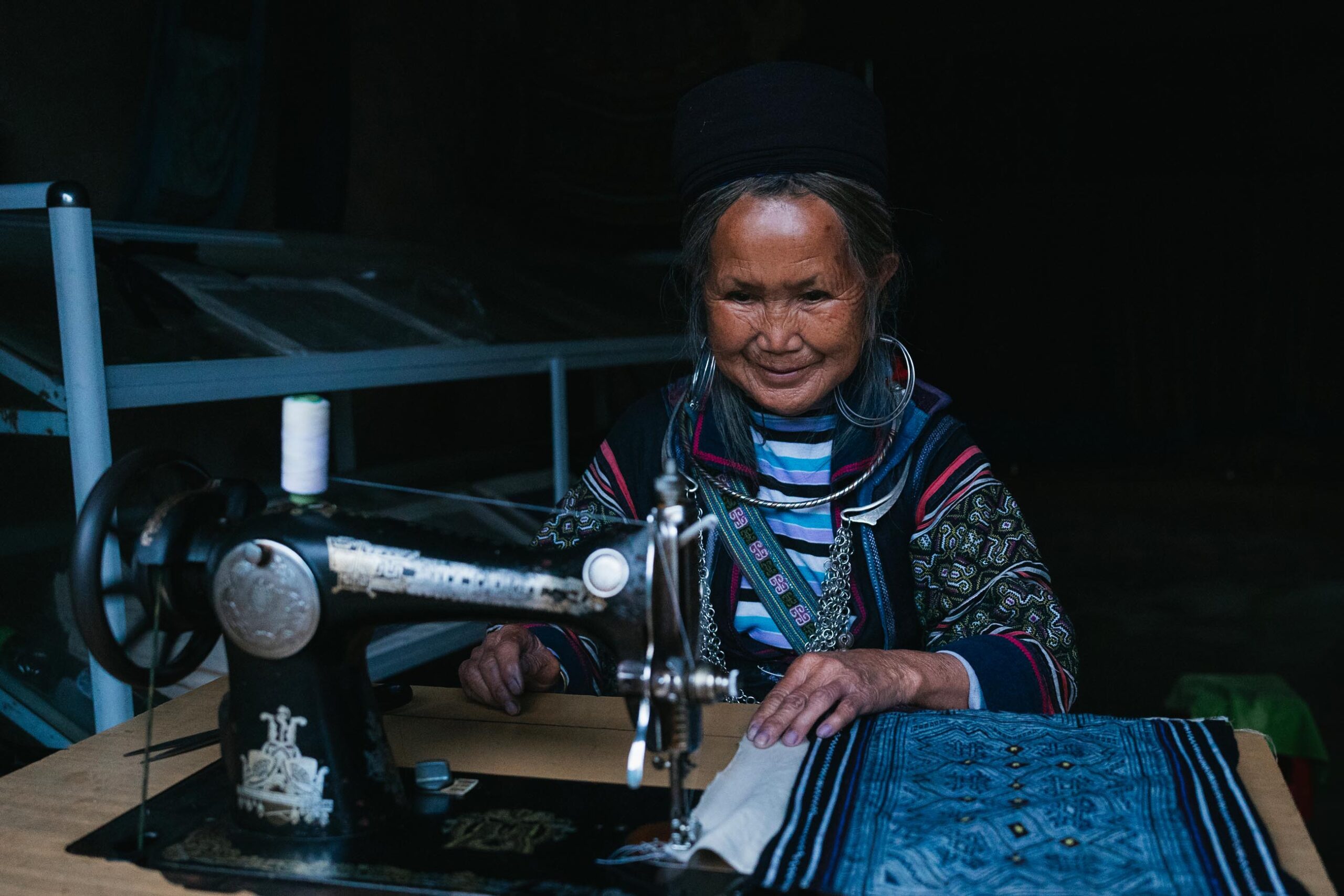
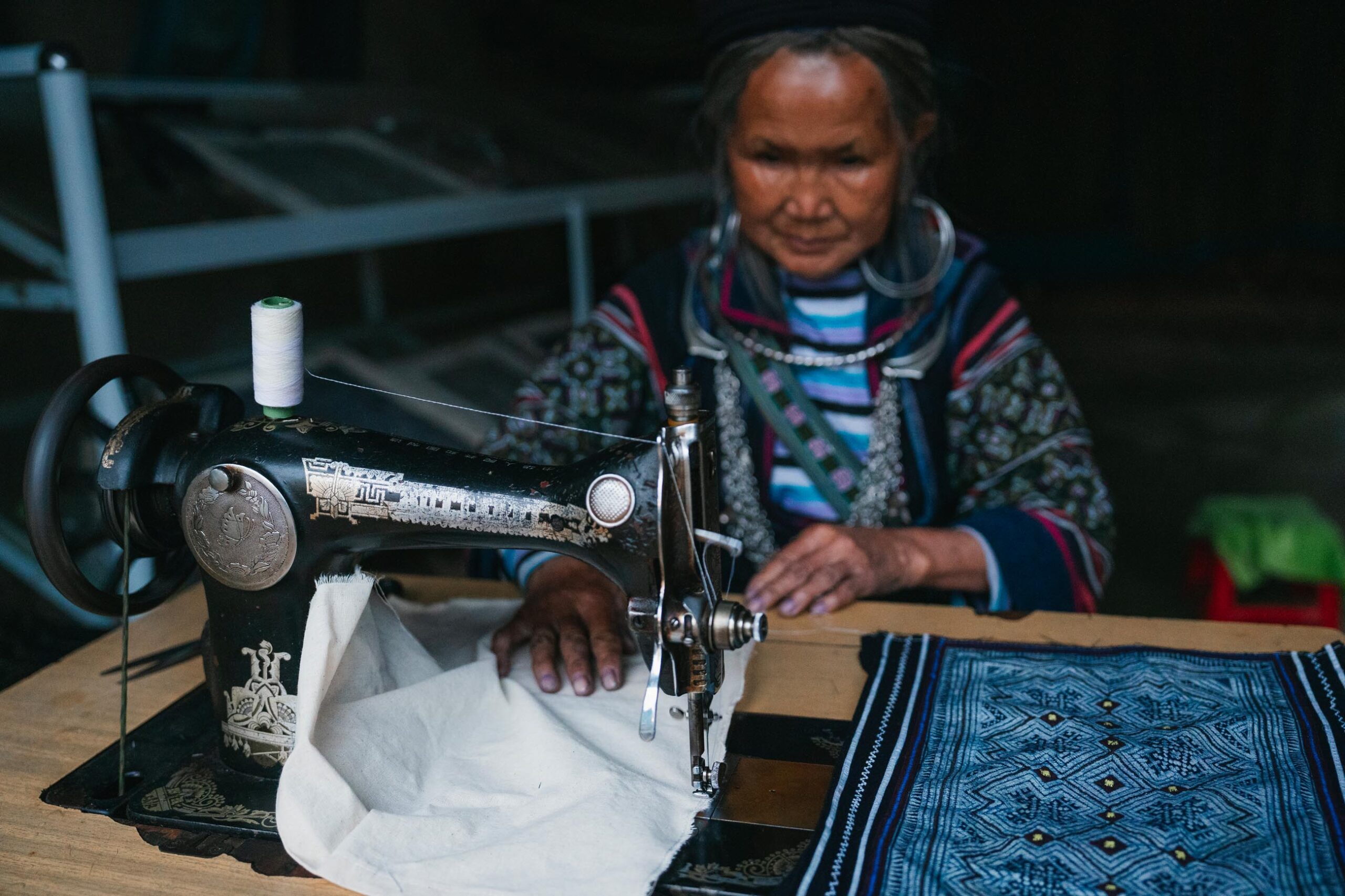
The male members play ritual instruments—gongs, drums, buffalo horns—and some study to become shamans, a practice that requires years of training. The females, on the other hand, work in the fields in summer and sew in winter: the owner tells us that it took her a whole year to make her wedding dress and her husband’s, sewing from morning to night. They all live together in a homestay with her husband’s family: her father-in-law is a shaman and her husband is studying to become one himself one day (it takes 30 years of study, and only 3% of the population becomes one). It is a true extended family, with energetic children — who study from an early age — and adults with hands and feet marked by work, but always neat and tidy.
They prepare special breakfasts for guests, such as crêpes with bananas and honey, and on request they offer traditional herbal baths from their ethnic group. Although they are close to the Chinese border, they never travel: they only know Sa Pa and have never been further afield. Tourists who come here are mainly from Europe, America, or neighboring countries such as Thailand.
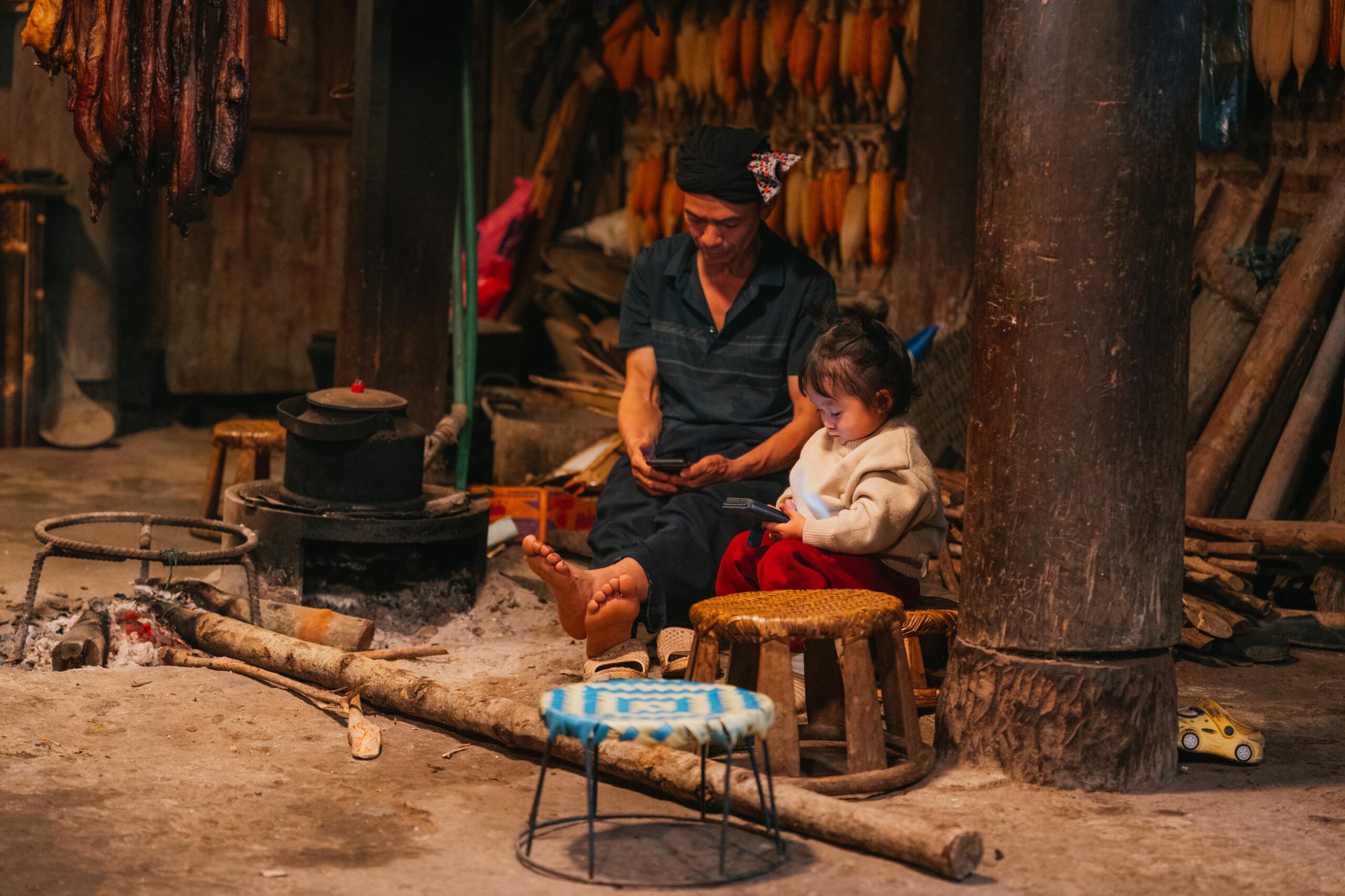
Pieces of meat are hung above the fire to dry, along with mushrooms and plants used as natural remedies. They let us dry our shoes by the fire and even lend us a hair dryer, a small gesture that immediately makes us feel at home.
The nearest hospital is in Sa Pa, but treatment is very expensive. The village is about a 20–30 minute drive away, although the first part of the road is quite rough.
It is a tough place, full of contrasts—modernity and tradition (children play with cell phones), poverty and comfort (they have big, new cars but wear only slippers and their houses have no real floors)—but incredibly authentic and human.


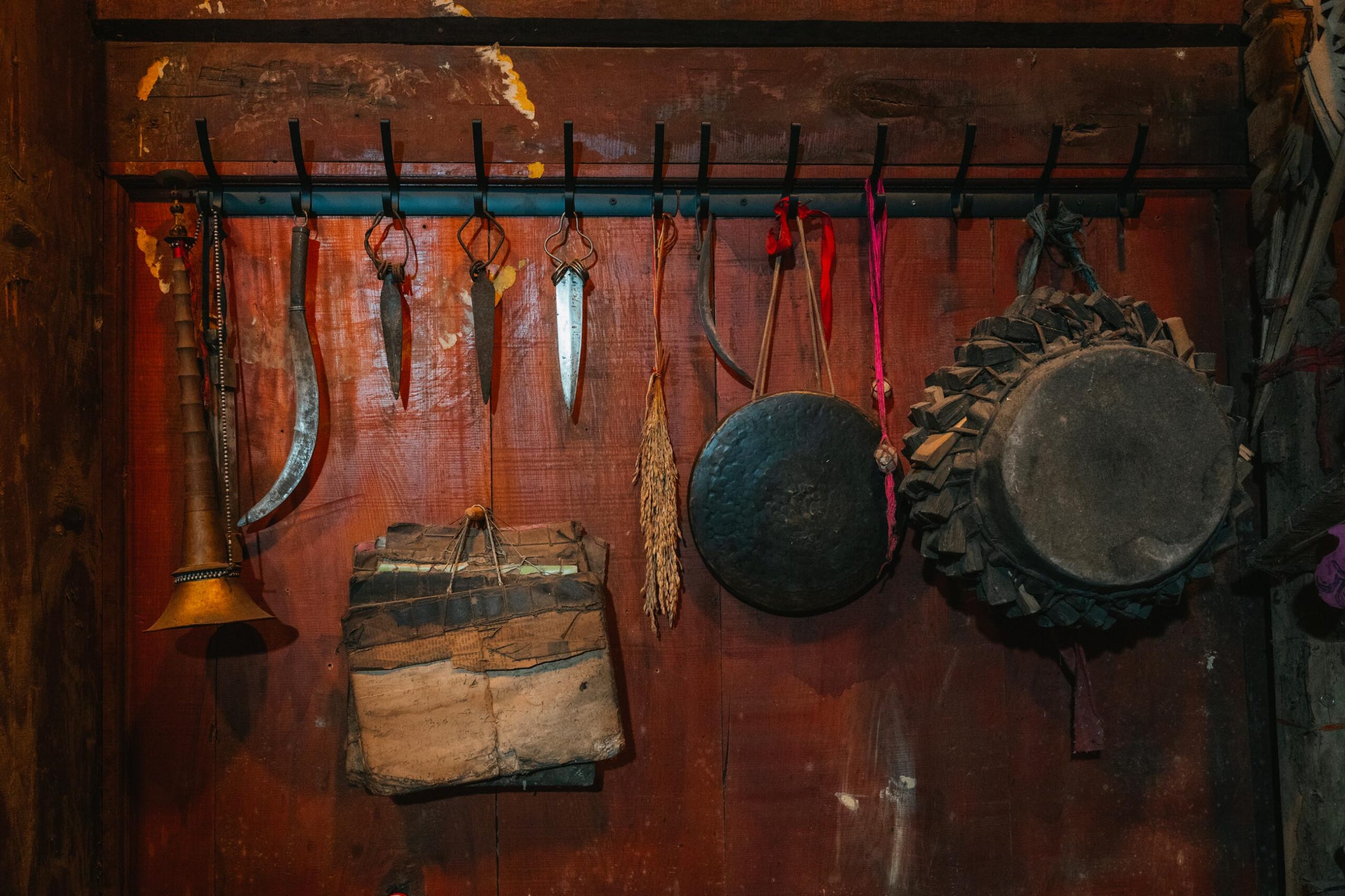

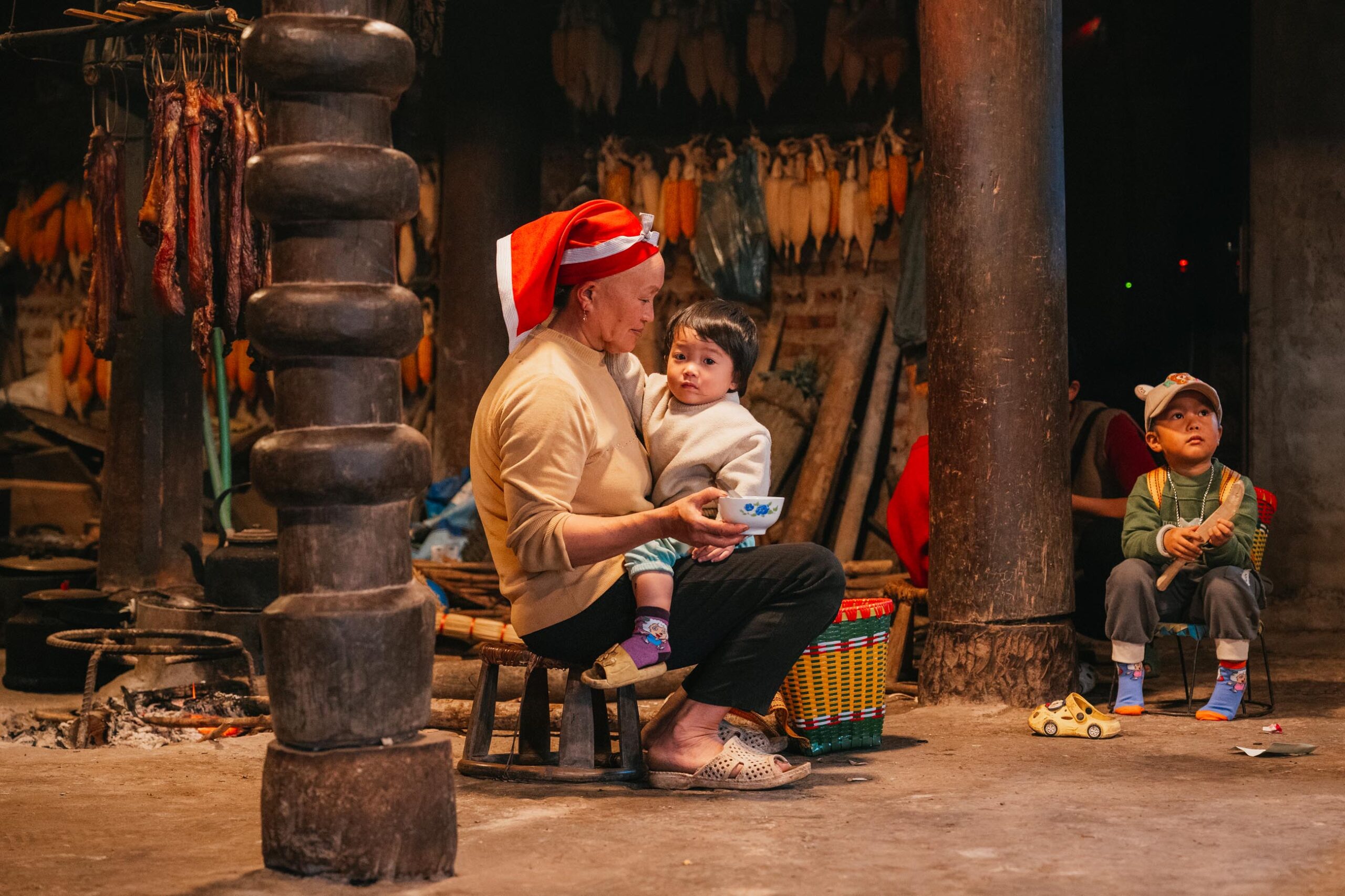
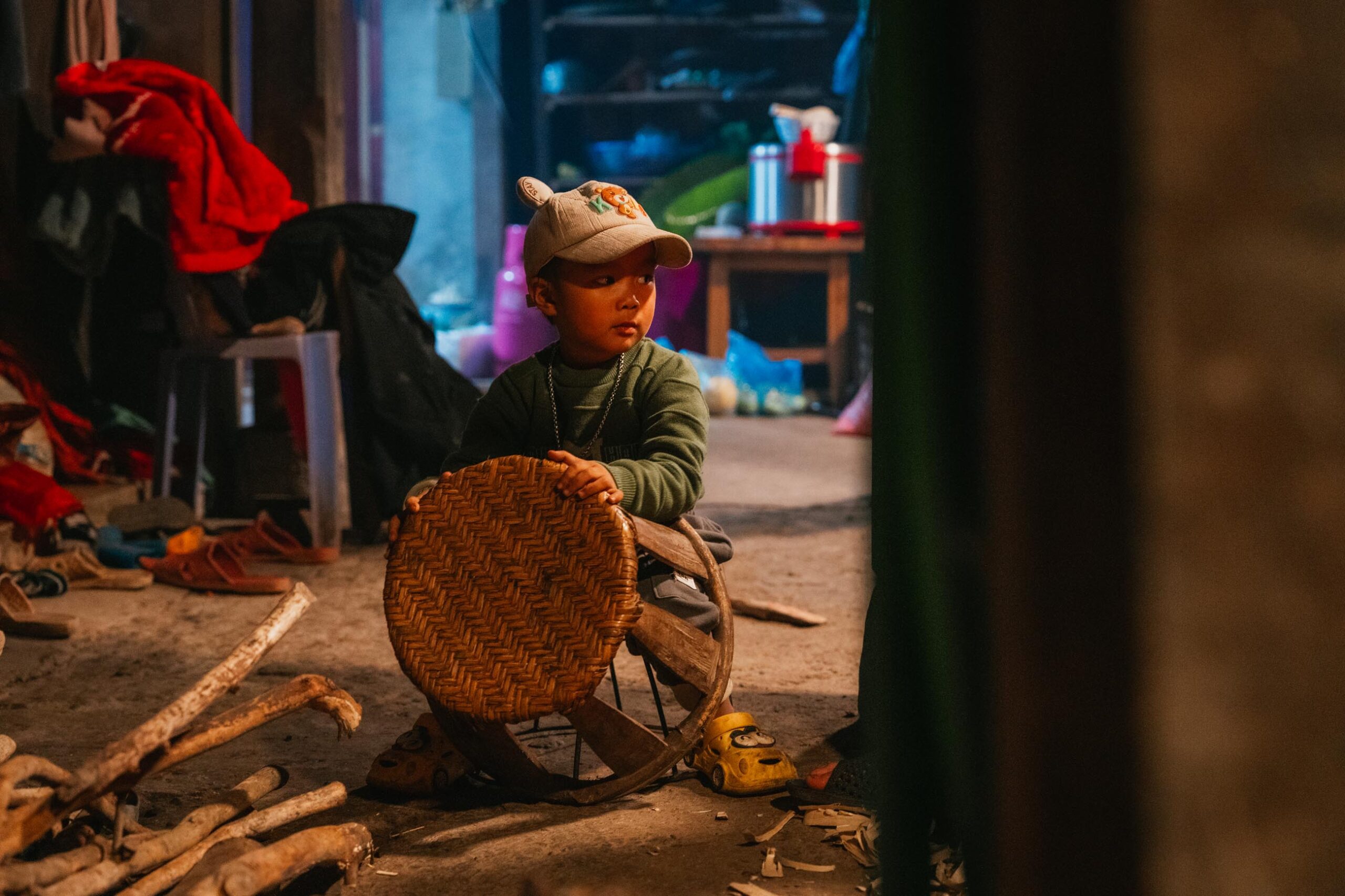
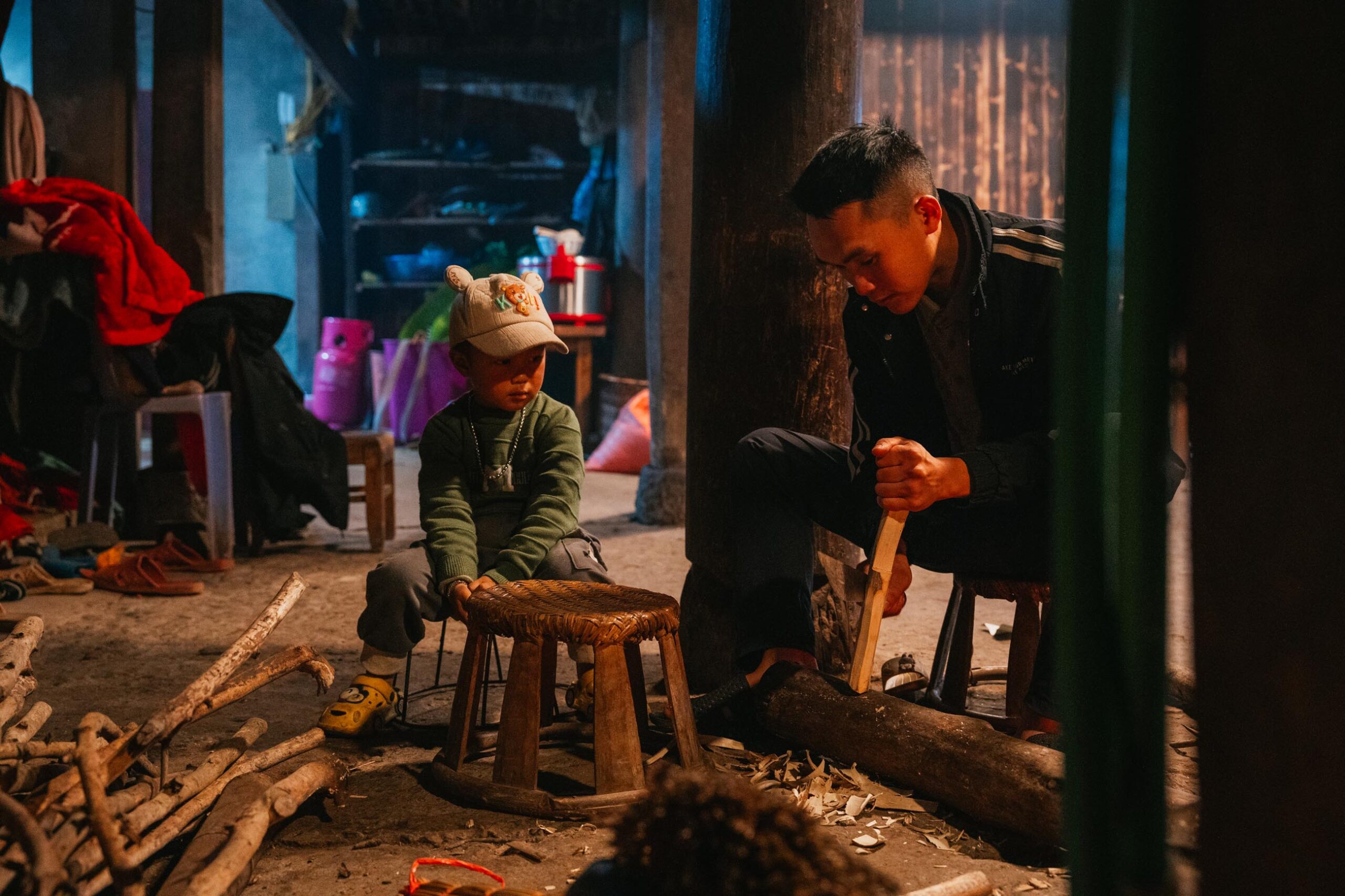
It’s raining today, so our hike is canceled — no big deal, since our shoes aren’t completely dry yet.
After a hearty breakfast at our homestay—we spent just €19 for accommodation and meals—we ask if they can call us a taxi to take us back to Sa Pa.
We spend the morning in a café in the city center and then have lunch at a vegan restaurant ✴️ nearby: really delicious, with a warm and welcoming atmosphere, kittens wandering between the tables, and a small library that invites you to relax.
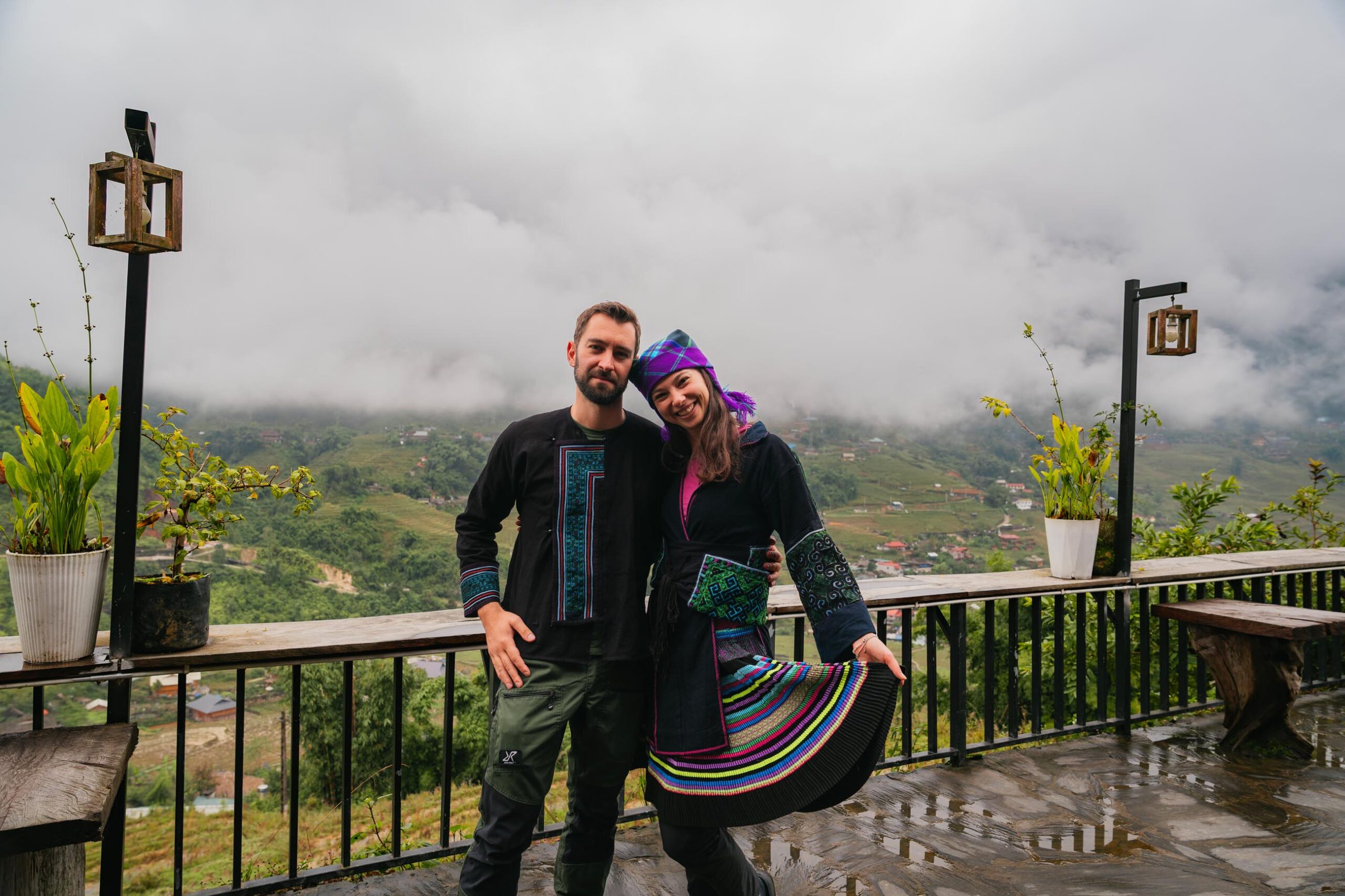
In the afternoon, we take another taxi to the village of Lao Chai, where we have booked our second homestay. Lao Chai is smaller but also more touristy than Ta Phin, with several shops and restaurants. All around, the rice fields shrouded in mist create a surreal landscape.
Our second homestay is located on a hill and offers a splendid view of the rice fields. Compared to the previous one, it is more modern and clean, and the owners—a couple with four children—are also more “modern” in style and approach.
Dinner here is truly memorable: the rolls are exceptional, prepared by the chef of the house, her husband, while breakfast with pancakes is equally delicious.
The owner speaks excellent English, even though she did not attend school, and is originally from the larger, more touristy village of Ta Van, about an hour away. She moved into her husband’s house. The family is Catholic and of Hmong ethnicity; there is a church just a few steps away.
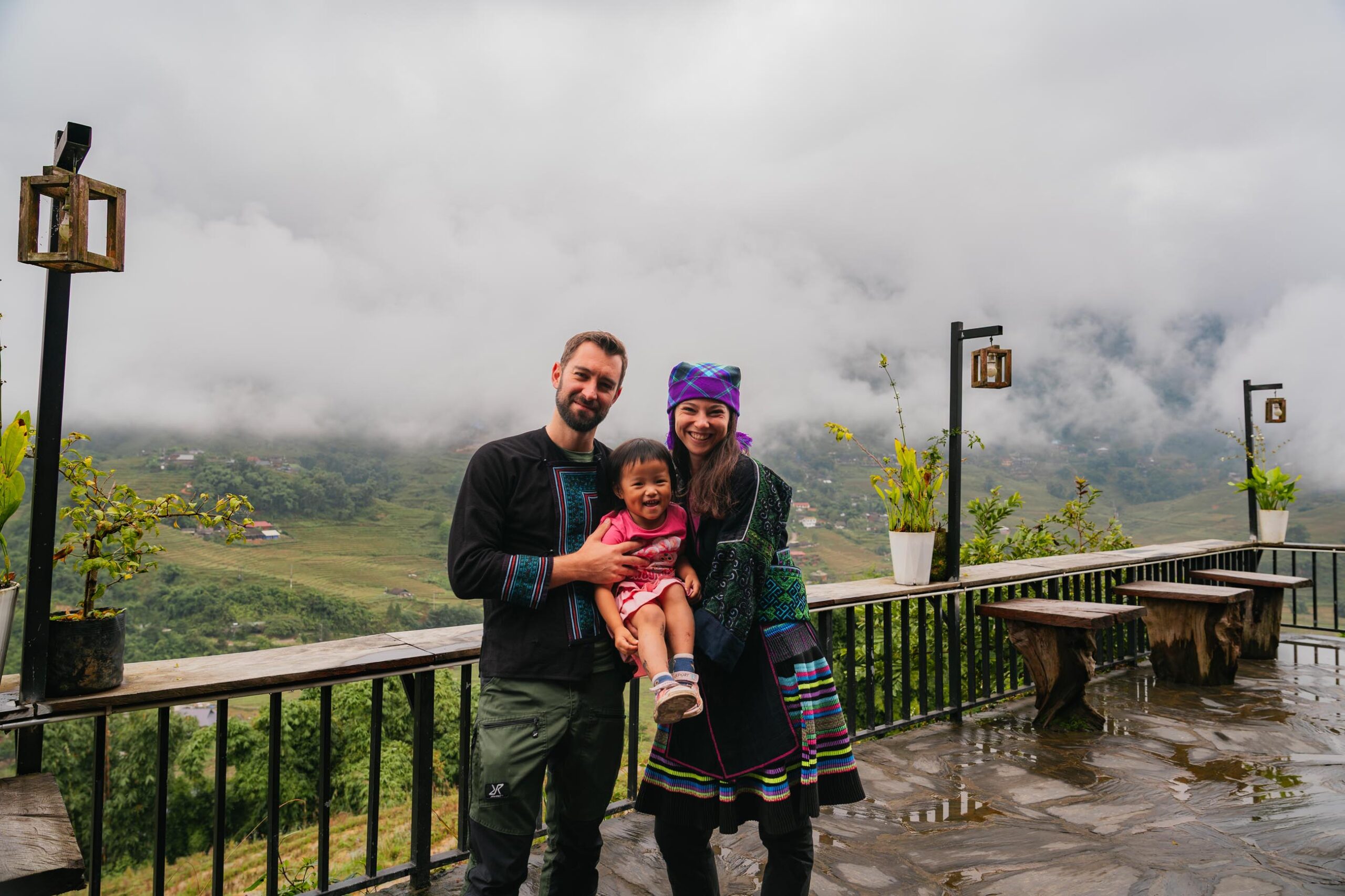
They still use natural remedies to treat themselves: cupping for shoulder pain or heated buffalo horns for headaches. They also let us try on their traditional clothes, all hand-sewn by the owner. The elderly wear them every day, while young people reserve them for special occasions.
Like many families in the area, they never venture beyond Sa Pa: their lives take place in the villages and fields around it. Compared to other ethnic groups, they no longer have the constraints imposed by sacred texts and are free to choose their own husbands, a freedom they did not have until about fifteen years ago.

Privacy Settings
This website uses cookies to improve your experience while you navigate through the website.
View the Cookie Policy View the Personal Data Policy
Google Fonts è un servizio per visualizzare gli stili dei caratteri di scrittura gestito da Google Ireland Limited e serve ad integrare tali contenuti all’interno delle proprie pagine.
Luogo del trattamento: Irlanda - Privacy Policy


